Retailers lose about $1.7 trillion a year to out-of-stocks and overstocks, roughly 6.2% of global retail sales, according to IHL Group's 2026 Inventory Distortion Study. IHL counts an item as out of stock even when the system says it is on hand but nobody can find it. That detail matters, because it means a large share of the loss is a data and follow-up problem, not a forecasting problem.
AI agents for retail are software workers that take goal-driven actions across store systems. They flag stock-record errors, answer order and returns questions, and brief store staff before a customer arrives. They work through a POS, an ERP, a WMS and a CRM instead of just chatting about them. The hard part is not picking an agent. It is running agents across dozens or hundreds of stores without losing control of what they do.
This guide covers stores, stock and store operations. For online shops, see AI agents for ecommerce, and for agent-driven checkout, see agentic commerce. On Rerun, these agents are called coworkers, and the sections below show where they fit and where a person must stay in charge.
In a hurry? Try your first coworker free for 5 days.
What are AI agents for retail?
An AI agent for retail is a system that reads data from your retail tools, decides on a next step, and acts in those tools toward a goal. A chatbot waits to be asked. A rules engine does exactly what a flowchart says. An agent sits between them: it handles the messy case the flowchart did not anticipate, then asks a person when the action carries risk.
| Chatbot | Rule-based automation | AI agent (coworker) | |
|---|---|---|---|
| Starts on its own | No | Yes | Yes |
| Acts in your POS, ERP, CRM | No | Fixed steps only | Yes |
| Handles an unexpected exception | No | No | Yes |
| Asks a human before risky steps | No | No | Yes |
| Leaves a readable action log | No | Partial | Yes |
If the distinction is new to you, our breakdown of AI agents vs chatbots goes deeper.
Why physical and omnichannel retail is different
Online stores have one catalog and one checkout. A store network has stock in the shop, the stockroom, the distribution center and the online fulfillment node at the same time. Click-and-collect and ship-from-store add more moving parts. Staff act on the shop floor, so a wrong instruction becomes a wrong action within minutes. And the data lives in many systems that rarely agree.
As Retail Insight Network notes, AI can only work with the information it receives. In a store network, that information is often the weakest link.
 How overstock, stockouts, and returns cost retail UpdateExplore how overstock, stockouts, and returns cost retail $1.75tn.
 Retail Insight Network
Three use cases where AI agents for retail deliver value today
Each use case below follows the same pattern: the problem, what the agent does, and the checkpoint where a human approves. Examples are illustrative, not customer results.
Inventory and replenishment agents
IHL splits inventory distortion into 65.6% out-of-stocks and 34.4% overstocks, so the loss runs in both directions. An inventory agent works the gap between what the system says and what is true.
- Stock-record anomalies. It compares sales, receipts and counts, then flags items the system shows as available that keep failing to sell.
- Replenishment proposals. It drafts reorder quantities and store-to-store transfers based on sell-through.
- Overstock alerts. It surfaces slow movers before a deep discount is the only option.
A 2025 field study across about 24,000 SKUs in 11 grocery stores found that inventory audits lifted overall sales by 11%, as reported in the same Retail Insight Network piece. That result is about audits, not about AI. It still shows why accurate stock records pay off, and why an agent that finds record errors is valuable.
The human checkpoint: purchase orders above a set threshold, markdown rules and inter-store transfers get approved by a person. The coworker prepares the decision. It does not make it alone.
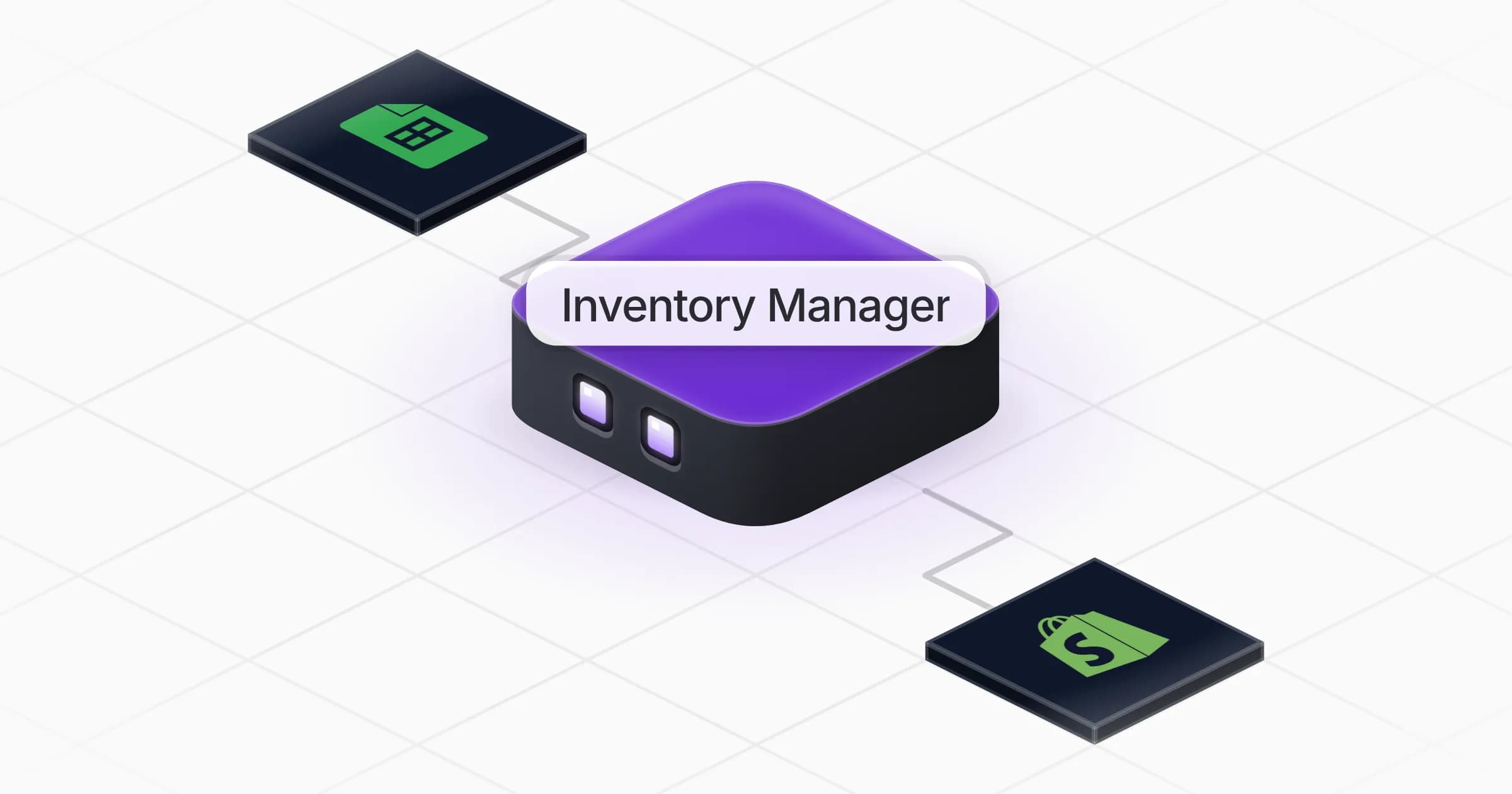
Inventory Manager
Plan Reorders and Spot Dead Stock


A coworker like this one can run the nightly record check and leave a short list for the regional manager each morning.
Customer support agents for store and omnichannel service
Retail support is dominated by repeatable questions: where is my order, what is your returns policy, is this in the store near me. Returns are also a large cost. The NRF puts 2025 US returns at $849.9 billion, or 15.8% of annual retail sales (a separate figure from IHL's, so never add the two).
A support agent answers the repeatable requests, checks live availability, and hands off to store staff with the full context attached. Our guides on AI agents for customer service and AI voice agents cover the channel mechanics in more detail.
The human checkpoint: refunds, goodwill gestures and escalations go to a person. The agent drafts, the person approves.
Support Rep
AI Customer Support Agent: Triage and Reply

Personalization agents in store and across channels
In stores, personalization means something practical: a clienteling brief for the associate before a known customer walks in, a local assortment suggestion for a store cluster, or an offer tuned to a segment. This is different from an on-site recommendation engine, which belongs to the web-shop side.
The human checkpoint: pricing, promotions and any use of customer data are approved by a person. Respect consent rules such as GDPR and CCPA, and treat this article as general guidance, not legal advice.
A personalization agent that cannot explain which customer data it used is a liability, not a feature. Ask for the log before you ask for the lift.
Store operations, the underrated fourth use case
Some of the best early wins are not customer-facing at all.
- Staffing and task lists. A coworker spots shift gaps, drafts the daily task list and sends the manager briefing.
- Compliance checks. It reviews price-label and planogram photos against the plan and flags mismatches.
- Supplier follow-up. It chases delayed deliveries, summarizes supplier emails and flags damaged stock.
These tasks are narrow, measurable and low risk, which makes them a good place to build trust before you give an agent anything that touches money.
Why most AI agents for retail projects stall: the control gap
Pilots in ten stores usually work. Rollouts across hundreds usually do not, and the reasons repeat.
- Agents act on bad data. Dirty stock records produce confident, wrong actions at scale.
- No audit trail, no trust. Store managers will not accept actions they cannot trace.
- Permissions are an afterthought. One wrong price pushed to every store, or one unauthorized refund, ends the project.
- No clear owner. When an exception appears, nobody is responsible for deciding.
These are governance problems, not model problems. The NIST AI Risk Management Framework is a neutral baseline for thinking about them, and our pieces on AI agent governance, guardrails, observability and security go further.

The operations layer: governance, observability and human approval
Rerun is not a model and not an agent-building framework. It is the operations layer around the agents and tools a retailer already uses. A retail operations layer has to do five things.
How Rerun fits
A coworker on Rerun acts in the apps you already use, runs 24/7 on its own private machine, and asks a person to approve sensitive steps. You can approve from the app or from Slack, and the coworker resumes exactly where it paused. See human-in-the-loop approvals, coworkers, security and the shared second brain for the details, and our guide to human-in-the-loop AI agents for the design principles.
Rerun does not replace your POS, ERP or WMS, and it does not decide your assortment. It will not fix inaccurate stock records either. What it does is make sure that when a coworker acts on those records, someone approved the risky steps and you can read what happened afterward.
An illustrative example: a replenishment coworker notices that 12 stores show stock for an item that has not sold in three weeks. It proposes counts and transfers, a regional manager approves two of them from the app, and the log records the whole decision.
Why not Zapier, Make or n8n, or a chatbot?
Zapier, Make and n8n are good at deterministic flows: when X happens, do Y. Retail is full of exceptions, such as a mislabeled SKU, a damaged delivery or a count that does not match the system, and a flowchart breaks on the first one. A chatbot answers questions but does not act. The comparison pages for Zapier, Make and n8n show the differences in detail.
| Need | Flowchart tool | Chatbot | Coworker |
|---|---|---|---|
| Handle a store count that does not match | No | No | Yes |
| Draft a transfer and wait for approval | Partial | No | Yes |
| Work without being asked | Yes | No | Yes |
| Explain what it did afterward | Partial | No | Yes |
How to roll out retail agents in five steps
- Pick one narrow, measurable use case, such as stock-record anomalies in ten stores.
- Fix the data and name an owner for each source system.
- Start suggest-only. The coworker proposes, a person acts.
- Add approval gates and turn on the action log before you widen the scope.
- Expand by store cluster, and measure out-of-stock rate, markdown rate, handle time and first-contact resolution.
Use this as a pre-launch check:

Build, buy or run: choosing your approach
There are three realistic routes to deploy AI agents for retail. Retail suites and vendor agents are fastest when your need matches one product. Building on a framework gives control, but you own the maintenance, as covered in our AI agent frameworks overview. Running coworkers on an operations layer sits in between: you keep your tools and models, and add permissions, approvals and logs. Our roundup of the best AI agent platforms compares the options, and AI agent development companies is worth a read if you plan to outsource.
If a single point solution already covers your use case, use it. The operations layer matters most once you run more than one agent across more than a few stores.
Start AI agents for retail with one store cluster this week
Retail rewards boring, accurate operations. Pick one narrow task, run it suggest-only, add an approval gate, and read the log every morning. When it holds, widen the cluster. If you want the coworker already wired to the tools you use, start from the library.
Frequently asked questions
What are AI agents for retail?
AI agents for retail are software workers that take goal-driven actions across retail systems, such as flagging stock errors, answering order questions or briefing store staff. They work through a POS, ERP and CRM, and should run with scoped permissions and human approvals.
How are AI agents different from retail chatbots?
A chatbot answers questions. An agent can check stock, draft a transfer or open a ticket. In retail that also means it needs approval gates, because a mistake touches money and customers. On Rerun, these agents are called coworkers.
What can AI agents do for inventory management in stores?
They can flag stock-record anomalies and out-of-stock risks, propose replenishment and transfers, and alert teams to overstock. IHL splits inventory distortion into 65.6% out-of-stocks and 34.4% overstocks. A person should approve purchase orders and markdowns.
Can AI agents handle customer support for physical stores?
Yes, for repeatable requests such as order status, returns policy, store hours and whether an item is in a nearby store. Refunds, goodwill gestures and sensitive complaints should go to a person with the full context attached.
How do AI agents personalize the in-store experience?
They prepare briefs for associates from purchase history and preferences, suggest local assortments and target offers by store or segment. Respect consent and privacy rules, and have a person approve pricing and promotions.
Do retail AI agents replace store employees?
No. The practical pattern is delegation: coworkers take the repetitive checks and follow-ups, while staff keep judgment, customer contact and approvals. Treat any promise of headcount results with caution.
What are the biggest risks of AI agents in retail?
Acting on inaccurate stock data, pushing wrong prices or refunds at scale, exposing customer data, and having no audit trail. Governance, observability and human approval reduce these risks. The NIST AI Risk Management Framework is a neutral starting point.
How is Rerun different from Zapier, Make or n8n for retail?
Those tools run fixed flows, which break on retail exceptions. Rerun is an operations layer where coworkers act in your existing tools, run on a schedule or trigger, and ask a person to approve sensitive steps. It works with the models and tools you already use.

Clément Janssens