The Best Hermes AI Alternative in 2026: Governed, Human-in-the-Loop AI Agents
Looking for a Hermes AI alternative? We rank and compare Hermes Agent, OpenClaw forks, Claude Code, Lindy and Rerun on security, control, and governance, and explain why a human-in-the-loop agent wins.
Most "Hermes AI alternative" lists just hand you another unattended autonomous agent and call it a day. That misses the point. When people leave Hermes AI, it is rarely because the agent cannot do the work. It is because letting an agent run on its own, with broad permissions and no clear audit trail, starts to feel like a liability the moment it touches anything real.
So here is the verdict up front: if you want a Hermes AI alternative you can actually trust in production, the tool to look at first is Rerun, because it pairs autonomous agents with human approvals, live observability, and least-privilege access by default. The rest of this guide ranks and compares every serious option, from the OpenClaw forks to Claude Code, so you can pick with your eyes open.
In a hurry? Spin up your first agent free and watch it work before you decide.
The reason control matters so much here is not a vendor talking point. OWASP's Top 10 for Large Language Model Applications lists Excessive Agency, an agent acting beyond its intended authority, as one of the top risks in the whole category. That is the exact tradeoff every self-hosted Hermes-style agent forces on you.

Why people are looking for a Hermes AI alternative
Hermes AI (often called Hermes Agent) belongs to the wave of self-hosted, autonomous agent tools that exploded alongside OpenClaw and its many forks. It can plan, call tools, and complete multi-step tasks with little supervision. That autonomy is the appeal, and also the problem.
Here is what actually pushes people to shop for a replacement.
The complaints that come up again and again
- Unattended autonomy. The agent acts on its own with broad permissions. Great until it sends the wrong email, edits the wrong file, or triggers a payment you never saw coming.
- Security exposure. Self-hosted agents inherit a long list of risks. Prompt injection, over-broad plugin access, and sensitive data leaking into outputs are all on OWASP's list, and they land on you to mitigate.
- Operational burden. Self-hosting means a server to run, keys to rotate, updates to apply, and logs to babysit. That is real work most teams did not sign up for.
- No readable audit trail. When something goes wrong, you are scrolling terminal logs trying to reconstruct what the agent did and why.
The real question with any Hermes AI alternative is not "which agent is most powerful." It is "which one can I safely let loose on production without holding my breath."
That reframe matters, because it changes what "best" means. NIST's AI Risk Management Framework makes the same point at the standards level: its Govern and Manage functions treat human oversight and auditability as core requirements, not nice-to-haves. A good alternative should make those the default, not a config file you remember to set.
What "good" looks like: the six criteria we score on
We rank every tool below against the things that actually decide whether an agent is safe to run:
- Governance: are there rules the agent cannot cross?
- Human-in-the-loop: does it stop and ask before sensitive actions?
- Observability: can you watch and audit every action, live?
- Least-privilege: does it get only the access it needs?
- No-code accessibility: can a non-engineer run it safely?
- Total cost of ownership: infra, maintenance, and token bills included.
The best Hermes AI alternatives in 2026 (ranked)
1. Rerun: the governed, human-in-the-loop alternative
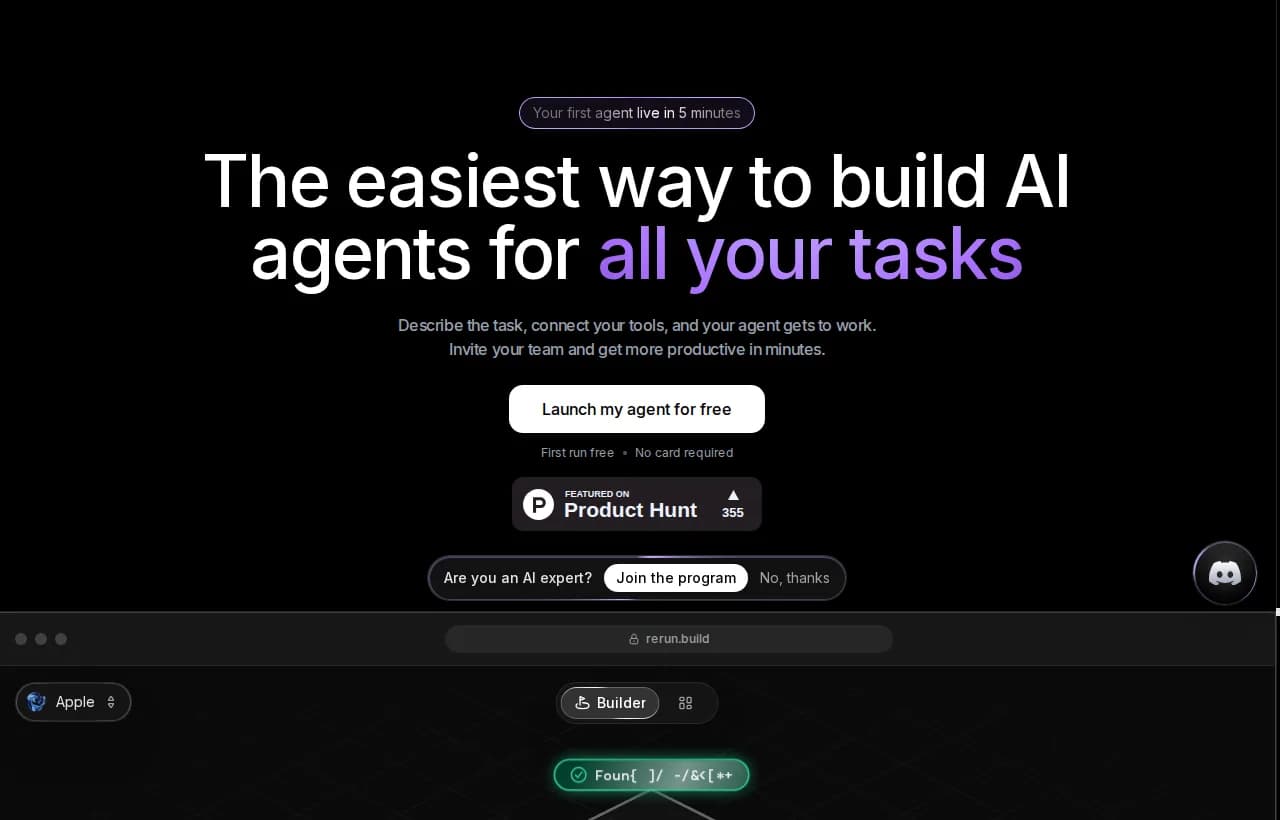
Rerun is the platform that lets you run AI agents you can actually watch work. You describe the task, connect your tools, and the agent gets to work on its own always-on machine, while a live dashboard shows every action, token, and handoff as it happens.
The difference that matters for anyone leaving Hermes is control. Before anything sensitive, a payment, an email to a client, a refund, the agent stops and hands it back to you. You approve from the app or from Slack, and it resumes exactly where it paused. Nothing runs unattended unless you decide it should.
What makes it the strongest Hermes AI alternative:
- Human approvals built in. The agent asks before it acts on anything that matters, so excessive agency stops being a risk you carry alone.
- Full observability. Runs, logs, tokens, and errors are all on a dashboard anyone on your team can read. No terminal archaeology.
- Least-privilege by default. Connectors bundle only the access an agent needs, instead of handing it the keys to everything.
- No code, ever. If you can describe the job, you can build the agent. No server to run, no keys scattered across a VPS.
- Your own private cloud. Every workspace gets a dedicated, isolated machine, so your data stays inside it.
It runs on Claude, ChatGPT, Gemini and more, and you can bring your own subscription or API key with no usage caps from Rerun. Pricing starts at $24/month for the plan, with a free 7-day trial to try it before you commit.
2. Claude Code / Cowork: the managed coding agent
Anthropic's Claude Code (and the Cowork surface around it) is a strong managed option, especially for developers who live in a terminal and want a capable coding agent without self-hosting. It is well engineered and backed by a serious model.
The tradeoffs: it is oriented toward code and developer workflows, it ties you to one model vendor, and governance beyond the coding sandbox is still largely on you. If your team is not engineers, the terminal-first experience is a wall. We cover it in more depth in our roundup of the best AI coding agents.
3. OpenClaw: the open-source incumbent
OpenClaw is the open-source project most Hermes alternatives are measured against. It has the widest integration breadth and a large community, and if you want to self-host and tinker, it is the reference point.
The catch is everything that comes with self-hosting: the ops burden, and a security profile you own end to end. If you are weighing this route specifically, we wrote a full breakdown of the tradeoffs.

The Best OpenClaw Alternatives in 2026 (Safer, No-Code, Human-in-the-Loop)
OpenClaw is powerful, but it runs with full system access and no approval step. Here are the best OpenClaw alternatives in 2026, ranked for safety, visibility, and no-code use.
4. The lightweight forks: ZeroClaw, NanoClaw, NemoClaw, IronClaw
A whole ecosystem of lean OpenClaw forks exists, each trimming the incumbent down for a narrower use case or a lighter footprint. They are attractive if you want minimal, self-hosted, and fast to stand up.
What you give up is governance and interface. These are built for people who are comfortable at the command line and willing to own the security posture themselves. There is no readable dashboard and no built-in approval step waiting for you.
5. Vellum: the on-device personal assistant
Vellum leans into privacy with an on-device, personal-assistant angle. For an individual who wants an agent that keeps data local and handles personal tasks, it is a reasonable fit.
It is not built for team governance or shared oversight, though. The moment you need multiple people to see what an agent did, or need approvals routed to the right person, a personal-use tool runs out of room.
6. Lindy: no-code business automation
Lindy is a friendly, no-code way to put agents on business admin: inbox triage, scheduling, follow-ups. It is approachable and it ships fast, and it is a genuine option for lightweight office automation.
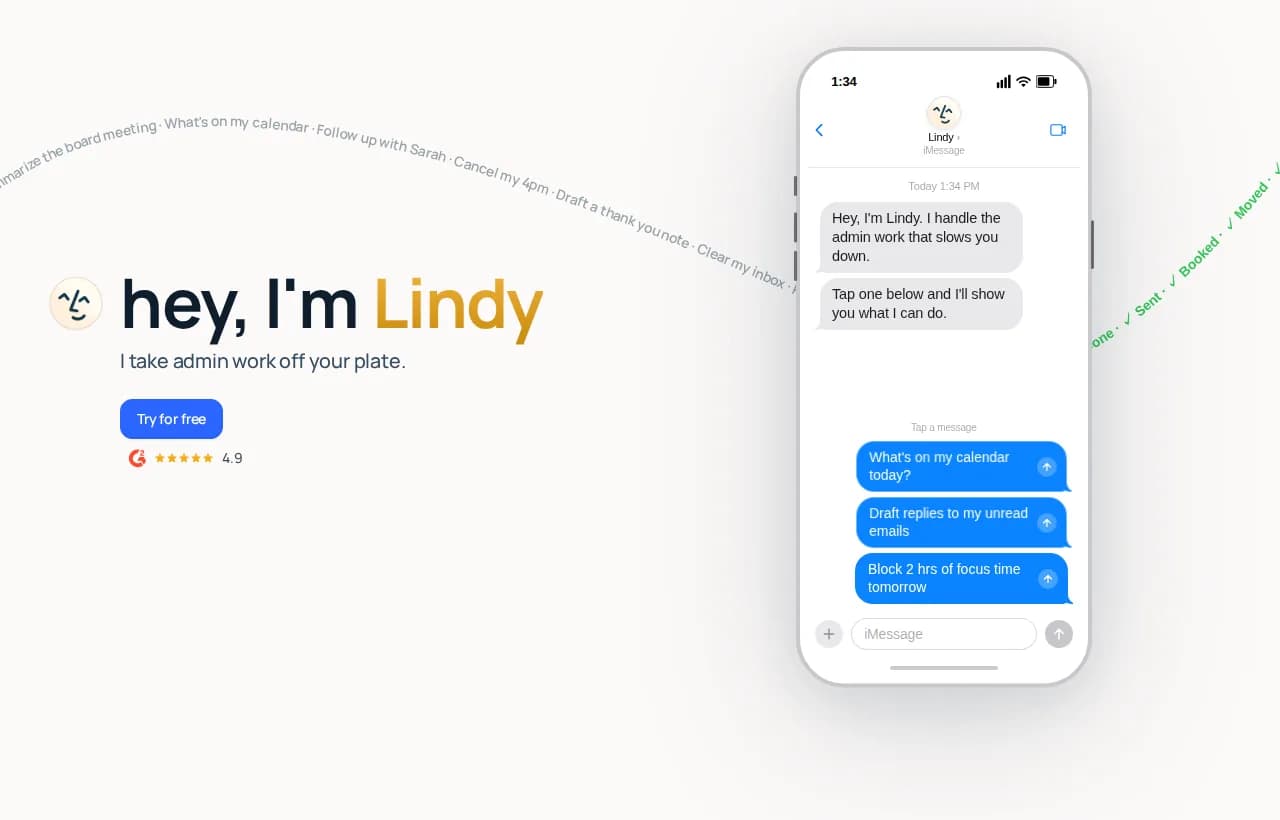
Where it differs from a Hermes replacement: it is oriented around assistant-style automation rather than governed, autonomous execution across your whole stack, and deep observability is not the headline. Notably, even Lindy's own testimonials pitch it as an agent "without the security nightmare," which tells you how central that concern has become for anyone leaving a self-hosted tool.
7. Orchestration frameworks: CrewAI and LangGraph
CrewAI and LangGraph give engineers maximum control to build multi-agent systems from primitives. If you have a strong dev team and a specific architecture in mind, they are powerful.
But they are frameworks, not products. Governance, observability, security, and human approvals are all yours to build. Choose this path and you have effectively rebuilt Hermes' problems from scratch, just with your own name on them. If orchestration is what you are after, our guide to AI agent orchestration covers the patterns.

Hermes Agent vs OpenClaw vs Rerun: head-to-head
The two comparisons people search for most are Hermes Agent vs OpenClaw, and both against a governed alternative. Here is how they stack up on the criteria that decide production-readiness.
| Capability | Hermes Agent | OpenClaw | Rerun |
|---|---|---|---|
| Autonomous execution | Yes | Yes | Yes |
| Human-in-the-loop approvals | No | DIY | Yes |
| Live observability dashboard | No | DIY | Yes |
| Least-privilege by default | Partial | No | Yes |
| No-code, non-engineer friendly | No | No | Yes |
| Managed infra (no server to run) | No | No | Yes |
| Readable audit trail | No | logs | Yes |
| Predictable cost | Partial | Partial | Yes |
The pattern is hard to miss. Hermes Agent and OpenClaw can both act autonomously, but the governance columns, the ones that decide whether you can sleep at night, are where a purpose-built platform pulls ahead. Rerun is the only row that is green across control, visibility, and access.
For the deeper security context behind these columns, our breakdown of AI agent security walks through the specific failure modes and how to close them.
Why Rerun is the safest Hermes AI alternative
Ranking is one thing. Here is the concrete why.
Human-in-the-loop approvals
Nothing sensitive runs unattended. The agent pauses, shows you exactly what it wants to do, and waits. You approve from the app or from Slack, and it picks up where it left off. That single design choice turns OWASP's "excessive agency" from a standing risk into a decision you make on purpose.
Full observability and audit trail
Every run, token, and handoff is on a live dashboard. You are never reconstructing what happened from a wall of terminal output. If you have ever tried to audit an autonomous agent after the fact, our piece on AI agent observability explains why this is the feature that actually matters.
Least-privilege by default
Agents get access through connectors that bundle only the tools they need. No blanket credentials, no scattered API keys, no plugin with the run of your systems.
No-code, so the right people stay in control
Because there is no code and no server, the people who own a process can build and supervise the agent themselves. They do not have to route everything through an engineer, and safety does not depend on remembering to set a flag. If you want the broader landscape here, we compared the field in our no-code AI agent builder guide.
Here is the kind of brief you would hand a Rerun agent, with the approval gate baked right in:
{ "goal": "Chase overdue invoices in Stripe", "steps": ["find invoices overdue by 7+ days", "draft a polite reminder to the customer", "PAUSE and ask a human to approve any refund or credit above $100", "send approved reminders and log the outcome"], "guardrails": ["never issue a refund without approval", "least-privilege: Stripe read + email send only"] }What a Hermes AI alternative is NOT
Plenty of tools get suggested in these searches that solve a completely different problem. If you are replacing an autonomous agent, none of these will do the job.
- Flowchart automation (Zapier, Make, n8n). These run deterministic if-this-then-that pipelines. They do not reason or handle anything you did not wire by hand. You are the intelligence; the tool just executes your branches. A Hermes alternative needs agency, and these have none.
- Chatbots and GPT wrappers. They talk, they do not act. No tool execution, no autonomous task completion. Wrong job entirely. If the distinction is fuzzy, our AI agent vs chatbot breakdown makes it concrete.
- DIY agent frameworks. Powerful, but you build and secure and observe and govern everything yourself. Pick this and you have rebuilt the exact problems you left Hermes to escape.
The governed middle is the spot worth aiming for. You want an agent that acts autonomously, but only inside limits you approve, with everything it does visible. That is the category Rerun occupies, and it is why it tops this list.
How to choose: a quick decision checklist
Run your shortlist through this before you commit:
If you answered "unattended," "engineer only," or "I have to host it" for your current tool, that is exactly why the search brought you here. A governed platform flips every one of those answers.
The bottom line
Every Hermes AI alternative can run tasks. The ones worth switching to let you stay in control while they do. Weighed on governance, human approvals, observability, and least-privilege, Rerun is the safest place to land: autonomous when you want it, supervised where it counts, and transparent all the way through.
Stop babysitting terminal logs and start watching your agents do the work, on a dashboard you can actually read.
Frequently asked questions
What is the best Hermes AI alternative in 2026?
For most teams, Rerun is the strongest Hermes AI alternative because it pairs autonomous agents with human-in-the-loop approvals, a live observability dashboard, and least-privilege access by default. It runs on Claude, ChatGPT, Gemini and more, needs no server to self-host, and starts at $24/month with a free 7-day trial.
Is Hermes Agent safe to run in production?
Hermes Agent is a self-hosted autonomous agent, so you inherit its full security posture. OWASP's Top 10 for LLM Applications flags excessive agency, prompt injection, and insecure plugin access as top risks. A safer alternative closes those gaps with human approvals, least-privilege access, and an audit trail by default rather than leaving them to you to configure.
Hermes Agent vs OpenClaw: which should I choose?
Both are self-hosted autonomous agents. OpenClaw has the widest integration breadth and a large community, while Hermes Agent is a leaner take. Both require you to run infrastructure and own security and governance yourself. If you want autonomy without that operational and security burden, a managed, governed platform like Rerun is a better fit.
Is there a free Hermes AI alternative?
The open-source OpenClaw forks (ZeroClaw, NanoClaw, NemoClaw, IronClaw) are free to self-host, but you pay in setup time, maintenance, and security ownership. Rerun offers a free 7-day trial and a $24/month plan, and lets you bring your own model subscription or API key with no usage caps from Rerun.
What is the difference between a Hermes AI agent and a tool like Zapier or a chatbot?
Zapier, Make, and n8n run deterministic if-this-then-that flowcharts you wire by hand, with no reasoning. Chatbots talk but do not take actions across your tools. A Hermes-style agent reasons and executes multi-step tasks autonomously. If you need real agency with guardrails, choose a governed agent platform, not a flowchart tool or a chatbot.
Can non-engineers use a Hermes AI alternative safely?
With self-hosted tools like Hermes Agent or OpenClaw, no, they assume comfort at the command line and someone to own security. Rerun is no-code: if you can describe the task you can build the agent, and human approvals plus a readable dashboard mean the people who own a process can supervise it without an engineer in the loop.
Why does human-in-the-loop matter for autonomous agents?
OWASP lists excessive agency, an agent acting beyond its intended authority, as a top LLM risk, and NIST's AI Risk Management Framework treats human oversight and auditability as core requirements. Human-in-the-loop approvals turn that risk into a deliberate decision: the agent pauses before sensitive actions, you approve from the app or Slack, and it resumes where it paused.

Written by
Clément Janssens