AI Agent vs. Chatbot: Why They're Not the Same (And Why It Matters)
Chatbots talk. AI agents act. Zapier-style tools? Neither. Here is the real difference between the three categories and how to pick the right one for your workflows.
By 2028, 33% of enterprise software will include agentic AI, up from less than 1% in 2024. That single Gartner prediction tells you everything about where business automation is heading. But here is the catch: most of what gets called an "AI agent" today is not one.
Most teams asking themselves about AI agent vs chatbot are actually asking the wrong question. The real answer involves a third category stuck in the middle — and understanding all three changes how you build workflows.
In this guide, you will learn the real difference between chatbots, AI agents, and flowchart-based automation tools like Zapier, so you can make the right call for your team.
In a hurry? Start building your first agent free.

What Is a Chatbot? (And Why the Term Is Muddier Than You Think)
The word "chatbot" covers a surprising range of tools, from a simple FAQ widget that matches keywords to an LLM-powered assistant that sounds remarkably human. What they all share: they are reactive. They wait for a question. They answer. They stop.
The first chatbot, ELIZA, was built at MIT in 1966. It used pattern matching to simulate conversation. Sixty years later, the label "chatbot" still describes the same fundamental behavior, even if the technology underneath looks completely different.
Rule-Based Chatbots
These are decision trees in disguise. They match keywords or button clicks to pre-written responses. If the user says "return," route them to the return policy. If they say "hours," display the store hours. Predictable, auditable, and completely rigid. Step outside the script and the bot breaks.
AI-Powered Chatbots (Still Not Agents)
Modern LLM-powered bots generate natural, contextual responses. They feel smarter because they are. But they share the same core limitation: they respond to a prompt, then stop. They do not initiate. They do not remember across sessions by default. They do not take actions in external systems. ChatGPT in a standard chat window is a chatbot, a very capable one, but a chatbot.
The chatbot market was valued at approximately $7.76 billion in 2024, according to Grand View Research, and the vast majority of that market is reactive, scripted or semi-scripted support bots. The category is large precisely because it solved a narrow problem well.
What Is an AI Agent?
An AI agent does not wait for prompts. You give it an objective and it figures out how to reach it.
That distinction sounds small. The implications are enormous.
Goal-Oriented Autonomy
You tell a chatbot: "What is the status of order #1234?"
You tell an agent: "Follow up on all overdue orders from this week, draft a personalized email to each customer, and flag the ones that need a discount to retain them."
The agent reads your CRM, identifies the orders, crafts the emails, applies your discount rules, and sends. You get a report when it is done.
Tool Use and System Integration
Agents are read-write systems. They call APIs, write to databases, send emails, and update records in your CRM. A chatbot pulls information out of a conversation. An agent pushes actions into the world.
Multi-Step Planning and Execution
An agent can break a goal into sub-tasks, execute them in sequence or in parallel, and course-correct when something does not work. A chatbot handles one turn at a time, with no ability to chain steps on its own.
Persistent Memory
Agents remember context across sessions, accumulate knowledge over time, and adapt to preferences expressed in past interactions. The information carries weight because it was earned through prior work.
According to McKinsey's Global Survey on AI, 78% of respondents report their organizations now use AI in at least one business function — and the fastest-growing use cases are agent-style automations that take multi-step actions, not just answer questions.
The Missing Category Nobody Talks About: Flowchart Automation
Here is where most comparisons go wrong. They frame the AI agent vs chatbot debate as a binary. But there is a third category that sits in the middle and is often confused with both.
Zapier. Make. n8n. Flowchart-based automation platforms.
These tools are not AI agents. They are conditional logic engines. If a Typeform submission arrives, add the contact to HubSpot and send a Slack notification. Fast, reliable, and genuinely useful for that exact, predictable sequence.
The moment you need judgment, they fall apart. "Is this email a refund request or a complaint?" A Zapier zap cannot decide. It cannot improvise. Someone has to map every possible scenario upfront, and then re-map it every time reality changes.
If you have ever maintained a workflow with 50+ zaps for a single business process, you have felt this ceiling. That is not automation. That is a complicated flowchart that breaks every time the inputs change. AI agents replace the flowchart with reasoning.
Chatbot vs. Flowchart Automation vs. AI Agent: The Full Comparison
Here is how the three categories stack up across the decisions that actually matter for your team:
| Chatbot | Flowchart Automation | AI Agent | |
|---|---|---|---|
| Input type | User prompt | Trigger event | Goal or instruction |
| Output type | Text response | Pre-defined action | Multi-step execution |
| Handles ambiguity | No | No | Yes |
| Integrates with tools | Partial | Yes | Yes |
| Learns and adapts | No | No | Yes |
| No coding required | Partial | Yes | Yes |
| Best for | FAQ, Q&A | Routine triggers | Complex workflows |
⚠️ = partial or limited support
Is ChatGPT an AI Agent or a Chatbot?
Both, depending on how you use it.
ChatGPT in a standard chat session is a very capable chatbot. It is reactive, has no persistent memory by default, and does not take actions in external systems. You ask, it answers.
ChatGPT with tools enabled (browsing, code execution, connected apps) starts behaving more like an agent. The underlying model is the same. The agentic behavior comes from the scaffolding around it: memory, tool access, and a planning loop that lets it take multiple steps toward a goal.
This is exactly why the "AI agent vs chatbot" label is so easily abused in marketing. The model does not make something an agent. The architecture does.
{
  "chatbot_prompt": "What is the status of invoice #4521?",
  "agent_goal": "Review all unpaid invoices from the last 30 days. For each: send a payment reminder to the client, log the outreach in the CRM, and flag any invoice over $5,000 for manual review.",
  "why_it_matters": "A chatbot answers one question. An agent executes an entire workflow, end to end, without you managing each step."
}
When to Choose a Chatbot vs. an AI Agent
The right tool depends on the shape of your workflow, not on what sounds more impressive.
Use a chatbot when:
Use an AI agent when:
If you find yourself building 50+ Zapier zaps to handle a single business process, that is the moment to switch to an agent.
Real-World Examples in Practice
Understanding the AI agent vs chatbot difference in the abstract is useful. Seeing it in concrete terms is better.
Chatbot scenario: A website FAQ bot answers "What is your return policy?" with a pre-written response. Useful, contained, and zero ability to actually process the return.
Flowchart automation scenario: A Zapier workflow fires when a Typeform submission arrives, adds the contact to HubSpot, and sends a Slack notification. Fast and reliable for that exact scenario, with zero ability to handle "What if this email already exists under a different domain?"
AI agent scenario: An agent named Jules monitors your inbox for inbound leads, determines whether each is qualified based on your defined criteria, drafts a personalized reply, schedules a meeting, and adds a note to the CRM. You touch nothing. You get a daily summary of everything that was handled.
Autonomous AI Agents & Agentic AI: How to Build and Deploy Them (2026 Guide)
A practical 2026 guide to building and deploying autonomous AI agents — covering architecture, frameworks, memory, tool use, production deployment, and cost controls.
No-Code AI Agent Builders: The Category Shift Happening Now
Building an AI agent used to require writing code: orchestration frameworks like LangChain or AutoGen, API key management, a server to run it all. That barrier kept agents in the hands of engineers.
That has changed.
No-code platforms now let non-developers define goals, connect tools, and deploy agents without touching a terminal. You describe what the agent should accomplish, connect your data sources and integrations, and run it.
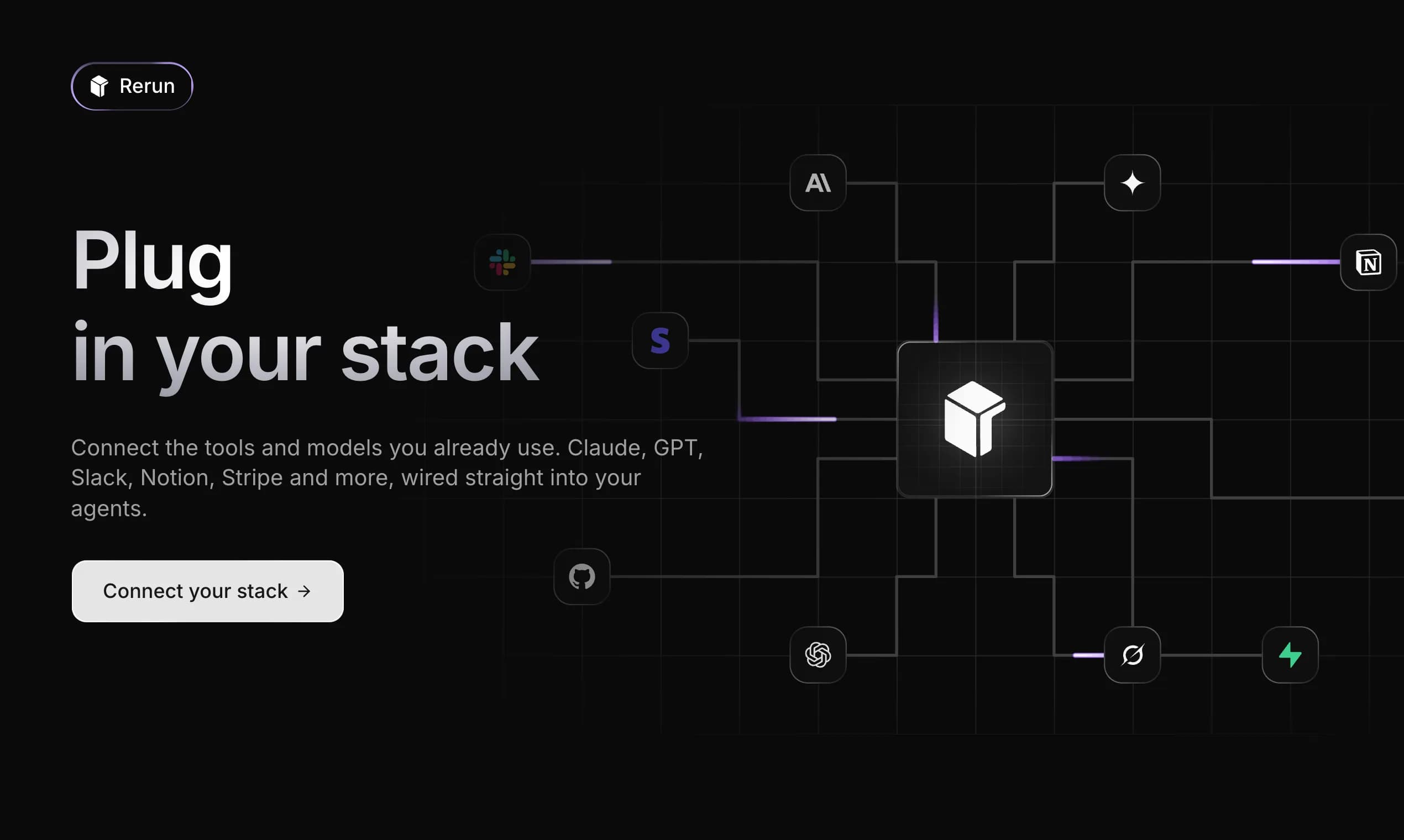
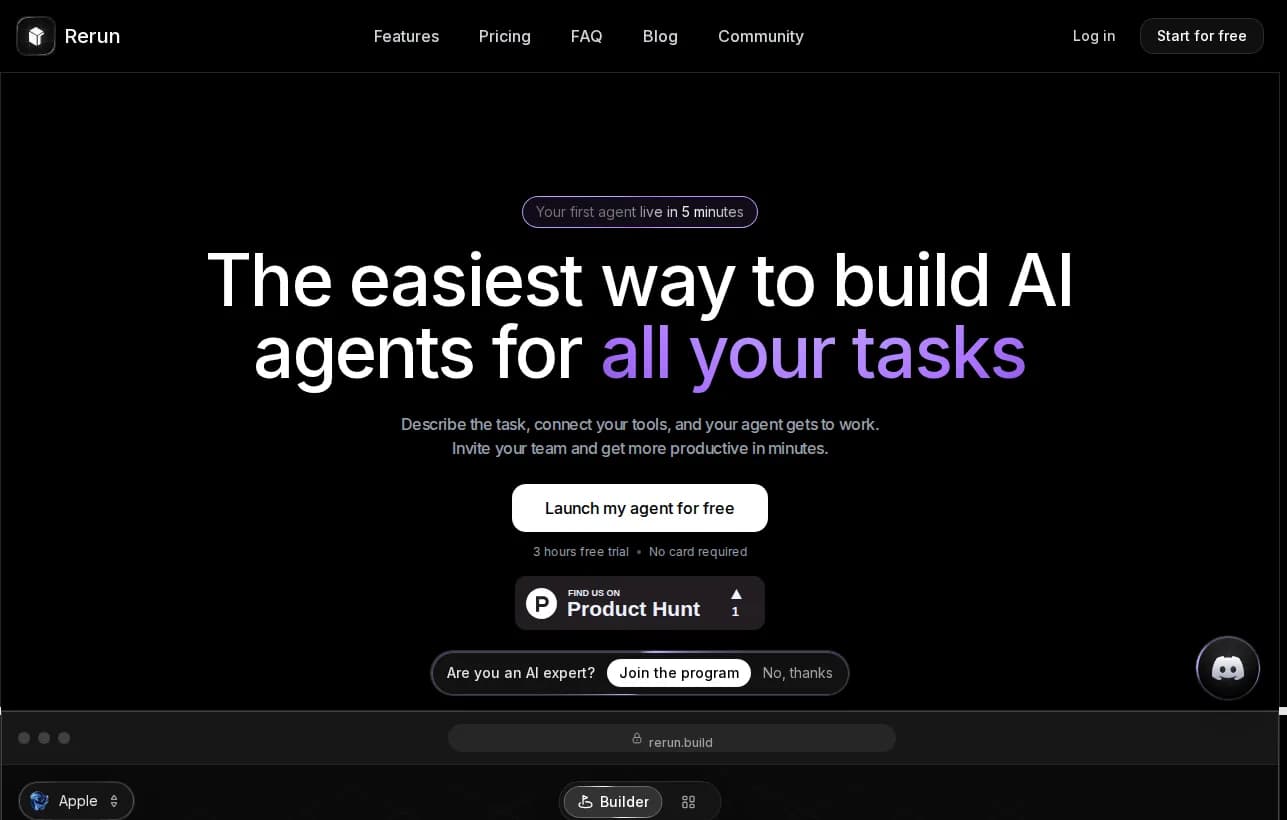
Rerun is purpose-built for this category. You build agents in minutes, connect your stack (Gmail, Slack, HubSpot, Notion, and 110+ other integrations), and watch the work happen live on a dashboard your whole team can read. No flowcharts. No code. No black box.
Every agent runs on its own always-on machine. You see every action it takes in real time, with full logs. When it needs a human decision, it pauses and asks, then resumes exactly where it left off.
Best No-Code AI Agent Builders in 2026: Ranked and Tested
We tested the top no-code AI agent builders of 2026. See which tools actually let you build, deploy, and monitor autonomous agents, no code required.
The Bottom Line
The AI agent vs chatbot debate misses the real question: what does your workflow actually need?
The chatbot era solved a real problem: handling the same simple question a thousand times without hiring another person. The agent era solves the harder problem that comes after, getting complex, judgment-requiring knowledge work done without expanding your team further.
If your workflows need to answer simple, predictable questions, a chatbot is the right tool. If they require judgment, tool access, and multi-step execution, you do not need a better chatbot. You need an agent.
Frequently asked questions
Is ChatGPT an AI agent?
It depends on how you use it. ChatGPT in a standard chat session is a capable chatbot: it is reactive, has no persistent memory by default, and does not take actions in external systems. With tools enabled (browsing, code execution, connected apps), it starts behaving more like an agent. The underlying model is the same; the agentic behavior comes from the scaffolding around it.
What is the main difference between an AI agent and a chatbot?
A chatbot is reactive: it waits for a prompt, responds, and stops. An AI agent is goal-oriented: you give it an objective and it plans and executes the steps needed to reach it, including using external tools, writing to systems, and making decisions along the way.
Are AI agents just bots?
No. Traditional bots follow a fixed script or decision tree. AI agents can reason, plan multi-step workflows, use external tools, and adapt when something does not go as expected. The word 'bot' implies a rigid, scripted system; 'agent' implies autonomy and judgment.
What is the difference between an AI agent and an AI assistant?
An AI assistant (like a standard chatbot) responds to your questions and helps you think through problems. An AI agent goes further: it takes actions in the real world on your behalf, such as sending emails, updating databases, scheduling meetings, and running multi-step workflows without you managing each step.
Can I build an AI agent without coding?
Yes. No-code platforms like Rerun let you describe what the agent should do, connect your tools, and deploy it without writing a single line of code. You get the same autonomous, multi-step execution as a coded agent, with a live dashboard to watch it work.
When should I use an AI agent instead of a chatbot?
Use an agent when your workflow requires judgment, involves multiple steps, or needs to take actions in external systems (CRM updates, email sends, API calls). Use a chatbot when your needs are narrow and predictable: answering FAQs, providing hours, handling simple support queries with fixed responses.
Is Zapier an AI agent?
No. Zapier is a flowchart automation tool: it executes pre-scripted 'if this, then that' logic. It cannot handle ambiguity, make decisions, or adapt when inputs change. AI agents replace the flowchart with reasoning, handling edge cases and judgment calls that would break a Zapier workflow.

Written by
Clément Janssens