The Best n8n Alternatives in 2026 (Tested & Compared by Use Case)
The best n8n alternatives in 2026, sorted by the switch you are actually making: open-source, cheaper, more AI-native, or governed AI agents. Honest picks, compared.
By 2028, a third of enterprise software will include agentic AI, up from less than 1% in 2024, according to Gartner's strategic technology trends. That shift is the real reason "n8n alternatives" is trending. Teams that wired up a few automations are now asking a bigger question: what runs the work when the workflow stops being a flowchart and starts being an agent that decides?
n8n is a genuinely good tool. Most people searching for an alternative are not running from it, they are running toward a specific need it no longer fits: less self-hosting overhead, friendlier pricing, something more AI-native, or something a non-developer can actually use.
This guide sorts the best n8n alternatives by the switch you are actually trying to make, and it is honest about where n8n is still the right answer. For each tool we compared the license, the pricing model, and GitHub activity as of September 2026.
In a hurry? Start your free 7-day trial and put your first agent to work today.
Quick-pick: the best n8n alternative for each need
| If you want... | Best pick | Why |
|---|---|---|
| The closest open-source, self-hostable clone | Activepieces | MIT-licensed, 700+ integrations, free to self-host |
| A cheaper, visual Zapier-style tool | Make | Per-operation pricing, strong visual builder |
| The largest app ecosystem for non-technical teams | Zapier | 7,000+ apps, no server to run |
| A code-first workflow engine | Windmill | Scripts to workflows, very fast, self-hostable |
| Developer triggers plus real code | Pipedream | Code steps with managed event sources |
| A no-code AI workflow builder | Gumloop | Built around AI steps, not bolted on |
| Data-pipeline orchestration | Kestra or Airflow | Declarative, built for scheduled data jobs |
| Governed AI agents you can watch work | Rerun | Human-in-the-loop approvals, live dashboard, audit trail |
Keep reading for the full breakdown, a side-by-side table, and a four-question framework to choose.

Why people look for n8n alternatives
Search the term and you will find one keyword hiding four very different problems. Naming yours first makes the choice obvious.
Self-hosting and maintenance overhead
n8n self-hosts beautifully, until it doesn't. As workflows multiply, someone has to own the container, the database, the upgrades, and the queue mode when volume grows. Small teams often hit the point where babysitting the infrastructure costs more than the automation saves. That pushes them toward either a fully managed tool or a lighter-weight open-source engine.
Pricing and execution limits
n8n's cloud plans meter by workflow executions, which can get expensive once a busy workflow fires thousands of times a day. The self-hosted route removes that meter but adds the maintenance above. People also trip over the license question: n8n ships under a fair-code Sustainable Use License, not a standard open-source license, so commercial use has boundaries. For some teams, a permissively licensed alternative is the whole reason to switch. For the record, n8n is thriving on that model, with 203,082 GitHub stars as of September 2026, so this is about fit, not decline.
They want something more AI-native
n8n added AI nodes and agent building, but its center of gravity is still node-based workflow automation. Teams building agent-first products often want a tool designed around the LLM and the agent loop, not one where the AI is one node among hundreds.
They want genuinely no-code
n8n rewards technical users. The moment you need a Code node, a non-developer stalls. Marketers and ops people who want to describe a task in plain language, not wire a canvas, look for something simpler.
The honest read: if none of these four is your pain, you probably do not need to leave n8n. Switch for a reason, not for novelty.
The best n8n alternatives, compared
For each tool: what it is, who it is for, whether it self-hosts, how it prices, and where it beats n8n versus where n8n still wins.
Make: the cheaper visual automation tool
Make (formerly Integromat) is the closest like-for-like to n8n's cloud experience: a visual canvas, thousands of app connections, and per-operation pricing that often works out cheaper than task-based competitors at volume. It leans more no-code than n8n and less code-friendly.
- Best for: visual builders who want lower per-run cost than Zapier without self-hosting.
- Self-hosted: no.
- Pricing: free tier, paid plans start around $9/mo, billed per operation.
- Beats n8n on: zero maintenance, generous visual tooling. n8n still wins on: self-hosting, custom code freedom, data ownership.
Zapier: the largest ecosystem
Zapier is the safe default for non-technical teams. Nothing matches its 7,000+ app integrations, and there is no server to run. The tradeoff is task-based pricing that climbs fast and less depth for complex, branching logic. We go deep on this matchup in our n8n vs Zapier comparison.
- Best for: non-technical teams that value breadth and reliability over cost.
- Self-hosted: no.
- Pricing: free tier, paid plans start around $20/mo, billed per task.
- Beats n8n on: app coverage, ease for beginners. n8n still wins on: cost at scale, self-hosting, complex workflow control.
Activepieces: the true open-source alternative
If you left n8n over the license, this is your landing spot. Activepieces is MIT-licensed, self-hostable with Docker or Helm, and ships 700+ integrations ("pieces"), with MCP support baked in. On GitHub it carries the n8n-alternative topic on its own repo and has passed 24,180 stars as of September 2026.
- Best for: teams that want a permissive open-source license and a clean no-code builder.
- Self-hosted: yes, and free to self-host with no per-execution charge.
- Pricing: free forever cloud tier, paid cloud plans for teams.
- Beats n8n on: MIT license, cleaner UI for non-developers. n8n still wins on: raw integration count and maturity.
Windmill: the code-first engine
Windmill turns scripts in Python, TypeScript, Go, or Bash into workflows, webhooks, and internal UIs. Written in Rust, it markets itself as far faster than Airflow and positions as an open-source alternative to Retool and Temporal. It sits at the developer end of the spectrum, well past n8n. It is open source and self-hostable, with 17,764 GitHub stars.
- Best for: developers who think in code, not canvases.
- Self-hosted: yes, open source (AGPLv3).
- Pricing: free self-host, paid cloud and enterprise tiers.
- Beats n8n on: performance, code-native control. n8n still wins on: no-code approachability, ready-made app nodes.
Pipedream: code plus managed triggers
Pipedream is for developers who want to write code steps but not run the plumbing. It offers thousands of managed event sources and pre-built actions, then lets you drop into Node, Python, Go, or Bash whenever you need to.
- Best for: developers who want real code with managed triggers.
- Self-hosted: no (hosted platform).
- Pricing: free tier, paid plans start around $19/mo, credit-based.
- Beats n8n on: developer ergonomics, hosted triggers. n8n still wins on: self-hosting and visual no-code building.
Gumloop: no-code AI workflows
Gumloop is built around AI from the ground up rather than adding it as a node. Non-technical teams use it to chain LLM steps, scraping, and data tasks into workflows without code. It is the AI-native answer for people who found n8n too technical.
- Best for: non-developers building AI-heavy workflows.
- Self-hosted: no.
- Pricing: free tier, paid team plans.
- Beats n8n on: AI-first design, approachability. n8n still wins on: integration breadth, self-hosting, lower cost at scale.
Node-RED, Kestra, and Airflow: orchestration and data pipelines
If your real need is scheduled data pipelines or event-driven orchestration, a general workflow tool is the wrong shape. Three open-source engines fit better:
-
Node-RED: flow-based, event-driven, Apache-2.0, an OpenJS Foundation project popular in IoT and hardware. 23,608 stars.
-
Kestra: declarative, YAML-defined orchestration for mission-critical data jobs, Apache-2.0. 27,967 stars.
-
Apache Airflow: the long-standing standard for Python-defined data pipelines.
-
Best for: data engineering, ETL, and infrastructure orchestration.
-
Self-hosted: yes, all open source.
-
Beats n8n on: scale, scheduling rigor, code-as-config. n8n still wins on: app integrations and no-code speed.
Microsoft Power Automate: the enterprise Microsoft stack
If your company lives in Microsoft 365, Power Automate is the path of least resistance. It plugs straight into Teams, SharePoint, Outlook, and Dynamics, with governance controls IT already knows.
- Best for: enterprises standardized on Microsoft.
- Self-hosted: no (cloud, with on-prem data gateway).
- Pricing: per-user and per-flow plans, roughly $15/user/mo.
- Beats n8n on: Microsoft integration, enterprise governance. n8n still wins on: flexibility, non-Microsoft breadth, cost for small teams.
Rerun: for when your workflows become agents
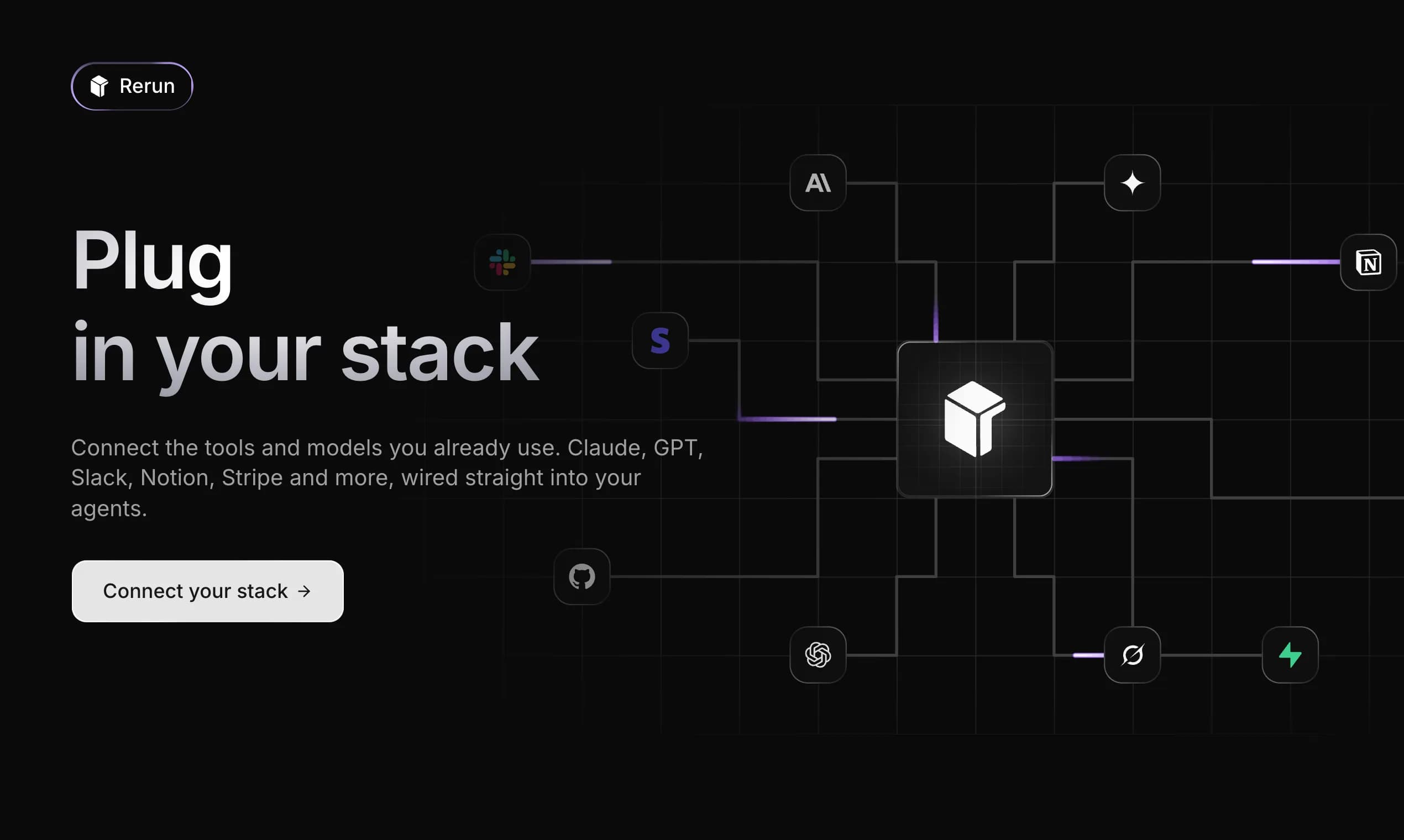
Here is the honest boundary. If you want a like-for-like n8n replacement to wire webhooks to 400 apps, Rerun is not that, pick Activepieces or Make. Rerun is for the next step: when the automation stops being a fixed flowchart and becomes an autonomous AI agent that makes decisions, and you need control over what it is allowed to do.
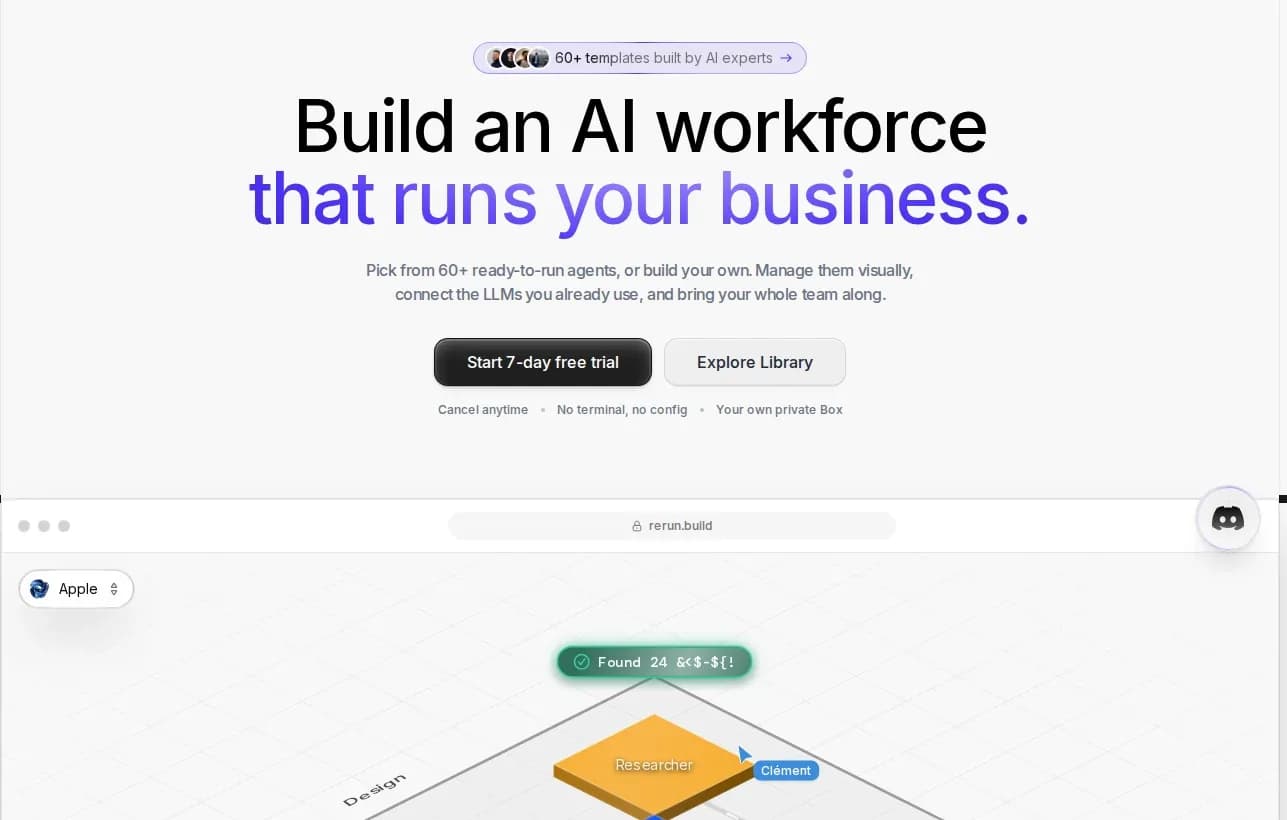
Rerun runs an AI workforce you can actually watch work. You build an agent in minutes, connect your tools, and watch every action live on a dashboard anyone on the team can read. It is not a chatbot that talks back, not a flowchart you wire and maintain, and not a black box. Before an agent sends a client email or moves money, it pauses and asks for approval, which you grant from the app or Slack.
- Best for: teams whose n8n workflows have grown into AI agents that need governance, oversight, and an audit trail.
- Self-hosted: the Rerun engine is self-hostable on higher plans.
- Pricing: one self-serve plan from $24/mo (3 agents, 1 private Box), plus custom Enterprise.
- Beats n8n on: governance for autonomous agents, live observability, approvals. n8n still wins on: breadth of ready-made integrations and pure no-code workflow building.
Where it beats n8n: governance, approvals, guardrails, and an audit trail for what your AI agents actually do. Where n8n still wins: integration breadth and classic no-code workflow building. Choose Rerun when the thing you are automating has stopped being a workflow and started being an agent.
n8n alternatives compared
| Tool | License | Self-host | Free tier | Pricing model | AI-agent native | Best for |
|---|---|---|---|---|---|---|
| n8n | Fair-code | Yes | Yes | Per execution | Partial (nodes) | Technical automation |
| Make | Proprietary | No | Yes | Per operation | Partial | Cheaper visual builds |
| Zapier | Proprietary | No | Yes | Per task | Partial | Largest app ecosystem |
| Activepieces | MIT (open) | Yes | Yes | Flat / self-host | Partial | Open-source clone |
| Windmill | AGPL (open) | Yes | Yes | Self-host / cloud | No | Code-first engine |
| Pipedream | Proprietary | No | Yes | Credit-based | Partial | Developer triggers |
| Gumloop | Proprietary | No | Yes | Seat / credits | Yes | No-code AI workflows |
| Kestra | Apache (open) | Yes | Yes | Self-host / cloud | No | Data orchestration |
| Airflow | Apache (open) | Yes | Yes | Self-host | No | Data pipelines |
| Rerun | Engine self-host | Yes | 7-day trial | Flat from $24/mo | Yes | Governed AI agents |
Always confirm pricing and license on each tool's own site before you commit, these change often.
The n8n honesty check: agents are not flowcharts
Most n8n alternatives are the same shape as n8n: a canvas where you wire triggers to actions. If your task genuinely fits a flowchart, one of those tools is the right answer, and you should pick the one that matches your license, budget, and skill level.
But a growing share of these searches come from teams whose "workflow that calls an LLM" has quietly become "an agent that acts." That is a different problem. A flowchart runs the same path every time. An agent reasons, chooses, and can surprise you. The risk is not a broken node, it is an autonomous action you did not expect and cannot explain after the fact.
That is the gap tools like Zapier, Make, and even n8n were never built to close. They automate steps. They do not govern judgment. This is exactly where a governance layer earns its place, and why frameworks like the NIST AI Risk Management Framework put human oversight and traceability at the center of running AI in production.
 AI Risk Management Framework
How to choose: a four-question framework
Work down this list and stop at your first strong yes.
And the honest fifth option: if n8n already does the job and none of the above bites, stay on n8n. A roundup that only ever tells you to switch is selling, not helping.
AI Workflow Automation: Use Cases, Tools, and How to Get Started (2026)
AI workflow automation runs multi-step work with agents that reason and act, not rigid if-this-then-that rules. Here are the real use cases, how the tools differ, and how to get started.
The bottom line
The best n8n alternative depends on why you are leaving. Want an open-source clone? Activepieces. Cheaper visual builds? Make. Maximum breadth? Zapier. Code-first power? Windmill. Data pipelines? Kestra or Airflow. And when your automation has grown into an AI agent that acts on its own, the question is no longer which flowchart tool to use, it is how you keep that agent accountable.
That is the category Rerun owns: autonomous agents you can watch work, with approvals before anything sensitive and a live dashboard your whole team can read. Stop doing the work. Watch your agents do it.
Frequently asked questions
Which tool is better than n8n?
There is no single winner, it depends on why you are switching. Activepieces is the best open-source, MIT-licensed alternative. Make is cheaper for visual builds. Zapier has the largest app ecosystem. Windmill is best for code-first developers. And Rerun is best when your automation has become an autonomous AI agent that needs governance and oversight.
Is there a free, open-source n8n alternative?
Yes. Activepieces is MIT-licensed and free to self-host with no per-execution charge. Windmill (AGPL), Node-RED (Apache-2.0) and Kestra (Apache-2.0) are also open source and self-hostable. Unlike n8n's fair-code Sustainable Use License, these use standard open-source licenses with fewer commercial restrictions.
Is n8n obsolete now?
No. n8n is actively developed, has passed 200,000 GitHub stars, and remains an excellent choice for technical teams that want self-hosted, code-friendly workflow automation with 400+ integrations. Most people searching for alternatives are not leaving n8n, they have a specific need it no longer fits, such as a permissive license, lower cost, or AI-agent governance.
What is the best n8n alternative for AI agents?
If you want AI-first no-code workflows, Gumloop is built around LLM steps rather than adding them as nodes. If your automation has become an autonomous agent that makes decisions and acts, Rerun adds the governance layer: human-in-the-loop approvals before sensitive actions, a live dashboard, and a full audit trail of what the agent did.
Does Microsoft have something similar to n8n?
Yes, Microsoft Power Automate is the closest Microsoft-native equivalent. It integrates directly with Teams, SharePoint, Outlook and Dynamics, and offers enterprise governance controls. It is the path of least resistance for companies already standardized on Microsoft 365, though it is less flexible than n8n outside the Microsoft ecosystem.
Is n8n really open source?
Not in the standard sense. n8n ships under a fair-code Sustainable Use License, which allows self-hosting and internal use but places restrictions on commercial redistribution and offering n8n as a hosted service. If you need a truly permissive license, Activepieces (MIT), Node-RED (Apache-2.0) or Kestra (Apache-2.0) are stricter open-source options.

Written by
Clément Janssens