AutoGen vs CrewAI: Which Multi-Agent Framework Should You Build On in 2026?
AutoGen is in maintenance mode, CrewAI went standalone. A 2026 comparison of architecture, orchestration, and production readiness, plus the governance layer both leave to you.
Gartner expects over 40% of agentic AI projects to be scrapped by the end of 2027, undone by cost, unclear value, and weak controls. Notice what is not on that list: the framework you picked. Teams love to agonize over AutoGen vs CrewAI, then ship nothing they can trust.
So let's settle the framework question quickly, and then talk about the part that actually decides whether your project survives.
Here is the twist most comparisons miss: the ground shifted in 2025. AutoGen is now in maintenance mode, and Microsoft is steering new projects to its successor, the Microsoft Agent Framework. CrewAI went the other way, ripping out its old LangChain dependency to become a lean, standalone platform used by a large slice of the Fortune 500. This is no longer a fight between two equal, actively-developed peers.
In a hurry? Spin up an agent you can watch work, free.

AutoGen vs CrewAI at a glance
| Dimension | AutoGen | CrewAI |
|---|---|---|
| Creator / backing | Microsoft Research | CrewAI Inc. (João Moura) |
| Core paradigm | Conversational, multi-agent chat | Role-based crews running a process |
| Architecture | Event-driven agents that talk to each other | Agents, Tasks, and a Crew with a defined flow |
| Orchestration | Group chat, speaker selection, handoffs | Sequential or hierarchical (manager agent) |
| Human-in-the-loop | UserProxyAgent code hook | Code-level human input step |
| Code execution | Native, sandboxed in Docker | Via tools, less central |
| Learning curve | Steeper, more primitives | Gentle, "assemble a team" mental model |
| License | Open source (code MIT) | Open source (MIT) |
| GitHub stars | ~60.4k | ~57.1k |
| Maintenance status | Maintenance mode, succeeded by Microsoft Agent Framework | Actively developed, standalone |
| Best for | Azure or .NET shops, exploratory and research work | Python teams shipping structured role-based automations |
The one-line verdict: choose CrewAI if you want a stable, standalone Python framework for structured, role-based work you can reason about. Choose AutoGen (knowing you are really adopting the Microsoft Agent Framework) if you live in Azure and .NET and want flexible, conversational orchestration with Microsoft's long-term support behind it.
Whichever you pick, keep reading. The framework decides how your agents think, not whether you can safely run them in production. That gap is the same for both.
What is AutoGen?
AutoGen is a framework, born in Microsoft Research, for building multi-agent applications where agents collaborate by talking to each other. Instead of a rigid pipeline, you define agents with roles and let them exchange messages, critique each other's output, and converge on an answer. Its two workhorse building blocks are an AssistantAgent (the reasoning agent) and a UserProxyAgent (the stand-in for a human or an executor). It ships native, Docker-sandboxed code execution and a no-code GUI called AutoGen Studio for prototyping.
A minimal AutoGen agent looks like this:
from autogen_agentchat.agents import AssistantAgent
from autogen_ext.models.openai import OpenAIChatCompletionClient

model_client = OpenAIChatCompletionClient(model="gpt-4.1")
agent = AssistantAgent("assistant", model_client=model_client)
await agent.run(task="Summarize this week's support tickets")
Its strengths show up on open-ended, exploratory problems: research tasks, autonomous code generation, and anything where you want agents to reason out loud and adapt. Its flexibility is also its cost. Emergent conversation is harder to predict, harder to test, and harder to keep on rails than a fixed flow.
The Microsoft Agent Framework shift, read this first
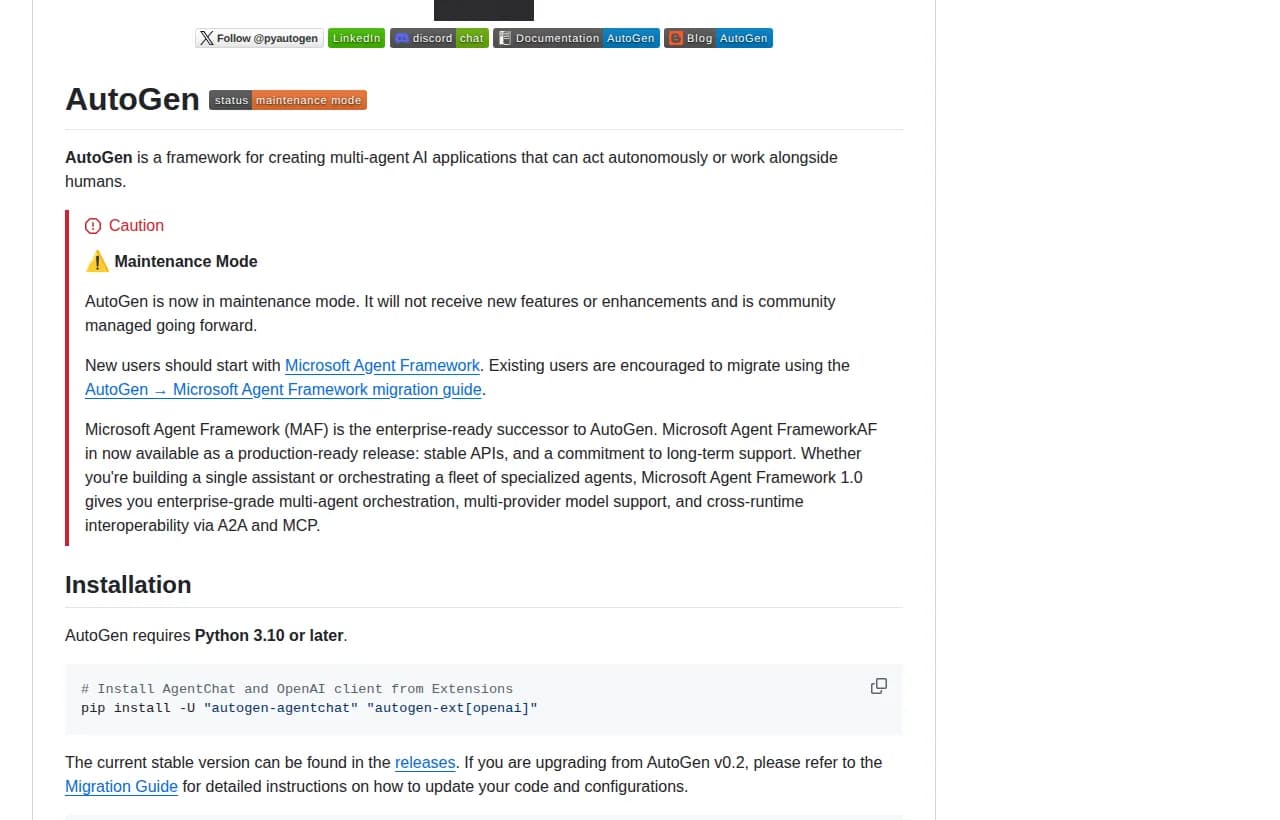
This is the fact that reframes the whole comparison. As of late 2025, the AutoGen repository carries an official maintenance mode banner: no new features, community-managed from here, and new users are pointed to the Microsoft Agent Framework. That framework merges AutoGen's orchestration research with Semantic Kernel's production foundations into a single, enterprise-supported successor.
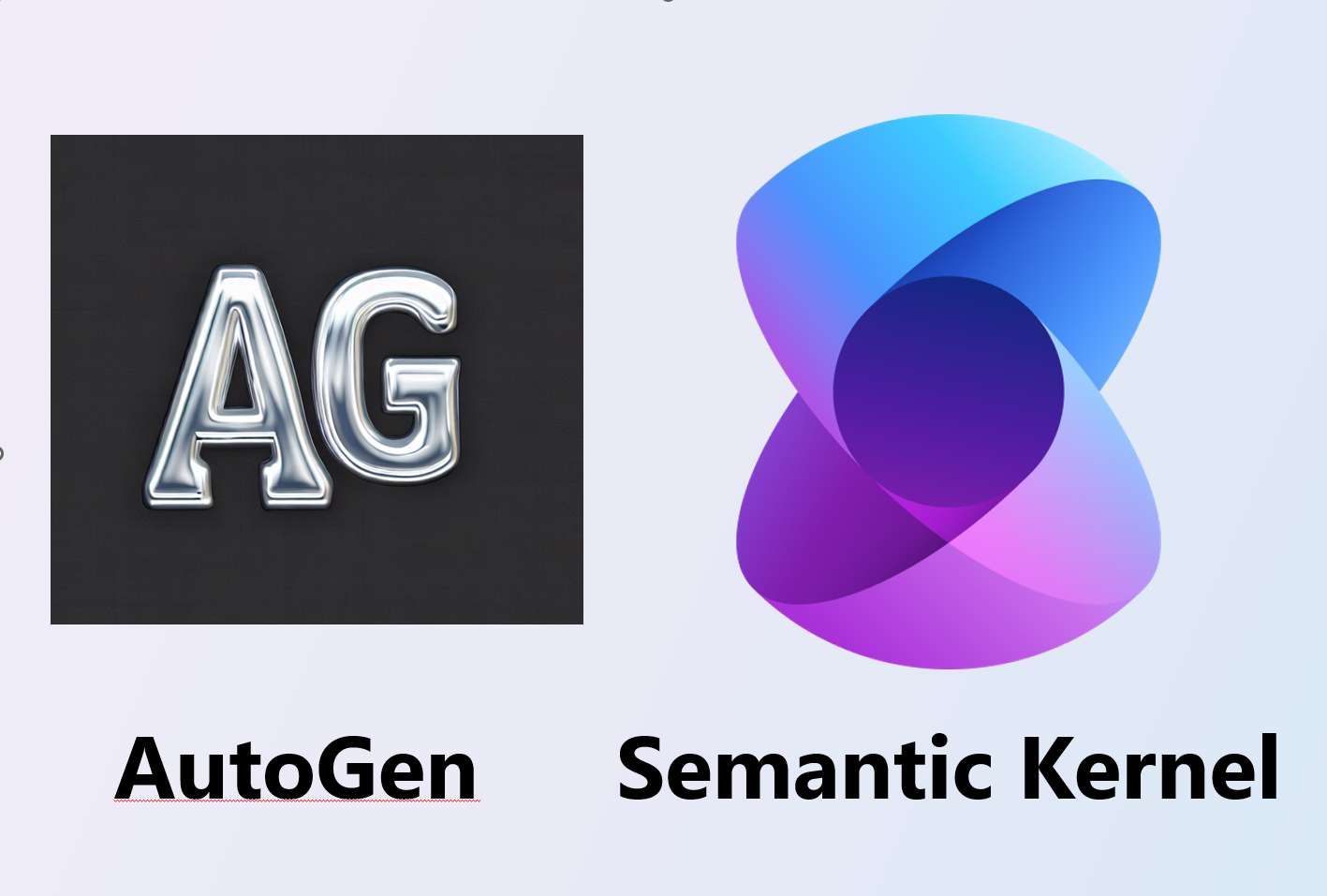 Microsoft’s Agentic AI Frameworks: AutoGen and Semantic Kernel | Microsoft Agent FrameworkMicrosoft’s agentic AI frameworks, Semantic Kernel and AutoGen are deeply collaborating to provide the best-in-class agentic developer experience.
 Microsoft Agent Framework
What this means in practice:
- Starting fresh? You are really choosing the Microsoft Agent Framework, not classic AutoGen. Read its official docs before you commit.
- Already on AutoGen? Your code keeps working, but the roadmap now lives in the successor, and there is a migration path to follow.
- Evaluating "AutoGen vs CrewAI" today? You are comparing a framework in transition against one under active, independent development. That trajectory matters as much as any feature.
 Unpacking the Microsoft Agent FrameworkBringing together two very different ways of building AI applications is a challenging task. Has Microsoft bitten off more than it can chew?
 InfoWorld
What is CrewAI?
CrewAI takes the opposite mental model. Instead of agents chatting freely, you assemble a crew: each agent gets a role, a goal, and a backstory, you define Tasks, and a Crew runs them through a process that is either sequential or hierarchical. If you can describe a team of colleagues handing work down a line, you can describe a CrewAI setup. That intuitiveness is why beginners reach it fast.
The same task, framed as a crew:
from crewai import Agent, Task, Crew, Process

analyst = Agent(role="Support Analyst", goal="Summarize weekly tickets",
                backstory="You triage support and spot patterns.")

task = Task(description="Summarize this week's support tickets",
            agent=analyst, expected_output="A 5-bullet summary")

crew = Crew(agents=[analyst], tasks=[task], process=Process.sequential)
crew.kickoff()
CrewAI has real enterprise traction: its open-source engine runs millions of agents a month, the company raised $18M from investors including Insight Partners with angels like Andrew Ng, and it now sells a Control Plane for governed production use. You can read the official CrewAI docs to see how Agents, Tasks, and Crews fit together.
CrewAI is no longer built on LangChain
A lot of older comparisons still repeat that CrewAI is "built on LangChain." That is out of date. CrewAI rewrote its core to remove the LangChain dependency, which was the community's single biggest complaint, and now runs as a lean, standalone framework. If a comparison article does not know this, it is describing a version of CrewAI that no longer exists. For a wider view of the standalone ecosystem, our roundup of CrewAI alternatives maps the field.
Architecture head-to-head: conversation vs role-based crews
This is the real intellectual split, and it is worth stating plainly.
AutoGen bets on emergence: give capable agents a conversation and let a good answer surface. CrewAI bets on structure: define the roles and the process, and let predictability do the heavy lifting.
Emergence is powerful when the problem is open-ended and you cannot script the steps in advance. It is a liability when you need the same input to produce the same shape of output every time, which is most of production. Structure is the reverse: less dazzling on a novel research task, far easier to test, review, and trust on a recurring business workflow.
| What you care about | AutoGen (conversation) | CrewAI (role-based) |
|---|---|---|
| Open-ended reasoning | Strong | Workable |
| Predictable, repeatable output | Harder to pin down | Its whole design |
| Onboarding speed | More primitives to learn | Fast, intuitive |
| Testability | Emergent paths vary | Defined tasks and handoffs |
| Fit for recurring business workflows | Possible with effort | Natural fit |
Neither is "better." They are tuned for different problems. If you want to go deeper on how agents are wired together internally, our guide to AI agent architecture breaks down the patterns underneath both.
Orchestration, state, and memory
AutoGen coordinates work through conversation. A group chat manager selects which agent speaks next, agents pass messages and nested chats, and the "state" of the work lives in the evolving transcript. It is flexible, and it can loop or wander if you do not constrain it.
CrewAI coordinates through an explicit process. A sequential crew runs tasks in order; a hierarchical crew adds a manager agent that delegates to workers and consolidates results. It ships built-in memory so agents share context across a run without you plumbing it by hand.
The deeper you go into multi-agent coordination, the more this stops being a framework detail and starts being an operational one. Our primer on AI agent orchestration covers the coordination patterns both frameworks lean on, and where they break down at scale.
AI Agent Orchestration: How to Coordinate Multi-Agent Systems
AI agent orchestration coordinates multiple reasoning agents toward one goal. Learn the four patterns, the architecture, and how to run a multi-agent system with no code.
Human-in-the-loop and control
Both frameworks nod at human oversight, and both stop at the code layer.
- AutoGen offers the
UserProxyAgent, which can pause and request human input at defined points in a conversation. - CrewAI supports a human input step inside a task, so a person can review before the crew moves on.
Useful primitives, but be honest about what they are: callbacks in your code, not a production approval system. Neither ships an approval queue, role-based access, a review UI a non-engineer can use, or an audit trail of who approved what and when. When an agent is about to send a client email, move money, or touch a production system, "add a Python callback" is not a governance strategy. This is exactly where teams get burned, and it is framework-agnostic. You can read more in our guide to human-in-the-loop AI agents.

Production readiness: which is safe to ship?
Raw, open-source agents of either flavor are hard to run unattended, because the failure modes are not in the framework, they are in operations: silent errors, runaway loops, ballooning token bills, and no record of what happened.
- AutoGen's production future is the Microsoft Agent Framework, which leans toward Azure and .NET shops that want Microsoft-grade support and stable APIs.
- CrewAI answers with CrewAI Enterprise and its Control Plane: tracing, RBAC, audit trails, and human approval gates sold as a layer on top of the open-source core.
Both are telling you the same thing by what they sell: the framework is the cheap part, and governing agents in production is the expensive part. Whatever you build on, you will need observability and control around it. Our field guide to deploying AI agents walks through what "production-ready" actually requires.
Community, licensing, and ecosystem
Both projects are open source, popular, and Python-first.
| AutoGen | CrewAI | |
|---|---|---|
| GitHub stars | ~60.4k | ~57.1k |
| Forks | ~9.1k | ~8.2k |
| License | Code MIT (docs CC-BY-4.0) | MIT |
| Backing | Microsoft | $18M raised, CrewAI Inc. |
| Active development | Maintenance mode | Standalone, active |
| Enterprise offering | Microsoft Agent Framework | CrewAI Enterprise / Control Plane |
The headline number is not the star count, which is close. It is the direction of travel: one project is consolidating into a successor, the other is compounding as an independent platform.
CrewAI vs AutoGen: which should you choose?
Skip the feature-by-feature agonizing and match the tool to your situation.
That last option matters. If your real question is control and determinism rather than conversation vs crews, the comparison you actually want is LangGraph vs CrewAI, which pits graph-based control against role-based structure.
LangGraph vs CrewAI: How to Choose an AI Agent Framework (2026)
CrewAI vs LangGraph compared across architecture, state, human-in-the-loop, observability and production readiness, plus when to pick each and how to govern both in production.
The part both frameworks leave to you: governance
Step back and look at what just happened in a single year. AutoGen, a Microsoft-backed framework, went into maintenance mode. CrewAI tore out its foundational dependency and re-architected. The frameworks themselves are moving targets.
That is the strongest argument against coupling your oversight to any one of them. What does not change, no matter which framework wins next year, is the need to approve the actions that matter, see exactly what your agents did, and prove it later. That layer is missing from AutoGen and from CrewAI's open-source core alike.
This is where Rerun fits, and it is deliberately not a fourth framework. Rerun is the framework-agnostic layer you put on top of whatever you built with AutoGen, CrewAI, LangGraph, or plain code. You get an autonomous AI workforce you can actually watch work:
- Human-in-the-loop approvals that are real gates, not code callbacks. Before a payment or a client email, the agent pauses and asks, and you approve from the app or from Slack.
- Live observability, a dashboard anyone on your team can read, showing every action, tool call, and token as it happens.
- A durable audit trail for debugging and compliance, so "what did the agent do and who approved it" always has an answer.
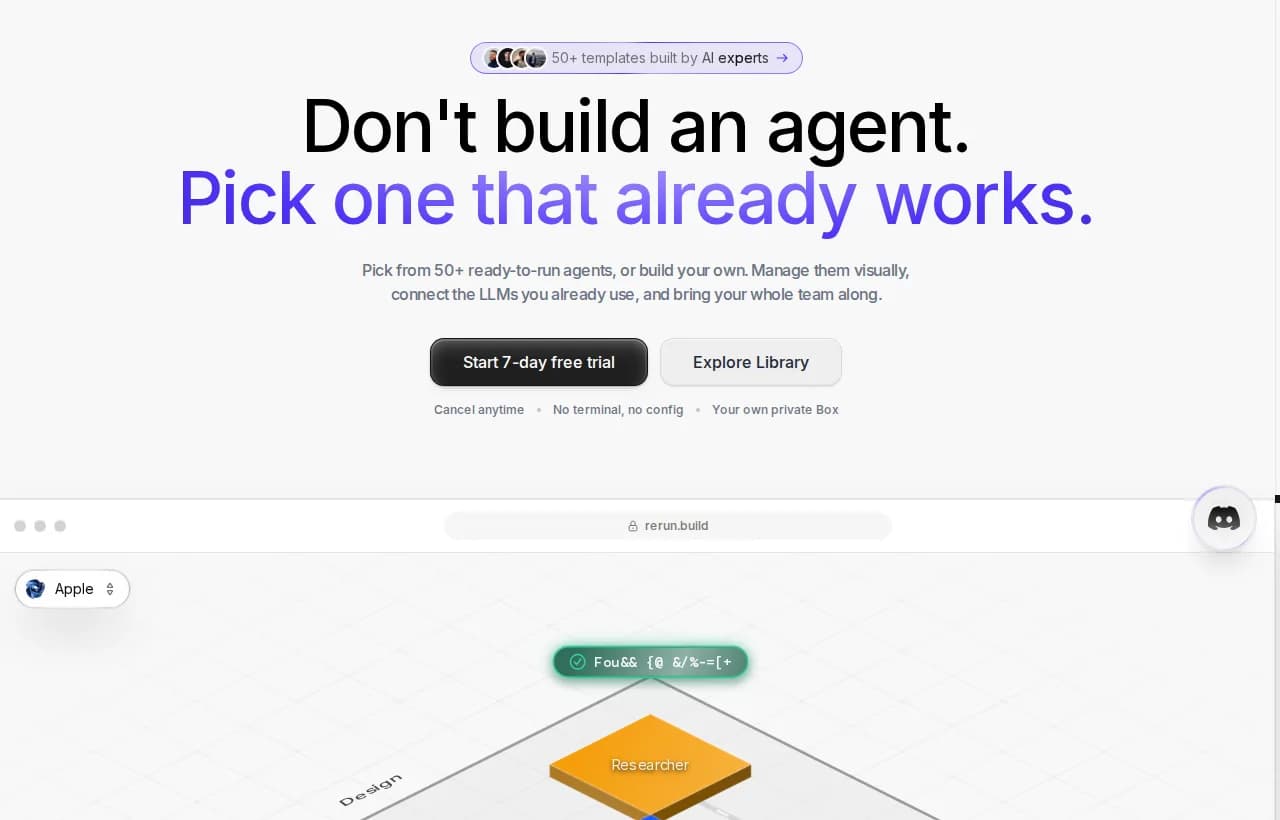
To be clear about what Rerun is not: it is not Zapier, Make, or n8n. Those are linear flowchart builders for deterministic triggers and actions. And it is not a chatbot. A chatbot answers; an agent acts. Rerun governs the non-deterministic, autonomous multi-agent systems that AutoGen and CrewAI produce, precisely because their behavior is not a fixed flowchart and needs oversight, approvals, and a record.
Here is the kind of governance brief you wrap around an agent, regardless of the framework underneath:
{
  "agent": "invoice-chaser",
  "built_with": "CrewAI or AutoGen, does not matter",
  "autonomy": "act on its own between checkpoints",
  "require_human_approval": ["send external email", "issue refund", "charge a card"],
  "observability": ["log every tool call", "track tokens and cost per run"],
  "audit": "immutable trail of actions and approvals",
  "escalate_if": "confidence < 0.7 or action not in allow-list"
}
Where each framework compares against a governance layer:
| Capability | AutoGen | CrewAI (OSS) | Rerun |
|---|---|---|---|
| Build multi-agent systems | Yes | Yes | Runs agents, not a framework |
| Real approval gates with a UI | No | No | Yes |
| Live dashboard anyone can read | No | No | Yes |
| Audit trail of actions and approvals | No | Enterprise add-on | Yes |
| No flowcharts to wire | Yes | Yes | Yes |
| Approve from Slack | No | No | Yes |
| Works on top of any framework | No | No | Yes |
The bottom line
AutoGen and CrewAI were built for two philosophies: conversational emergence versus structured role-based crews. In 2026 the tiebreaker is trajectory. AutoGen's ideas live on inside the Microsoft Agent Framework, which is the right call if you are an Azure or .NET shop. CrewAI is the stronger standalone bet for Python teams shipping structured automations they can reason about.
But the framework choice is reversible, and honestly, less important than it feels. The durable investment is the governance layer that keeps your agents approved, observable, and accountable no matter what you build them with. Pick your framework, then put something around it that lets you sleep at night.
Build an agent you can watch work, free for 7 days, and see what "in control" actually feels like.
Frequently asked questions
Is AutoGen better than CrewAI?
Neither is universally better; they solve different problems. AutoGen is built for conversational, emergent multi-agent collaboration and shines on open-ended research and code generation. CrewAI is built for structured, role-based crews that are easier to test and reason about in production. Note that AutoGen is now in maintenance mode, with Microsoft steering new projects to the Microsoft Agent Framework, while CrewAI is actively developed and standalone.
What is the difference between CrewAI and AutoGen?
The core difference is philosophy. AutoGen agents collaborate by talking to each other, so behavior emerges from conversation. CrewAI assembles a crew where each agent has a role, goal, and task, and a defined sequential or hierarchical process runs them. AutoGen favors flexibility; CrewAI favors predictability and fast onboarding.
Is AutoGen deprecated?
Not deprecated, but in maintenance mode. The official AutoGen repository states it will receive no new features and is community-managed going forward, and it directs new users to the Microsoft Agent Framework, its enterprise-ready successor that merges AutoGen with Semantic Kernel. Existing AutoGen code keeps working, but new development should target the successor.
Is CrewAI still built on LangChain?
No. CrewAI rewrote its core to remove the LangChain dependency and now runs as a lean, standalone framework. Older comparison articles that describe CrewAI as built on LangChain are out of date.
Can you use AutoGen and CrewAI together?
You can, though most teams pick one for a given project to avoid complexity. What is more useful is putting a framework-agnostic governance layer on top of whichever you choose, so approvals, observability, and audit stay consistent no matter what built the agents. That is the role Rerun plays.
Which is better for production, AutoGen or CrewAI?
For structured, repeatable business workflows in Python, CrewAI is usually the stronger standalone bet. For Azure or .NET shops that want Microsoft support, the AutoGen lineage via the Microsoft Agent Framework fits better. Either way, the framework alone is not production-ready. You need approval gates, observability, and an audit trail around it, which neither open-source core provides out of the box.

Written by
Clément Janssens