LangGraph vs CrewAI: How to Choose an AI Agent Framework (2026)
CrewAI vs LangGraph compared across architecture, state, human-in-the-loop, observability and production readiness, plus when to pick each and how to govern both in production.
Gartner predicts that over 40% of agentic AI projects will be canceled by the end of 2027, citing escalating costs, unclear business value, and inadequate controls.
Notice what is not on that list: the framework you picked. Most teams debating CrewAI vs LangGraph are answering the wrong question first. The framework decides how your agents think. It does not decide whether you can safely ship them.
This guide compares LangGraph and CrewAI honestly, across the eight dimensions that actually change your decision, then shows you the part both leave unsolved: governing agents once they touch production.
In a hurry? Spin up an agent you can watch work, free.
TL;DR: which should you pick?
- Choose LangGraph if you need deterministic, low-level control over a stateful, long-running workflow, especially with branching, loops, and audit-critical logic.
- Choose CrewAI if you want to stand up a role-based team of agents fast, with minimal boilerplate and a gentle learning curve.
- They are both legitimate. CrewAI has more GitHub stars, LangGraph has deeper state control. Neither is objectively "better."
- Neither is a governance system. Both ship some in-framework human-in-the-loop and tracing, but neither gives you a single, framework-agnostic control plane for approvals, audit, and cross-agent observability in production.
- The third option people miss is not a fourth framework. It is a governance layer you add on top of whichever one you choose.

Quick-reference comparison
| Dimension | LangGraph | CrewAI |
|---|---|---|
| Architecture | Stateful graph / state machine | Role-based crews + Flows |
| Learning curve | Steeper, explicit | Fast to first demo |
| State & memory | Checkpointing, replay | Built-in memory, less granular |
| Human-in-the-loop | Native interrupts | Human-input flags, manager review |
| Observability | Inspectable state + LangSmith | Higher abstraction, own tracing |
| Production readiness | Determinism, durability | Rapid delivery, watch token cost |
| Community (GitHub) | ~38.7k stars | ~56.5k stars |
| Best fit | Complex, controllable workflows | Fast multi-agent prototypes |
Star counts are live from GitHub as of August 2026 and move quickly. Treat them as a signal of momentum, not a verdict.
What is LangGraph?
LangGraph is a low-level orchestration framework for building stateful, multi-actor agent applications. It comes from LangChain Inc. but runs independently of the wider LangChain framework. You model your agent as a graph: nodes are processing steps, edges are transitions, and a central persistence layer tracks state across the whole run.
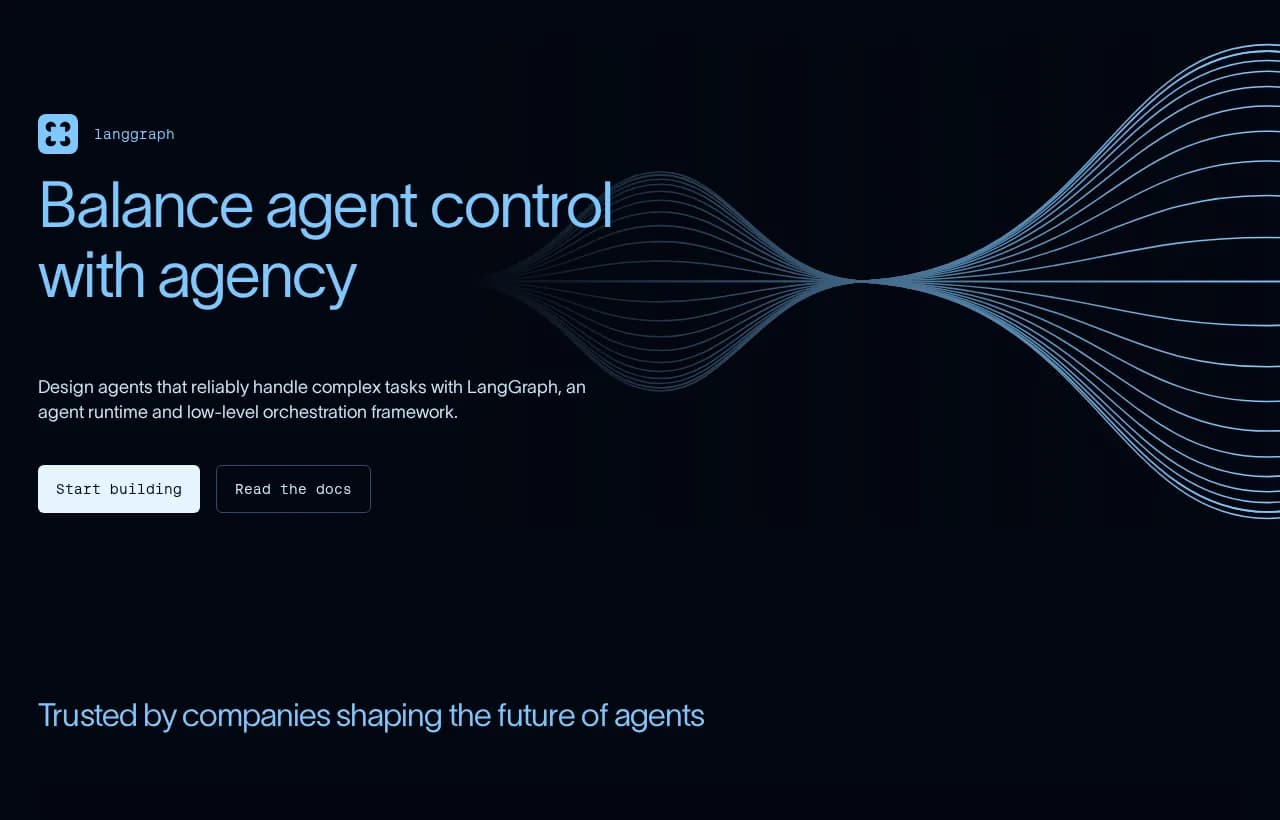
The design borrows from distributed computing models, so you get explicit control flow: conditional branches, loops, parallel paths, and checkpoints where a human can step in. Per IBM's framework review, LangGraph already powers production agents at enterprises like LinkedIn, Uber, Klarna, and GitLab.
Who it is for: teams that need fine-grained, auditable control over complex logic, and teams already invested in LangChain and LangSmith.
What is CrewAI?
CrewAI is a high-level framework for orchestrating role-playing, autonomous agents. You give each agent a role, a goal, and a set of tools, then let the "crew" collaborate on a task. For more structure, CrewAI Flows add event-driven, stateful control on top of the crews.
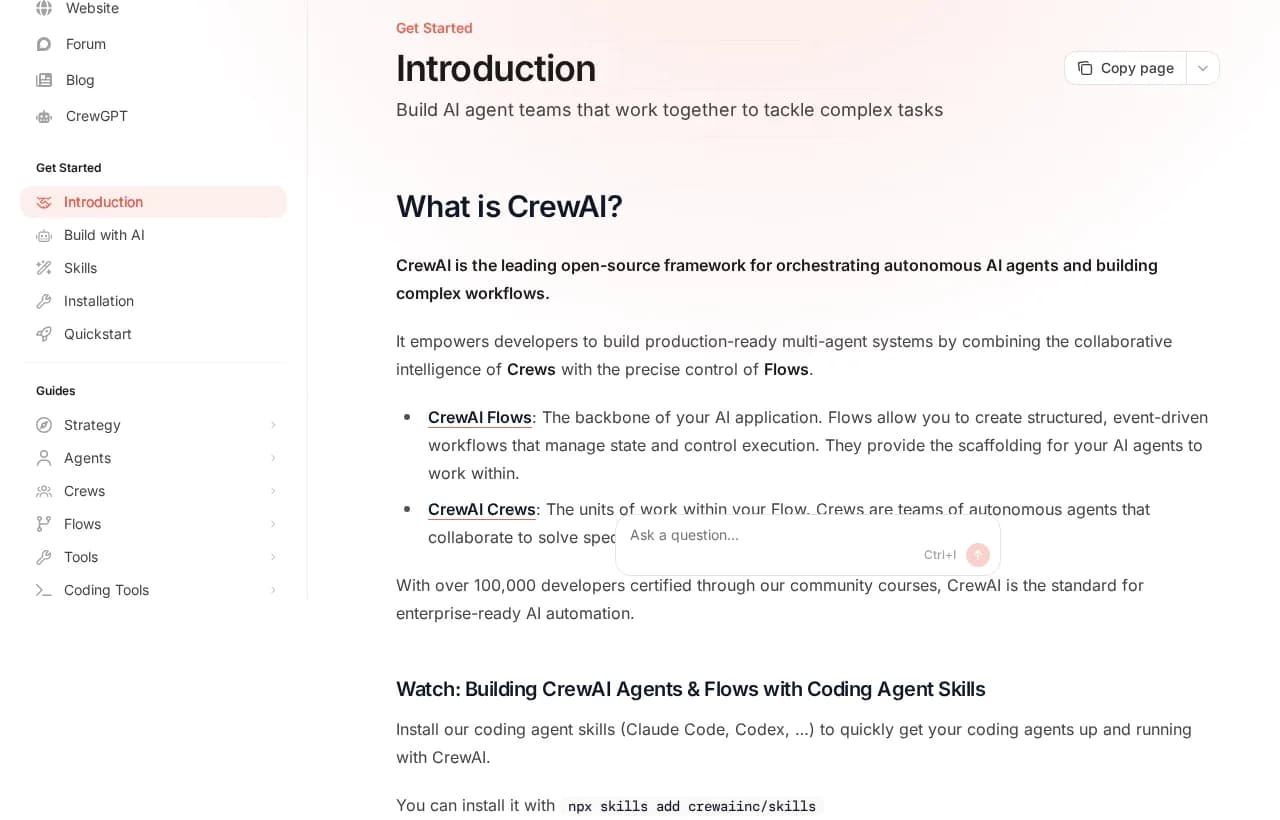
One common misconception worth clearing up: CrewAI is not built on top of LangChain. It was developed from the ground up as a standalone framework with no dependency on other agent frameworks. CrewAI markets itself around a large community, with more than 100,000 developers certified through its courses.
Who it is for: teams that want a working multi-agent prototype quickly, with role-based structure and minimal setup.
Head to head: the 8 dimensions that actually matter
1. Architecture model
LangGraph gives you a state machine. You explicitly define how control moves between steps, which makes non-linear logic (retries, branches, escalations) first-class. CrewAI gives you a team metaphor. You describe who does what, and the framework handles coordination. Graphs favor control, crews favor speed of expression.
2. Learning curve and developer experience
CrewAI is faster to a first working demo. A few lines of Python and some YAML config, and you have a crew running. LangGraph asks for more upfront: you think in nodes, edges, and state schemas before anything runs. The payoff is that nothing is hidden.
The tradeoff is old as software itself. CrewAI optimizes for time to first result. LangGraph optimizes for control over the hundredth result, the one running unattended in production at 3 a.m.
3. State and memory
This is LangGraph's strongest axis. Its central persistence layer supports checkpointing and replay, so you can pause a run, inspect the exact state, and resume or rewind it. CrewAI ships built-in memory (short-term, long-term, entity) and manager roles, but gives you less granular control over the underlying state.
4. Human-in-the-loop
LangGraph has native interrupts: the graph pauses at a checkpoint, waits for human input or approval, then continues from exactly where it stopped. CrewAI supports human input flags on tasks and hierarchical manager review. Both are real, and both stop at the framework boundary. Neither is a company-wide approval system with an audit trail, which is a different job. If you are new to this pattern, our guide to human-in-the-loop AI agents breaks down where it matters most.
5. Observability and debugging
LangGraph's inspectable state plus LangSmith tracing make it straightforward to see what happened at every transition. CrewAI's higher abstraction is more pleasant to write but can make non-linear debugging harder, though it has its own tracing and enterprise observability. Whichever you use, treat agent observability as a requirement, not an add-on.
6. Production readiness
LangGraph is often favored for mission-critical workflows because determinism, durability, and replay reduce the number of ways a run can silently go wrong. CrewAI is favored for rapid delivery. One caution with any autonomous loop: without hard step and cost limits, agent loops can quietly run up an API bill. Set ceilings before you ship.
7. Community and ecosystem
Both are large, active, MIT-licensed, and moving fast. As of August 2026, CrewAI carries roughly 56,500 GitHub stars and LangGraph roughly 38,700. Stars measure attention, not fit. LangGraph benefits from the surrounding LangChain and LangSmith ecosystem; CrewAI benefits from a standalone, self-contained design.
8. Cost and token efficiency
An explicit graph can avoid redundant LLM calls, because you control exactly when the model is invoked. Role-based crews are convenient but can trigger more back-and-forth between agents. Neither is automatically cheaper; the discipline of your design matters more than the logo.
The decision in one line
If your workflow is a tangle of branches, retries, and stateful steps that must be auditable, LangGraph rewards the extra effort. If your workflow is a team of clear roles working mostly in sequence and you want it running this week, CrewAI gets you there faster. When both fit, pick the one your team can actually operate day to day, then plan for the governance layer before you go live.
For a fuller list of independent, third-party takes on both frameworks, IBM's engineering team published a detailed side-by-side that is worth reading alongside this one.
 Comparing AI agent frameworks: CrewAI, LangGraph, and BeeAIThis article provides a comprehensive analysis of the capabilities, features, and implementation considerations of leading AI agent frameworks focused on multi-agent collaboration and orchestration. Based on official documentation and reliable sources, this article provides a detailed comparison of CrewAI, LangGraph, and IBM's BeeAI.
 IBM Developer
When to choose LangGraph
- You are building compliance-sensitive or financial workflows where every step must be auditable.
- Your logic is genuinely non-linear: branching, loops, and conditional escalation.
- You need long-running, stateful systems with checkpoint and replay.
- Your team already lives in the LangChain and LangSmith ecosystem.
When to choose CrewAI
- You want a proof of concept running this week, not next month.
- Your workflow maps cleanly to roles: a researcher, a writer, a reviewer.
- Your pipeline is mostly sequential or hierarchical rather than a tangle of branches.
- Your team is small and optimizing for speed over fine-grained control.

The question both frameworks leave unanswered
Here is the honest part no comparison article likes to admit. Once you have picked LangGraph or CrewAI and built something that works, you inherit a second job that has nothing to do with the framework: running that agent safely in front of real customers, real money, and real data.
Why a framework is not a control plane
A framework decides how one agent reasons. A control plane decides what your whole fleet is allowed to do. Those are different problems:
- Approvals: a single place where a human signs off on risky actions, no matter which framework triggered them.
- Audit trail: a durable record of every action an agent took, for accountability and compliance.
- Cross-framework observability: one dashboard for every agent, whether it was built in LangGraph, CrewAI, or something else next quarter.
Both frameworks give you pieces of this inside their own boundary. Neither gives you the boundary itself. As you move toward production, our walkthrough on how to deploy AI agents covers the operational gaps in detail.
This is not a Zapier flowchart, a chatbot, or glue code
Be clear about the category you are in, because it is easy to reach for the wrong tool:
- Zapier, Make, and n8n are deterministic trigger-to-action automations. Great for wiring apps together, but there is no autonomous reasoning and no agent to govern. If your problem fits a flowchart, use a flowchart.
- Chatbots answer. Agents act. A chatbot has no multi-agent task decomposition, no durable state, and no approval gates.
- DIY glue code gets a demo working, then leaves you owning retries, state, observability, approvals, and audit by hand, forever.
The category here is autonomous agents that reason and act, plus the controls to run them safely. That is a real gap, and it is where a governance layer earns its place.
Where Rerun fits: the governance layer on top
Rerun is not a fourth framework. It does not compete with LangGraph or CrewAI on how agents reason. It sits on top of whichever framework you chose and adds the production controls a framework alone does not give you.
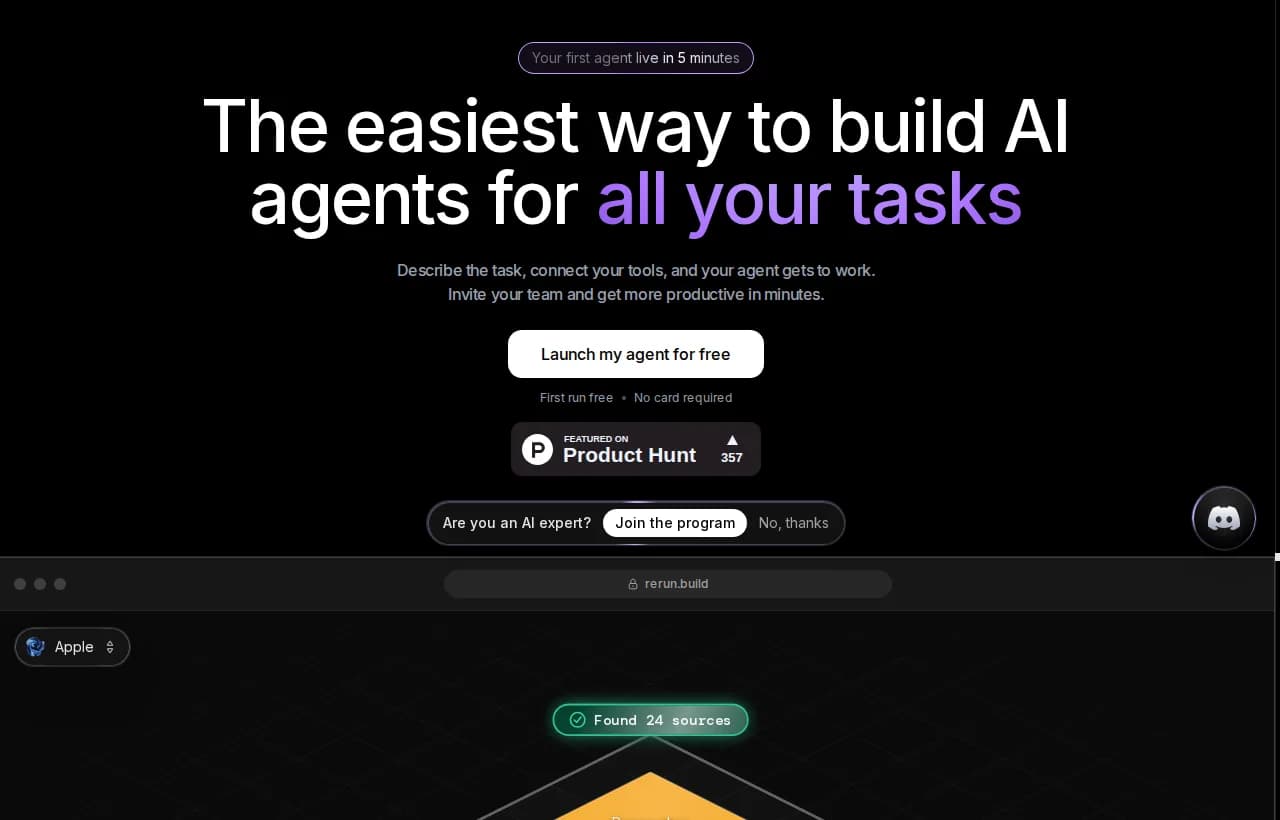
Three concrete things Rerun adds, framework-agnostic:
- Human-in-the-loop approvals that gate risky actions behind a human sign-off, approved from the app or Slack, resuming exactly where the agent paused.
- Observability over agents regardless of the framework underneath, with live logs, token usage, and run history on a dashboard anyone can read.
- A governance and audit layer so every action is visible and accountable, not buried in a terminal only one engineer understands.
Where LangGraph and CrewAI are code-first frameworks for developers, Rerun is a no-code platform for the people who need the work done and the oversight that comes with it. You watch the work happen instead of hoping it went fine.
| Capability | LangGraph | CrewAI | Rerun |
|---|---|---|---|
| Agent reasoning framework | Yes | Yes | Runs on top, not a framework |
| No-code, no terminal | No | No | Yes |
| Centralized approvals (app + Slack) | In-framework only | In-framework only | Yes |
| Live dashboard anyone can read | Via LangSmith | Own tracing | Yes |
| Framework-agnostic audit trail | No | No | Yes |
| Dedicated private cloud | No | No | Yes |
Whichever framework you choose, the brief you hand your team looks something like this:
{ "goal": "Run the agent in production safely", "framework": "LangGraph or CrewAI", "must_have": ["human approval before any payment or external email", "full audit trail of every action", "live dashboard for non-engineers", "hard step and cost limits"], "owner": "ops, not just engineering" }Want the deeper picture of how agents coordinate before you add oversight? Our primer on agent orchestration is a good next read.
AI Agent Orchestration: How to Coordinate Multi-Agent Systems
AI agent orchestration coordinates multiple reasoning agents toward one goal. Learn the four patterns, the architecture, and how to run a multi-agent system with no code.
LangGraph vs CrewAI vs the alternatives
The field is bigger than two names, and the reversed query "crewai vs langgraph" often pulls in a third or fourth option. A quick orientation:
| Tool | Agent framework? | Best for |
|---|---|---|
| AutoGen / Microsoft Agent Framework | Yes | Conversational multi-agent research, Microsoft-centric stacks |
| OpenAI Agents SDK | Yes | Lightweight agents tightly coupled to OpenAI models and tools |
| Google ADK | Yes | Agent development inside the Google Cloud ecosystem |
| n8n | Automation platform | Wiring apps together, not autonomous reasoning |
If your shortlist keeps growing, the deciding factor is rarely the framework's raw power. It is which one your team can operate, observe, and govern without turning every launch into a risk. For the underlying design tradeoffs, see our breakdown of AI agent architecture.
Your pre-production checklist
Before you put any agent, LangGraph or CrewAI, in front of real users:

The bottom line
Pick CrewAI for speed to a role-based prototype. Pick LangGraph for deterministic control over stateful, audit-critical workflows. Both are solid, and you can even use one inside the other. But the framework is only half the decision. The other half is whether you can watch the work, approve the risky parts, and prove what happened. That is the layer Rerun adds on top, no matter which framework you chose.
Stop guessing whether your agents did the right thing. Watch them work, and approve what matters.
Frequently asked questions
Is CrewAI better than LangGraph?
Neither is objectively better. CrewAI is faster to a working multi-agent prototype thanks to its role-based design and gentle learning curve. LangGraph gives you deeper, low-level control over state, branching, and human-in-the-loop checkpoints, which matters for complex or audit-critical workflows. Pick by your control needs and team, not by popularity.
Is CrewAI built on top of LangChain?
No. CrewAI was developed from the ground up as a standalone framework with no dependency on LangChain or other agent frameworks. LangGraph, by contrast, comes from LangChain Inc. but can also run independently of the wider LangChain framework.
Which multi-agent framework is best?
It depends on the job. Choose LangGraph for stateful, controllable, auditable workflows, and CrewAI for fast role-based crews. AutoGen, the OpenAI Agents SDK, and Google ADK are strong within their own ecosystems. Whichever you choose, add a governance layer for approvals, observability, and audit before production.
What is better than CrewAI?
There is no single winner. LangGraph offers more granular state control, AutoGen suits conversational multi-agent research, and the OpenAI Agents SDK is lightweight for OpenAI-centric stacks. The more useful question is which framework your team can operate, observe, and govern safely, which is where a control layer like Rerun adds value on top.
Can you use LangGraph and CrewAI together?
Yes. They are not mutually exclusive. Teams sometimes use CrewAI for fast role-based crews and LangGraph where they need explicit, stateful control, or run one inside the other. A framework-agnostic governance layer lets you monitor and approve actions across both from one place.
Is LangGraph production-ready?
Yes. LangGraph is used in production by major enterprises including LinkedIn, Uber, Klarna, and GitLab, according to IBM's framework review. Its checkpointing, replay, and deterministic control flow suit mission-critical workflows. Production readiness still depends on adding approvals, cost limits, and observability around the framework itself.

Written by
Clément Janssens