The Best OpenClaw Alternatives in 2026 (Safer, No-Code, Human-in-the-Loop)
OpenClaw is powerful, but it runs with full system access and no approval step. Here are the best OpenClaw alternatives in 2026, ranked for safety, visibility, and no-code use.
OpenClaw showed a lot of people what an AI agent can really do: not chat, but act. Run commands, read files, send messages, get real work done on your own machine. The catch is what comes with that power. OpenClaw runs locally with broad system access and no built-in approval step, so when the model misfires or a poisoned web page slips it a bad instruction, there is nothing standing between the agent and your files.
That single design choice is why so many people search for an OpenClaw alternative. It is not that the idea is wrong. It is that an agent with the keys to your machine and no seatbelt is a hard thing to trust with real work.
This guide ranks the best OpenClaw alternatives in 2026, scored on the things a leaver actually cares about: a real safety model, human approvals before consequential actions, visibility into what the agent did, and whether you need to be a developer to run it at all.
In a hurry?

The security problem you are actually trying to solve
Before the list, it helps to name the wall people hit with OpenClaw, because it is the same wall in almost every "is this safe?" thread.
An autonomous agent is only as safe as the permissions around it. The industry has a name for the two failure modes that bite hardest. The OWASP Foundation ranks prompt injection as the number-one risk for LLM applications (LLM01), and excessive agency as LLM06: giving a model more power to act than it can safely be trusted with. You can read the full list in the OWASP Top 10 for LLMs, and it reads like a checklist of everything a wide-open local agent gets wrong.
LLMRisks Archive OWASP Gen AI Security Project
OpenClaw is powerful precisely because it has high agency and runs close to the metal. That is also the risk. A good alternative does not remove the agent's ability to act. It puts a control layer around it: least-privilege access, a human checkpoint before anything sensitive, and a record of what happened. If you want the deeper version of this argument, we wrote a whole piece on AI agent security.
Here is what to grade every alternative on:
The best OpenClaw alternatives at a glance
| Tool | Best for | Approvals | See work live | No-code |
|---|---|---|---|---|
| Rerun | Teams that want agents to act safely | Yes | Yes | Yes |
| Claude Code | Developers writing code in a terminal | Partial | No | No |
| Cursor | Coding inside an editor | Partial | No | No |
| Manus | Hands-off cloud research and docs | No | Partial | Yes |
| n8n | Deterministic if-this-then-that flows | No | Partial | Partial |
| Zapier / Make | Connecting apps with triggers | No | Partial | Yes |
| OpenClaw forks (NanoClaw, ZeroClaw…) | Open-source, self-hosted control | No | No | No |
Named quickly, the best OpenClaw alternatives in 2026 are:
- Rerun, the safest pick for teams: autonomous agents that ask before acting, watched live, no code.
- Claude Code and Cursor, if the job is really writing software.
- Manus and Claude Cowork, for hands-off cloud tasks.
- Lindy and Vellum, for hosted business and workflow agents.
- NanoClaw, ZeroClaw, IronClaw and the other OpenClaw forks, if you want to stay open-source and self-hosted.
- n8n, Zapier and Make, only if you need fixed workflows, not a real agent.
The short version: if you want a real agent that acts but asks first, and you do not want to babysit a terminal, Rerun is the pick. The rest win in narrower lanes. Here is the full breakdown.
1. Rerun: the safest OpenClaw alternative for real work
Rerun is the closest thing to "OpenClaw, but you can actually trust it with your business." You describe a job in plain language, connect your tools, and the agent gets to work on its own always-on machine. The difference is everything around the agent.

Where OpenClaw hands the model the keys and hopes for the best, Rerun is built around control:
- Human-in-the-loop approvals. Before anything sensitive, a payment, an email to a client, a refund, the agent stops and asks. You approve from the app or straight from Slack, and it resumes exactly where it paused. This is the seatbelt OpenClaw does not have.
- Least-privilege by default. Agents get scoped access through connectors, not a blanket key to your whole machine. That directly answers the OWASP excessive-agency problem instead of ignoring it.
- You watch it work. Every run, token, and handoff shows up live on a dashboard anyone on the team can read. No black box, no scrolling a terminal to guess what happened. If observability is your sticking point, that is the whole thesis of the platform.
- No code, no server. No Node install, no VPS to keep online, no API keys scattered across config files. If you can describe the task, you can build the agent.
Under the hood you still get the power that made OpenClaw appealing: it runs on Claude, ChatGPT, Gemini and more, connects 110+ tools plus any MCP server, keeps memory across runs, and can schedule itself to wake up on a trigger. You bring your own model subscription if you want, with no usage caps.
{ "goal": "Chase overdue invoices without ever sending money on my behalf", "tools": ["Stripe", "Gmail", "Slack"], "rules": ["Draft a polite reminder for any invoice 7+ days overdue", "Ask for approval in Slack before issuing any refund or credit", "Log every action to the dashboard"] }That brief is the whole point: the agent does the tedious part on its own, but the moment money moves, a human signs off. OpenClaw makes you build that guardrail yourself, if you remember to.
Best for: solo founders and teams who want agents that take real action across their stack, with approvals and a live audit trail, and who would rather not run infrastructure.
Where OpenClaw still wins: if you specifically want a self-hosted, hackable runtime on your own hardware and you are comfortable owning every security decision yourself, that is OpenClaw's home turf.
2. Claude Code: for developers who live in the terminal
Claude Code is Anthropic's command-line coding agent. It reads your repo, writes and edits code, runs commands, and works through multi-step engineering tasks. If the reason you were using OpenClaw was to ship software, this is a sharper tool for that specific job.
It is genuinely excellent at code. It is also, like OpenClaw, a developer tool: it lives in a terminal, it acts on your local environment, and its guardrails are only as good as the ones you configure. It is not something you hand to a non-technical operator to run the business. For a wider look at this category, we compared the field in best AI coding agents 2026.
Best for: engineers who want an agent for coding specifically. Watch out for: it is a coding agent, not a general action-taking agent for operations, and there is no dashboard a stakeholder can read.
3. Cursor: the AI-native code editor
Cursor is an AI-first editor built on VS Code. It is less "autonomous agent" and more "an editor that writes alongside you," with an agent mode that can take on larger changes. Same story as Claude Code: powerful for building software, wrong tool for running your inbox, your billing, or your pipeline.
Best for: developers who want AI deeply wired into their editor. Watch out for: it is scoped to coding, and it does not run unattended work for a team.
4. Manus: hands-off cloud agent for research
Manus is a managed, cloud-based autonomous agent aimed at research, analysis, and generating documents, slides, and simple sites. Unlike OpenClaw, it runs in the cloud, so there is no local install and nothing to host.
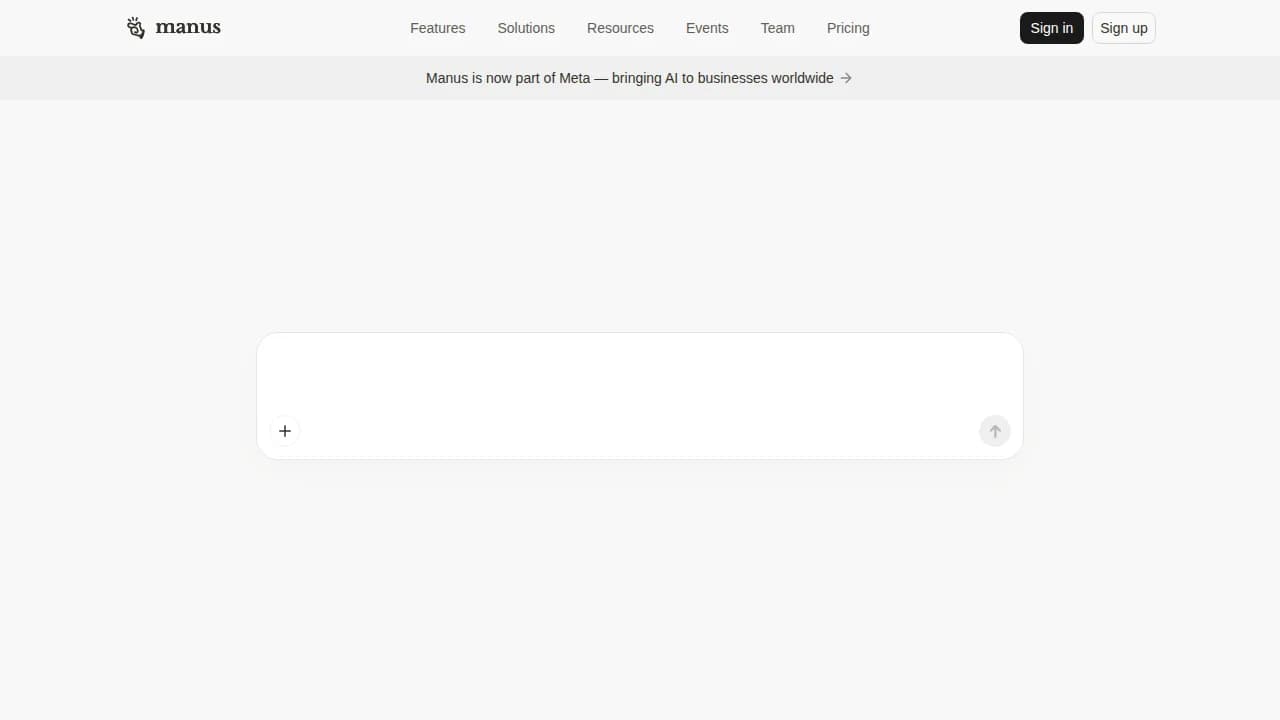
The trade is control. Manus leans toward "give it a goal and let it run," which is great for a research deliverable and less great when the task touches production systems or money, because you get limited say over each action as it happens. It is a strong pick when the output is a document, not a change to your live tools.
Best for: self-contained research and content tasks you want done hands-off. Watch out for: thin human-in-the-loop control when actions have real consequences.
Two more hosted names come up in the same breath. Claude Cowork is Anthropic's hosted take on a working agent, a natural look if you are already in the Claude ecosystem. Lindy and Vellum lean toward business and workflow agents you configure in a dashboard rather than a terminal. All of them remove the local-install risk that pushes people off OpenClaw, and all of them ask you to trust their level of per-action control, which is exactly the axis to compare them on.
5. n8n: powerful, but it is a workflow tool, not an agent
Here is where the category gets muddy, so let us be precise. n8n is a workflow automation platform. You wire nodes into a flowchart: when this happens, do that, then that. It is flexible and self-hostable, and it has bolted on AI nodes.
But a flowchart is not an agent. n8n executes the branches you drew in advance. It does not reason about a goal, adapt when reality does not match the diagram, or decide what to do next. The moment the situation is not one you pre-drew, it stops being useful. People leaving OpenClaw usually want the opposite: an agent that figures out the steps, not a canvas where they hand-wire every one.
A workflow does exactly what you drew. An agent does what the goal needs. The first breaks the day reality changes. The second adapts.
Best for: deterministic, repeatable pipelines with well-known steps. Watch out for: it cannot replace an autonomous agent, and complex flows become a maintenance burden.
6. Zapier and Make: connectors, not colleagues
Zapier and Make are the classic no-code automation tools. They are brilliant at moving data between apps on a trigger: new row here, send a message there. If your real need was integration plumbing, they do it well and without code.
They are not agents either. There is no reasoning, no judgment, no ability to handle a task that was not scripted in advance, and no approval step for consequential actions because they are not making consequential decisions in the first place. This is the difference we dug into in AI agent vs chatbot: tools that respond to triggers versus systems that pursue a goal.
Best for: simple app-to-app automations with fixed logic. Watch out for: they hit a ceiling the instant a task needs actual reasoning.
7. The open-source OpenClaw forks: NanoClaw, ZeroClaw, IronClaw and friends
Search "OpenClaw alternative" and most lists point you straight at OpenClaw's own family: the open-source forks. If you want to stay open-source and self-hosted, this is the crowd you will meet. Each one takes the same core idea and optimizes a different corner of it.
| Fork | Commonly positioned for |
|---|---|
| NanoClaw | Container-isolated local execution |
| IronClaw | Capability-based / sandboxed security |
| ZeroClaw, PicoClaw, NullClaw | Lightweight, minimal runtimes |
| NemoClaw | Heavier, enterprise-flavored deployments |
| Hermes Agent, Nanobot | Self-improving skills and MCP-first setups |
They are genuinely useful projects, and a couple of them (the sandboxed ones especially) take security more seriously than the original. But read the list again and the pattern is clear: they hand you a runtime and the freedom to build anything, and they also hand you the entire security, hosting, and observability problem. Least privilege, approvals, audit logs, keeping the thing online, most of that is still yours to build or go without. That is exactly the position OpenClaw leavers are trying to escape. If you are weighing one fork in particular, our breakdown of the best Hermes AI alternative options applies the same safety lens to Hermes Agent.
If you have the engineering time and you want maximum control, this family is legitimately powerful, and the safest OpenClaw alternative here is whichever fork sandboxes the agent hardest. If you are here because you wanted the power without owning every guardrail yourself, a fork is a lateral move, not an upgrade. We unpack the broader shift in autonomous AI agents.
Best for: engineering teams that want an open-source, self-hosted agent and will build the safety layer themselves. Watch out for: you inherit every risk on the OWASP list and every ops chore that comes with it.

OpenClaw alternatives compared
The clearest way to choose is to line up the criteria that made you leave OpenClaw in the first place.
| Capability | Rerun | OpenClaw | OpenClaw forks | Claude Code | Manus | n8n | Zapier / Make |
|---|---|---|---|---|---|---|---|
| Real autonomous actions | Yes | Yes | Yes | code only | Yes | No | No |
| Human approval before sensitive actions | Yes | No | No | Partial | No | No | No |
| Least-privilege access | Yes | No | sandboxed forks | Partial | Partial | Partial | Partial |
| Watch the work live | Yes | No | No | No | Partial | Partial | Partial |
| No code, no server | Yes | No | No | No | Yes | Partial | Yes |
| Predictable cost | Yes | No | No | Partial | Partial | Yes | Yes |
| Runs a whole business task, not just code | Yes | Yes | Yes | No | Partial | Partial | Partial |
The pattern is hard to miss. The coding tools win at coding. The workflow tools win at plumbing. Only a purpose-built agent platform gives you autonomous action plus the control layer, and among those, Rerun is the one where the safety model is the default rather than a project you take on.
How to choose in 30 seconds
- You want to ship software. Use Claude Code or Cursor.
- You want a research or document task done hands-off. Use Manus.
- You want to connect apps on fixed triggers. Use Zapier, Make, or n8n.
- You want an agent that runs real work across your tools and asks before anything risky. Use Rerun.
- You want to stay open-source on your own hardware. Stay on OpenClaw or one of its forks like NanoClaw or IronClaw.
Most people typing "OpenClaw alternative" are in that fourth bucket. They liked that OpenClaw acted. They just want it to act safely, in the open, without a server to babysit.

Best No-Code AI Agent Builders in 2026: Ranked and Tested
We tested the top no-code AI agent builders of 2026. See which tools actually let you build, deploy, and monitor autonomous agents, no code required.
Why the control layer is the whole game
It is tempting to compare these tools on raw capability. But capability was never OpenClaw's problem. The problem is that an agent powerful enough to be useful is also powerful enough to be dangerous, and the gap between those two is governance.
The NIST AI Risk Management Framework makes the same point in enterprise language: trustworthy AI is not about a smarter model, it is about the controls around it: knowing what it can do, approving what matters, and being able to trace what it did. That is precisely the layer OpenClaw leaves to you and the layer Rerun ships as the default.
An agent you cannot see is an agent you cannot trust. An agent that acts without asking is an agent that will eventually act wrong. The best OpenClaw alternative is not the one with the most power. It is the one that pairs the power with a seatbelt.
Frequently asked questions
What is the best OpenClaw alternative?
For most people leaving OpenClaw, Rerun is the best alternative. It gives you the same autonomous, action-taking agents, but with human-in-the-loop approvals before sensitive actions, least-privilege access, a live dashboard you can watch, and no code or server to manage. Claude Code and Cursor are better if your only need is writing software, Manus and Claude Cowork fit hands-off cloud tasks, and the open-source OpenClaw forks suit teams that want to self-host.
Is there an open-source OpenClaw alternative?
Yes. OpenClaw has a family of open-source forks, including NanoClaw, ZeroClaw, IronClaw, PicoClaw, NullClaw and NemoClaw, plus projects like Hermes Agent and Nanobot. Each optimizes a different corner, from container isolation to lightweight runtimes. They keep you fully self-hosted, but you still inherit the security, hosting, and observability work yourself, which is the main reason people look past them.
Is OpenClaw safe to use?
OpenClaw runs on your machine with broad system access and no built-in approval step, so its safety depends entirely on the guardrails you configure yourself. That exposes you to the top risks in the OWASP Top 10 for LLMs, especially prompt injection and excessive agency. A safer alternative adds least-privilege access, human approvals, and an audit trail by default.
What is the safest OpenClaw alternative for a team?
Rerun is built for teams that need agents to act without becoming a liability. Every agent works on the dashboard in the open, sensitive actions pause for a human to approve from the app or Slack, and access is scoped through connectors rather than a blanket key to your machine. Non-technical teammates can build and run agents without touching a terminal.
Are n8n, Zapier, or Make good OpenClaw alternatives?
Only if your real need is connecting apps on fixed triggers. n8n, Zapier, and Make are workflow automation tools: they execute branches you draw in advance. They do not reason about a goal, adapt when the situation changes, or take open-ended action the way an agent does. Most people leaving OpenClaw want an agent that decides the steps, not a flowchart they hand-wire.
Can I self-host an OpenClaw alternative?
Yes. The open-source OpenClaw forks run entirely on your own hardware, but you inherit all the security, hosting, and observability work yourself. Rerun also offers self-hosting of its engine on higher plans, so you can keep data on your own infrastructure while still getting approvals, observability, and no-code building out of the box.
How is Rerun different from OpenClaw?
OpenClaw hands the model the keys to your machine and leaves the guardrails to you. Rerun puts a control layer around the agent: least-privilege access, a human approval step before anything sensitive, and a live dashboard that shows every action. It also removes the setup burden. There is no Node install, no server to keep online, and no code required.
What should I look for in an OpenClaw alternative?
Grade each option on five things: least-privilege access instead of full access, human approval before consequential actions, the ability to see and replay what the agent did, whether a non-developer can run it, and predictable cost. These are the exact points where a wide-open local agent falls short.

Written by
Clément Janssens