Hermes vs OpenClaw (2026): Honest Comparison + When to Skip Self-Hosting Entirely
An honest, head-to-head comparison of Hermes Agent and OpenClaw across architecture, memory, security, setup, and cost, plus when self-hosting either agent is the wrong call.
Before you pick a framework, pick a fight you can actually win.
Gartner predicts that more than 40% of agentic AI projects will be canceled by the end of 2027, citing runaway costs, unclear value, and weak risk controls. Almost none of them will die because someone picked the wrong open-source agent. They die on the quiet tax that starts after you choose: hosting, patching, securing, and babysitting a runtime that can touch your data and take real actions on your behalf.
So yes, this is an honest Hermes vs OpenClaw head-to-head. We will compare the two agents on architecture, memory, security, setup, and cost. Then we will ask the question neither project's fans bring up: should you be self-hosting either one at all?
Unlike the "alternatives" roundups, this is a straight comparison, and then the honest question of whether to run either yourself.
In a hurry? Skip self-hosting and watch an agent do the work.
The 30-second verdict
Here is the short version, so you can stop reading if that is all you came for.
- OpenClaw is the mature, multi-channel control plane. Pick it if you want the broadest set of chat channels and the largest community around a self-hosted assistant.
- Hermes Agent is the self-improving runtime that writes its own skills. Pick it if you want a Python-native agent that learns as it goes and runs cheaply, even on serverless.
- For most teams, the real question is not which framework. It is whether running either one yourself is worth the security and maintenance bill.
| Capability | OpenClaw | Hermes Agent | Rerun |
|---|---|---|---|
| Stack | TypeScript / Node | Python | No-code, managed |
| What it is | Self-hosted assistant + control plane | Self-hosted self-improving agent | Platform you watch work |
| Channels | 25+ chat channels | Telegram, Slack, Discord, WhatsApp, Signal, email, CLI | Web app, Slack approvals, 110+ connectors |
| Learning | Community skills via ClawHub | Autonomous self-improving loop | Agents build and refine their own skills |
| Setup | Install, configure, self-host | Install, configure, self-host | About 3 minutes, nothing to install |
| Approvals | Do it yourself in config | Command approval you configure | Human-in-the-loop built in |
| Observability | Logs you host and read | Terminal and TUI | Live dashboard anyone can read |
| Hosting | Your machine or VPS | $5 VPS, GPU, or serverless | Dedicated private cloud, or self-host |
| Best for | Broadest channels and community | Self-improving agent, lean hosting | Teams who want no-code agents they can see |
Both are excellent open-source projects. The table also shows why a governed platform like Rerun belongs in the conversation: the rows where OpenClaw and Hermes say "do it yourself" are exactly the rows a team pays for in time and risk.
What are Hermes and OpenClaw?
Both are open-source, self-hosted AI agents you run on your own machine or server. Both keep persistent memory, execute tools and shell commands, and reach you across messaging apps. They are close cousins, so close that Hermes ships a command to import your OpenClaw setup. The differences are in philosophy and stack.
OpenClaw in brief
OpenClaw is a personal AI assistant developed in the open by the OpenClaw Foundation, a non-profit, and originally built by Peter Steinberger and a large community. It is written in TypeScript and runs on Node. The core idea is a local-first Gateway that acts as a control plane for sessions, channels, tools, and events, then routes you to isolated agents. It connects to 25+ channels out of the box, from WhatsApp and Telegram to Slack, Discord, Signal, and iMessage, and adds companion apps for macOS, iOS, and Android. If you want the widest surface area and the biggest ecosystem, this is it.
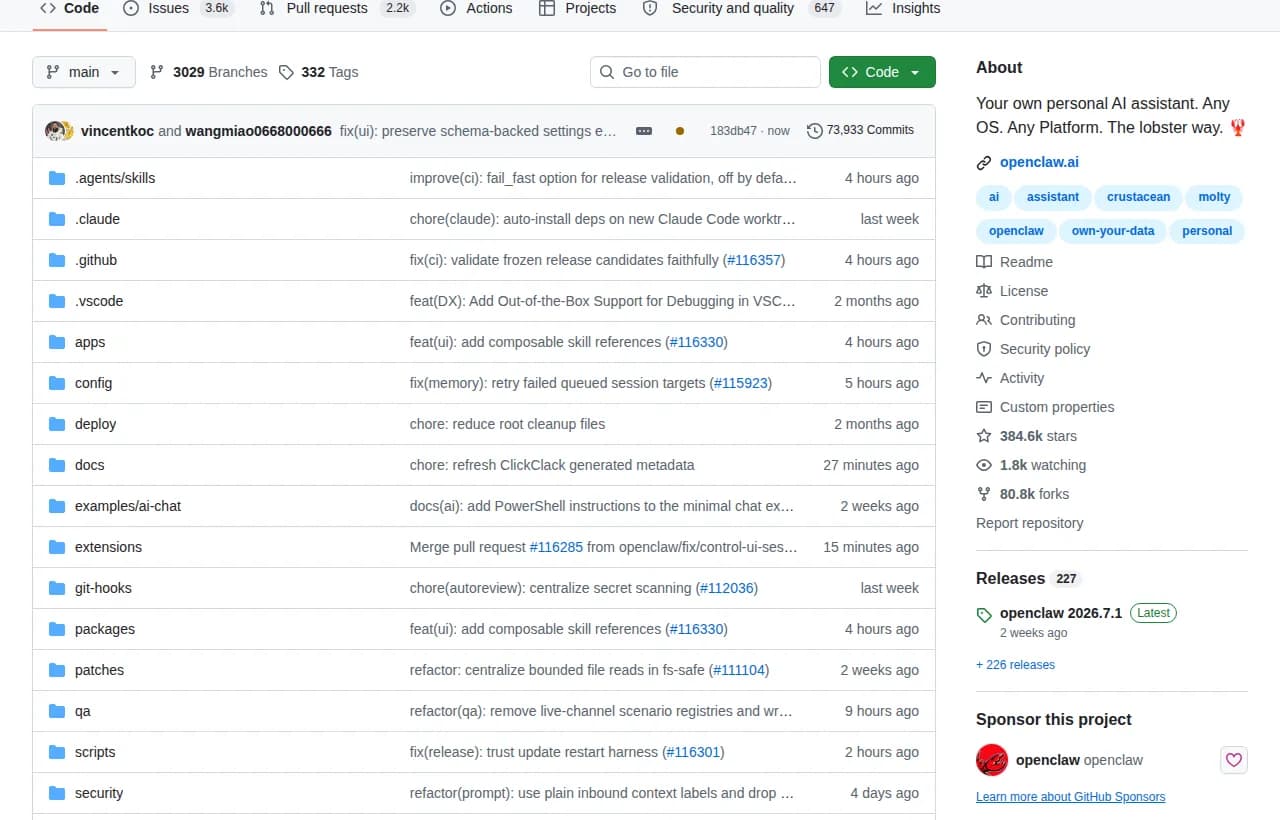
For a fuller breakdown of the ecosystem, forks, and where each one fits, our guide to OpenClaw alternatives goes deeper than we can here.
Hermes Agent in brief
Hermes Agent is built by Nous Research, released under the MIT license, and written mostly in Python. Its pitch is a built-in learning loop: it creates skills from experience, improves them during use, curates its own memory with periodic nudges, and searches its past conversations to build a model of who you are. It runs on a $5 VPS, a GPU cluster, or serverless backends that cost almost nothing when idle. We covered its internals in detail in our explainer on what the Hermes AI agent is, so we will keep the primer short here.
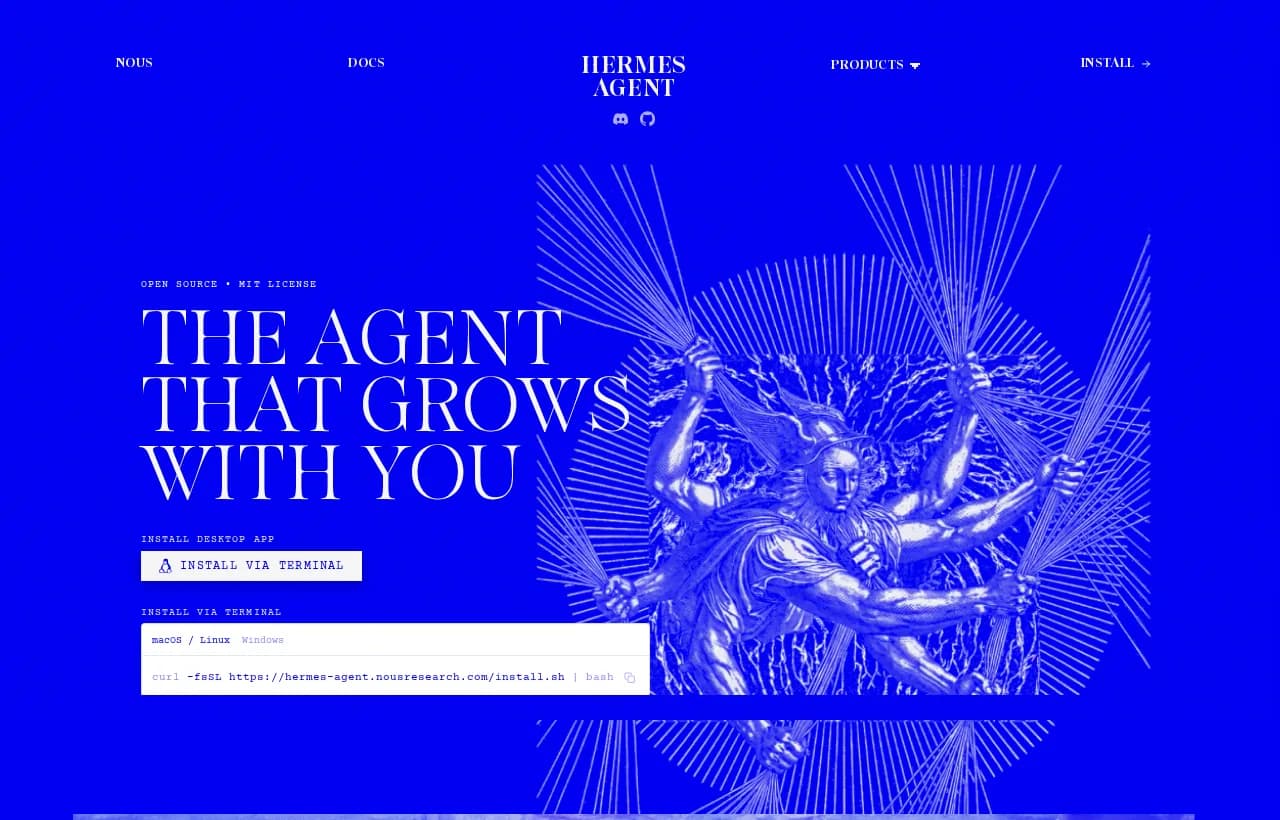
A telling detail: Hermes ships a hermes claw migrate command that imports your OpenClaw persona, memories, skills, and API keys. The two projects overlap enough that switching is a supported path, which tells you how similar the day-to-day experience really is.
Architecture and memory
This is where the two genuinely diverge.
Orchestration versus self-improvement
OpenClaw treats the Gateway as the product's backbone: a single control plane that manages channels, sessions, and tool calls, with multi-agent routing so different inboxes map to different isolated agents. It is built to be the always-on hub for a personal assistant that lives across every app you use.
Hermes puts the emphasis on the loop itself. It spawns isolated subagents for parallel work, lets you write Python scripts that call tools over RPC, and, most distinctively, generates and refines its own skills after complex tasks. OpenClaw grows through community skills you install from its ClawHub registry. Hermes grows by writing new ones on its own.
The practical consequence is a difference in flavor, not raw capability. OpenClaw feels like a well-run switchboard: everything routes through the Gateway, and you extend it by plugging in channels and community skills. Hermes feels like an apprentice that gets better the more you use it, because the learning loop is the headline feature rather than an add-on. If you value predictability and a big catalog of ready-made integrations, OpenClaw's model is comfortable. If you value an agent that compounds its own knowledge and runs lean on serverless, Hermes leans your way. Neither wins outright, which is precisely why the more useful decision is about ownership, not features.
How each handles memory
Both keep memory across sessions, but the flavor differs.
OpenClaw leans on explicit, legible session state you can inspect. Hermes leans on an autonomous memory that curates and rewrites itself.
Hermes uses SQLite full-text search to recall past conversations, summarizes them with an LLM for cross-session context, and layers on user modeling to track your preferences over time. OpenClaw keeps session history you can read and manage directly. Neither approach is strictly better. Self-curating memory is powerful and hands-off, but it is also harder to audit when you need to know exactly what the agent remembered and why. Legible memory is more work to maintain and easier to trust. That trade-off, hands-off power versus auditability, is the theme of this whole comparison.
Security and least privilege
This is the part most "X vs Y" posts skip, and it is the part that decides whether your project ships or gets canceled.
Both projects take security seriously, and both put the burden on you. OpenClaw's own docs tell you to treat inbound DMs as untrusted input, default to a pairing policy for unknown senders, and run non-main sessions inside Docker sandboxes before you expose anything remotely. Hermes ships command approval, DM pairing, and container isolation across several backends. These are good defaults. They are also your job to configure, monitor, and keep configured.
That matters because a self-hosted agent with shell access and your API keys is a textbook fit for the OWASP Top 10 for LLM Applications. Three risks map almost one to one onto a self-run agent:
- Excessive Agency (LLM06): an agent that can run commands and call tools can do more than you intended if a prompt goes wrong.
- Sensitive Information Disclosure (LLM02): your keys, files, and data live on the box the agent controls.
- Unbounded Consumption (LLM10): an unattended loop can burn tokens and money with no ceiling.
 OWASP Gen AI Security Project
The NIST AI Risk Management Framework frames the fix as govern, map, measure, and manage. When you self-host, every one of those verbs is on you. This is exactly where AI agent security stops being a config file and starts being an operating discipline.
Where human-in-the-loop changes the equation
The single most effective control for excessive agency is boring: make the agent stop and ask a human before anything sensitive. On a self-hosted framework you can build that, but you are wiring approvals, logging, and least-privilege access by hand, and you own every gap. A governed platform makes the pause the default. The agent stops, hands the decision back to you, and resumes exactly where it paused once you approve.

Setup, cost, and maintenance
Both tools install with a single shell command, which is genuinely nice.
# OpenClaw
curl -fsSL https://openclaw.ai/install.sh | bash

# Hermes Agent
curl -fsSL https://hermes-agent.nousresearch.com/install.sh | bash
Install and learning curve
Community consensus is consistent: Hermes is usually the easier first setup, while OpenClaw rewards you with broader integrations and companion apps once you invest the time. Both then expect you to keep a daemon running, manage a workspace, wire your model provider, and update the runtime as it evolves.
The true cost of self-hosting
Neither project charges a license fee. That is not the same as free.
- Infrastructure: a VPS or server, always on, plus storage and bandwidth.
- Model tokens: you bring your own provider keys, and an unattended agent can spend more than you expect.
- Your time: setup, security review, updates, and debugging the run that failed at 2 a.m. This is the line item people forget, and it is usually the biggest one.
On token usage specifically, you will see people online argue that one is leaner than the other. The honest answer is that it depends entirely on your workload, your model, and your prompts, and there is no neutral published benchmark to settle it. Do not trust a number without a methodology behind it.
The maintenance line deserves one more beat, because it is where self-hosting quietly gets expensive. An agent that can act is a small production service. It needs monitoring, log retention, secret rotation, and a plan for the day a model provider changes an API or a dependency breaks the daemon. On a solo project that is a fun afternoon. Across a team, it is an on-call rotation nobody signed up for, and it competes for the same engineering hours you wanted to spend on the actual work. That hidden cost, not the license price, is what usually tips the honest answer away from self-hosting.
When self-hosting either one is the wrong call
Here is the reframe. If you are a solo developer who enjoys running your own stack, self-hosting Hermes or OpenClaw is a great weekend and a genuinely capable assistant. If you are a team trying to put agents to work on real business tasks, the calculus changes. You do not want to become the on-call engineer for an agent runtime, and you definitely do not want approvals and observability to be things you meant to set up.
That is the gap Rerun fills. It is not a fourth framework to install. It is a platform where the governance you would otherwise hand-build is the product: human-in-the-loop approvals, live observability, least-privilege access, and a dedicated private cloud per workspace, all with no code.
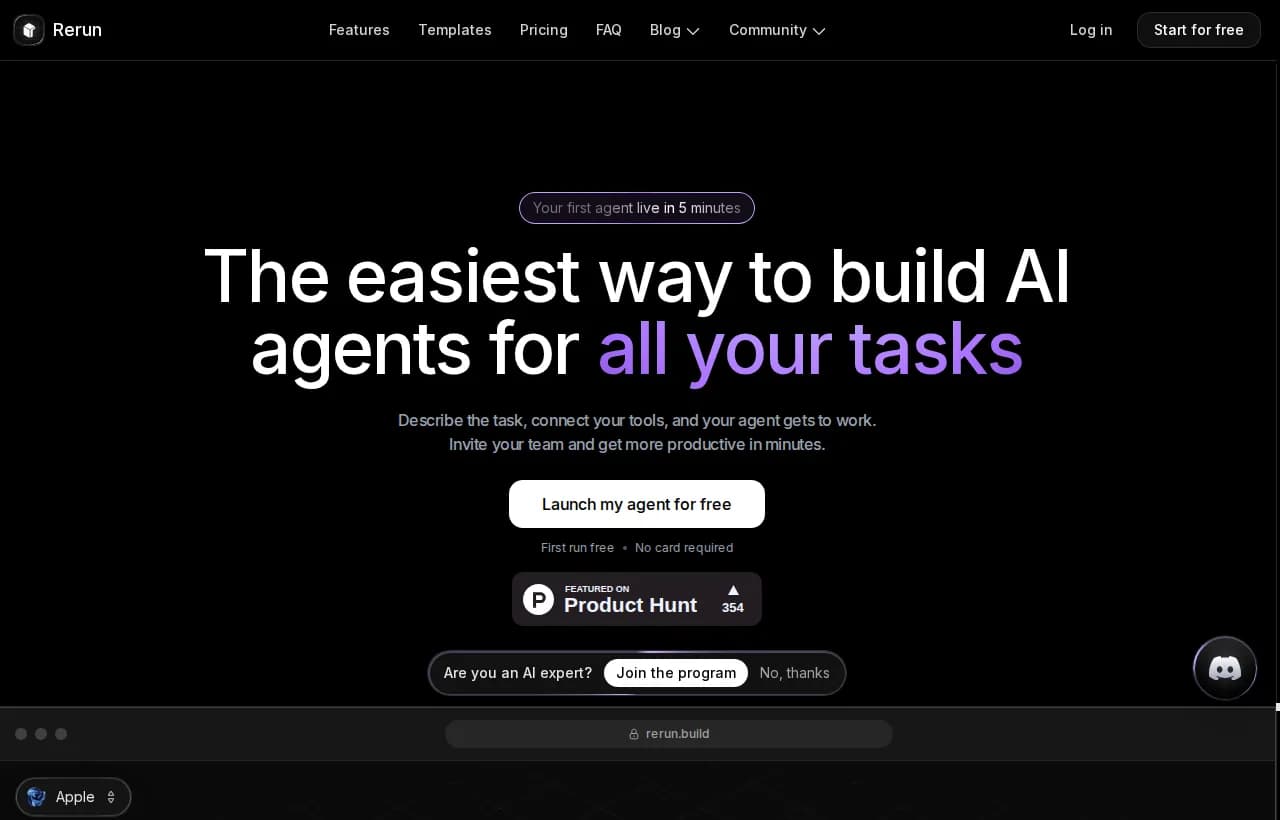
To be clear about what Rerun is not, because it matters here:
- Not a DIY framework. You do not self-host, patch, or babysit a runtime. There is no VPS to keep alive.
- Not a flowchart tool. It is not Zapier, Make, or n8n. You describe the goal, you do not wire trigger-to-action diagrams.
- Not a chatbot. It takes real actions, under approvals you control, and shows every one of them live.
{ "goal": "Chase overdue invoices and reconcile payments", "tools": ["stripe", "gmail"], "guardrails": { "approval_required_above": "$200 refund", "least_privilege": true }, "visibility": "live dashboard" }The difference is not that Rerun does more than a framework. It is that the safety rails, the ones OWASP and NIST say you need, come switched on instead of shipped as your homework.

Which should you choose?
Run this checklist before you commit to anything.
If you ticked most of those boxes, self-hosting is a fair bet. From there:
- Choose OpenClaw if you want the widest channel coverage, companion apps, and the largest community, and you are happy in TypeScript.
- Choose Hermes if you want a Python-native agent that improves itself, cheap serverless hosting, and the lightest first setup.
- Skip self-hosting if you left boxes unchecked, if a team needs to watch and approve the work, or if you would rather spend your time on the job than on the runtime. That is the case for a governed platform. If you are weighing managed options, our roundup of the best no-code AI agent builder is a good next read, along with our take on a Hermes AI alternative.

AI Agent Security: Risks, Best Practices & Guardrails
AI agents don't just answer, they act. Here are the 8 biggest AI agent security risks, the guardrails that contain them, and how to build an agent that is secure by design.
Both Hermes and OpenClaw are impressive pieces of engineering. The honest verdict is that the framework you pick matters far less than the question of who keeps it safe, watches it work, and stops it before it does something you did not intend.
Stop wiring the safety rails yourself. Start your free 7-day trial and watch an agent do the work, under your approval, live.
Frequently asked questions
Is Hermes really better than OpenClaw?
Neither is universally better. OpenClaw wins on channel coverage, companion apps, and community size. Hermes wins on its self-improving learning loop, Python-native design, and cheap serverless hosting. The better question for most teams is whether to self-host either one at all.
Is Hermes Agent similar to OpenClaw?
Very. Both are open-source, self-hosted agents with persistent memory, tool execution, and multi-channel messaging. They are close enough that Hermes ships a hermes claw migrate command to import your OpenClaw persona, memories, skills, and keys. The main split is TypeScript control plane versus Python self-improving runtime.
Can I run OpenClaw and Hermes together?
Yes. Both sit idle between requests, so you can install both on the same machine and try them side by side. The only real constraint is resource contention if both run heavy tasks at once. Keep their workspaces and API keys separated to avoid confusion.
What is the safer alternative to OpenClaw and Hermes?
A governed platform where approvals, observability, and least-privilege access are built in rather than configured by hand. Self-hosting means you inherit the full OWASP LLM risk list yourself. Rerun is the no-code option that ships those safety rails switched on, with a live dashboard you can read.
Does Hermes or OpenClaw use fewer tokens?
It depends entirely on your workload, your model, and your prompts. There is no neutral, published benchmark that settles it, and any single number you see online lacks a shared methodology. Treat token-usage claims for either tool as anecdotes, not facts.
Which is easier to set up, Hermes or OpenClaw?
Both install with a single shell command. Community consensus is that Hermes is usually the lighter first setup, while OpenClaw rewards more configuration time with broader integrations and companion apps. Either way, you then own hosting, updates, and security for the runtime.
How do Hermes and OpenClaw compare to Claude Code or Cowork?
Claude Code and Cowork are coding and chat assistants. Hermes and OpenClaw are self-hosted, multi-channel agents that take actions and keep memory. If you want that power without running a server or wiring approvals yourself, a managed platform like Rerun sits between the two worlds.

Written by
Clément Janssens