Claude Code vs Codex: A Hands-On 2026 Comparison of Two Coding Agents
Codex vs Claude Code, compared for real. Local terminal vs cloud sandbox, code quality vs autonomy, real pricing, and the orchestration layer neither CLI gives you.
In a controlled 2025 study, experienced developers took 19% longer to finish tasks when they used AI coding tools, even though they believed the AI had sped them up. That gap between what these tools feel like and what they actually do is exactly why the "Claude Code vs Codex" debate matters. Pick wrong, or use either one blindly, and you can lose time while feeling productive.
This is a hands-on comparison of the two coding agents most teams are actually weighing in 2026: Anthropic's Claude Code and OpenAI Codex. Not a spec sheet. We look at how each one executes, where each one wins, what they really cost, and the question neither tool answers on its own: how you run and watch agents once you are past a single terminal window.
In a hurry? Here is the one-line verdict. Claude Code is the local, interactive pair-programmer that wins on code quality and repo-level refactors. Codex is the cloud-sandbox delegator that wins on speed, parallelism, and hands-off tasks. Most strong teams use both, and route work by strength.
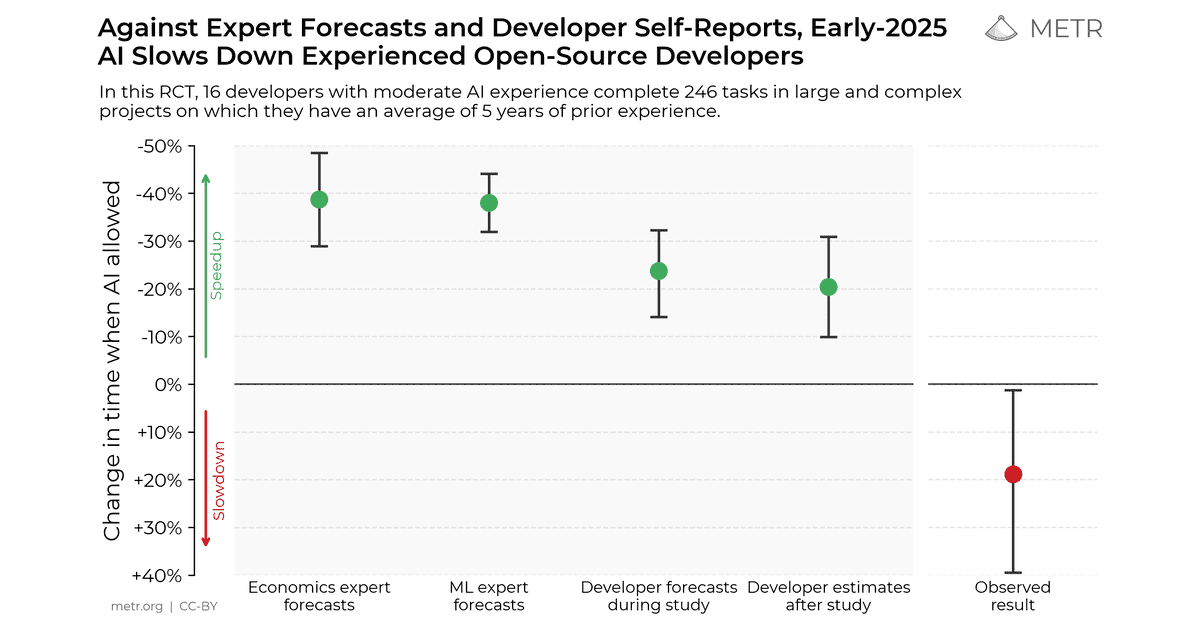 Measuring the Impact of Early-2025 AI on Experienced Open-Source Developer ProductivityWe conduct a randomized controlled trial to understand how early-2025 AI tools affect the productivity of experienced open-source developers working on their own repositories. Surprisingly, we find that when developers use AI tools, they take 19% longer than without—AI makes them slower.
 metr.org
The 30-second verdict: Codex vs Claude Code at a glance
If you only read one section, read this one. Here is how the two agents line up on the axes that decide real work.
| Dimension | Claude Code | OpenAI Codex |
|---|---|---|
| Where it runs | Local terminal, your real files | Cloud sandbox, cloned repo |
| Interaction style | Interactive, in-the-loop | Delegated, hands-off |
| Best at | Code quality, big refactors | Parallel tasks, autonomy |
| Speed on simple tasks | Fast | Slower to spin up |
| Long autonomous runs | Needs supervision | Strong |
| Local-first security | Runs on your machine | Runs in OpenAI cloud |
| Model | Claude Opus / Sonnet | GPT-5-Codex |
When Claude Code wins
Reach for Claude Code when you are working interactively in a codebase you care about. It maps an unfamiliar repo in seconds, makes multi-file edits that actually compile, and keeps you in the loop while it works. Large refactors where quality matters more than raw speed are its sweet spot.
When Codex wins
Reach for Codex when you want to delegate a task and walk away. It clones your repo into a managed cloud sandbox, runs the work in parallel containers, and comes back with a result. Long, well-scoped, hands-off jobs are where it shines, and you can fan out several at once without tying up your machine.

What each tool actually is, and why neither is a chatbot
Both of these are agents, not chat windows. That distinction is the whole point, so let us be precise about what each one is before we compare them.
Claude Code: Anthropic's terminal-native agent
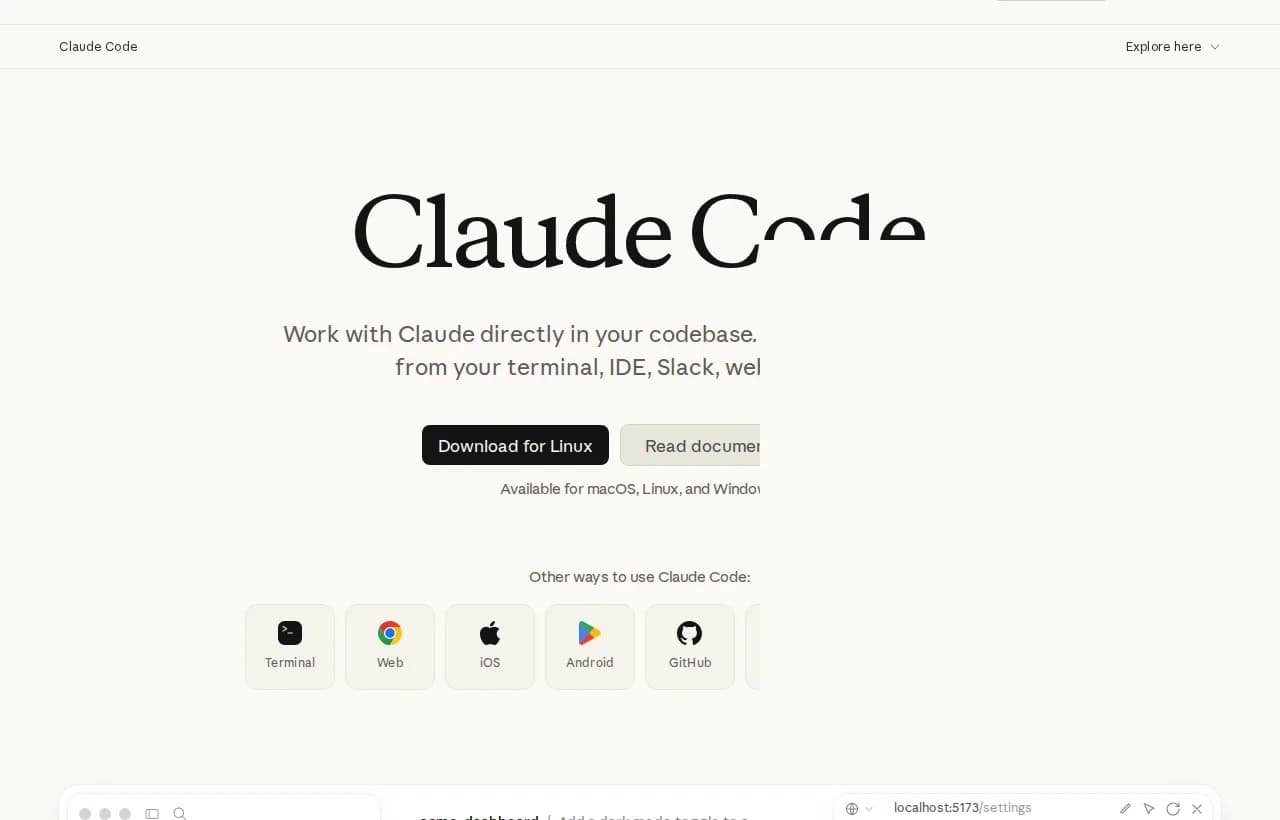
Claude Code is Anthropic's coding agent that runs locally in your terminal, against your actual files. You install it with a single command, sign in with a Claude Pro or Max plan, and it works alongside your existing IDE and CLI tools. It reads issues, edits code across many files, runs tests, and opens pull requests, all from where you already work. It runs on Anthropic's Opus and Sonnet models, and it asks permission before it changes files or runs commands.
OpenAI Codex: the cloud-sandbox agent
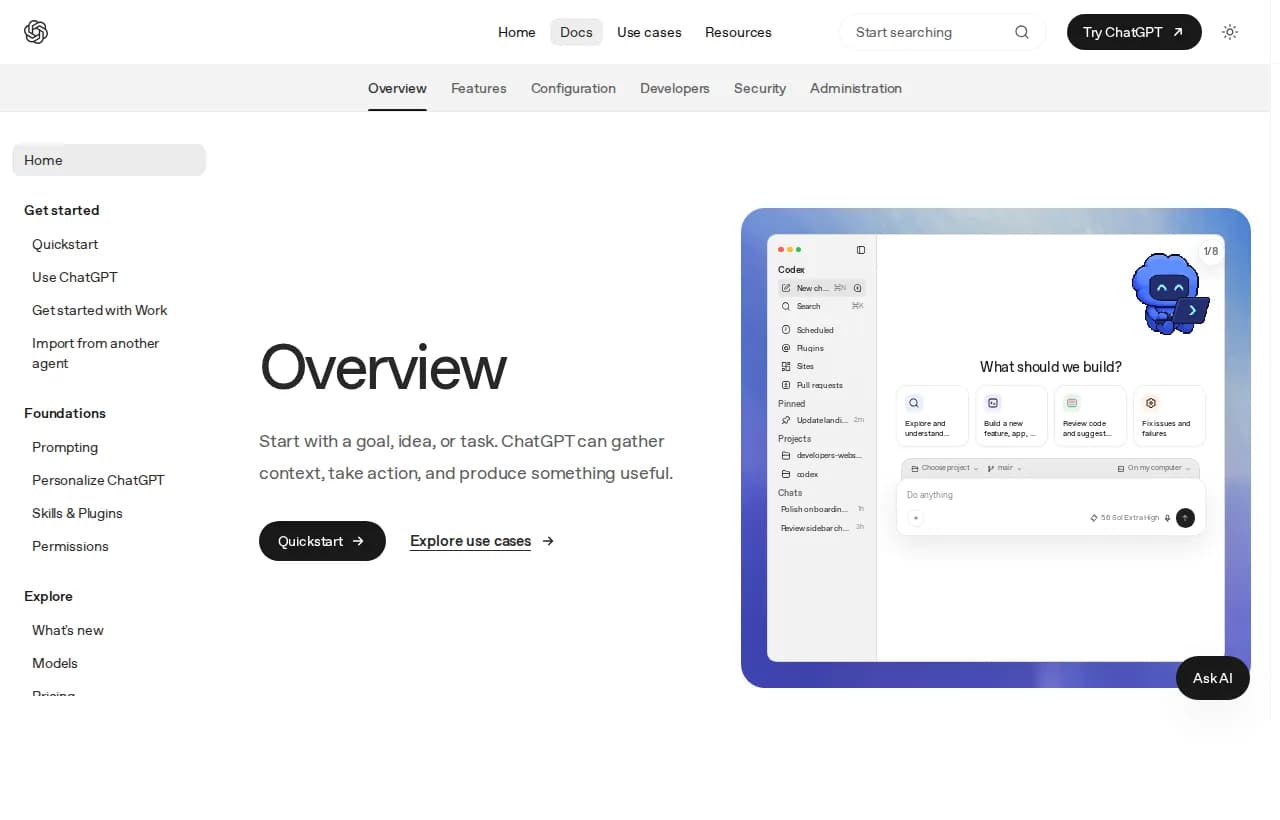
OpenAI Codex is the current 2026 agent product, not the deprecated 2021 model of the same name. It takes a goal, gathers context, and takes action across a CLI, an IDE extension, and a cloud surface. Its defining trait is that heavier work runs in OpenAI-managed cloud containers: your repo is cloned into a sandbox, the agent works there, and you review the result. It runs on the GPT-5-Codex family and plugs into ChatGPT plans.
Why both beat the flowchart-and-chatbot era
Here is what neither tool is. Neither is a Zapier-style flowchart where you wire triggers and actions by hand and pray reality never deviates from the diagram. Neither is a scripted chatbot that answers questions but cannot touch your repo. Those tools break the moment a task has a step you did not anticipate, which is most real tasks.
A flowchart encodes the steps you already know. A coding agent figures out the steps you do not. That is the difference between automation and delegation.
Claude Code and Codex are reasoning agents: you hand them an outcome, and they plan, act, and adjust to get there. That is the category. The only real question is which execution model fits your workflow, and how you keep eyes on the work once agents are doing it at scale.
Architecture: local terminal vs cloud sandbox
This is the single difference that drives everything else, so it is worth slowing down on.
How Claude Code executes
Claude Code runs on your machine. It reads your real files, uses your real environment, and talks directly to the model API without a remote code index or a backend server in between. When it edits, it edits the files on disk in front of you. That makes it fast to start, transparent step by step, and local-first: your source never leaves your environment except as prompts to the model.
How Codex executes
Codex leans on the cloud. For delegated tasks it clones your repository into an OpenAI-managed container, runs the work there on cloud compute, and hands back a diff or a pull request. That is what lets it run several tasks in parallel and keep going after you close your laptop. The trade-off is that your code is processed in OpenAI's infrastructure rather than only on your machine.
Security and data residency
For most teams this is a judgement call, not a dealbreaker. Local-first execution keeps sensitive code on your hardware, which regulated and security-conscious teams tend to prefer. Cloud-sandbox execution buys you parallelism and hands-off runs at the cost of sending your repo to managed containers. Decide based on how sensitive the codebase is and what your compliance team will sign off on.
| Concern | Claude Code (local) | Codex (cloud sandbox) |
|---|---|---|
| Where your code runs | Your machine | OpenAI containers |
| Parallel tasks | Limited by your hardware | Many at once |
| Works after you log off | Needs your session open | Keeps running |
| Data residency control | Strong | Provider-managed |
Head-to-head performance
Benchmarks are one thing, day-to-day work is another. Here is where each tool actually lands, based on how they are built and what practitioners consistently report.
Speed
Codex often finishes faster on heavy, delegated work because it runs in the cloud and parallelizes. Claude Code tends to feel faster on simple to medium interactive tasks because there is no sandbox to spin up: it just reads your files and edits them. If your loop is "ask, review, tweak, repeat," local wins the feel. If your loop is "fire off five tasks and check back later," cloud wins the throughput.
Code quality and large-repo refactors
This is Claude Code's strongest ground. Its agentic search maps project structure and dependencies before it edits, which is why its multi-file changes tend to hold together across a large codebase. For a gnarly refactor that touches twenty files, the in-the-loop model where you watch and correct as it goes produces cleaner results than fire-and-forget.
Autonomy and long-running tasks
Codex is built to be left alone. Hand it a well-scoped, long task and its cloud sandbox will grind through it while you do something else. Claude Code can run long too, but it is happiest with a human nearby to approve and steer. If your goal is genuine delegation of a bounded task, Codex has the edge.
Benchmarks and the benchmark trap
Both tools post strong numbers on SWE-bench Verified, the standard benchmark of real GitHub issues resolved. Use those scores as a sanity check, not a verdict. Benchmark deltas rarely predict which tool feels better on your codebase, in your language, with your conventions. The METR result at the top of this article is the cautionary tale: measured productivity and perceived productivity pointed in opposite directions. The Stack Overflow 2025 Developer Survey tells a similar story from the other side, with the majority of developers now using AI tools yet a large share still distrusting their accuracy. Run both on a task you actually understand before you trust any leaderboard.
Pricing and usage limits: the real cost math
Both tools bundle into subscriptions rather than charging per task, so the honest comparison is plan-to-plan, plus the usage limits that kick in.
Claude Code plans
Claude Code is included in Claude subscriptions. Pro is around $17 per month on an annual plan or $20 billed monthly, aimed at short sprints in small codebases. Max 5x is $100 per month for everyday use in larger repos, and Max 20x is $200 per month for power users who want the most model access. If you use a Claude Console account instead, Claude Code bills as standard API tokens.
Codex access
Codex rides on ChatGPT plans. In practice that means ChatGPT Plus at $20 per month for lighter use and ChatGPT Pro at $200 per month for heavy, hands-off delegation, with Business and Enterprise tiers above that. Usage limits scale with the plan.
| Plan level | Claude Code | OpenAI Codex |
|---|---|---|
| Entry | Pro, about $17 to $20/mo | ChatGPT Plus, $20/mo |
| Power user | Max, $100 to $200/mo | ChatGPT Pro, $200/mo |
| Pay-as-you-go | Console API tokens | Plan-gated |
| Billing model | Subscription or API | Subscription |
The $20-versus-$200 question comes down to volume. If you run a handful of interactive sessions a day, the entry tier of either tool is plenty. If you are keeping multiple agents busy for hours, the power tier pays for itself, and the cost per useful task drops fast. Do the math on your own volume rather than the sticker price.
One more cost that never shows up on a pricing page: the time you spend babysitting runs. A cheap plan you have to watch every second is not cheap. That hidden line item is exactly what the orchestration layer later in this article is built to remove.
Feature parity in late 2026: they copied each other
If you compared these tools six months ago on a feature checklist, that comparison is now stale. They have converged. Codex added goals, memories, hooks, plugins, and vim mode. Claude Code added an agent view that manages all your sessions in one place, plus routines that run on a schedule, from an API call, or in response to an event.
The takeaway is simple: feature-by-feature, they are close enough that a checklist will not decide it for you. Workflow fit will. Pick the execution model that matches how you actually work, because both teams will keep copying each other's best ideas anyway.
Which should you choose? A decision framework
Stop looking for a single winner. The right question is which layer of your workflow each tool owns.
Choose Claude Code if you work interactively, care about code quality on a large codebase, want local-first execution for sensitive code, or live in your terminal and want an agent that meets you there.
Choose Codex if you want to delegate long, well-scoped tasks and walk away, run many jobs in parallel, or prefer cloud execution so your laptop stays free.
Use both if you are like most strong teams: Claude Code for the interactive, quality-sensitive work, Codex for the hands-off parallel grind. Route each task to the tool built for it.
The switching cost is low, so you are not locked in. You can start a project in Claude Code and move it to Codex, or the reverse, with little friction, because both operate on the same git repository rather than a proprietary format. Practitioners who run both routinely hand a task from one to the other mid-stream. That freedom is a feature: you are choosing an execution model per task, not signing a marriage certificate with a vendor.
That "run both" answer is where a new problem shows up. One developer with one terminal is fine. A team running many agent tasks across many projects needs a way to orchestrate them and see what they actually did.
The missing layer: running and observing agents at scale
Claude Code and Codex both answer one question: which agent writes the code. Neither answers the next one, which becomes urgent the moment agents are doing real work for a team: how do you run them, coordinate more than one, and watch what each one did and why.
That is the layer Rerun sits on. It is not a third coding CLI to pit against these two. It is the platform that lets you run AI agents you can actually watch work. You build an agent in minutes, connect your tools, and see the work happen live on a dashboard anyone on the team can read.
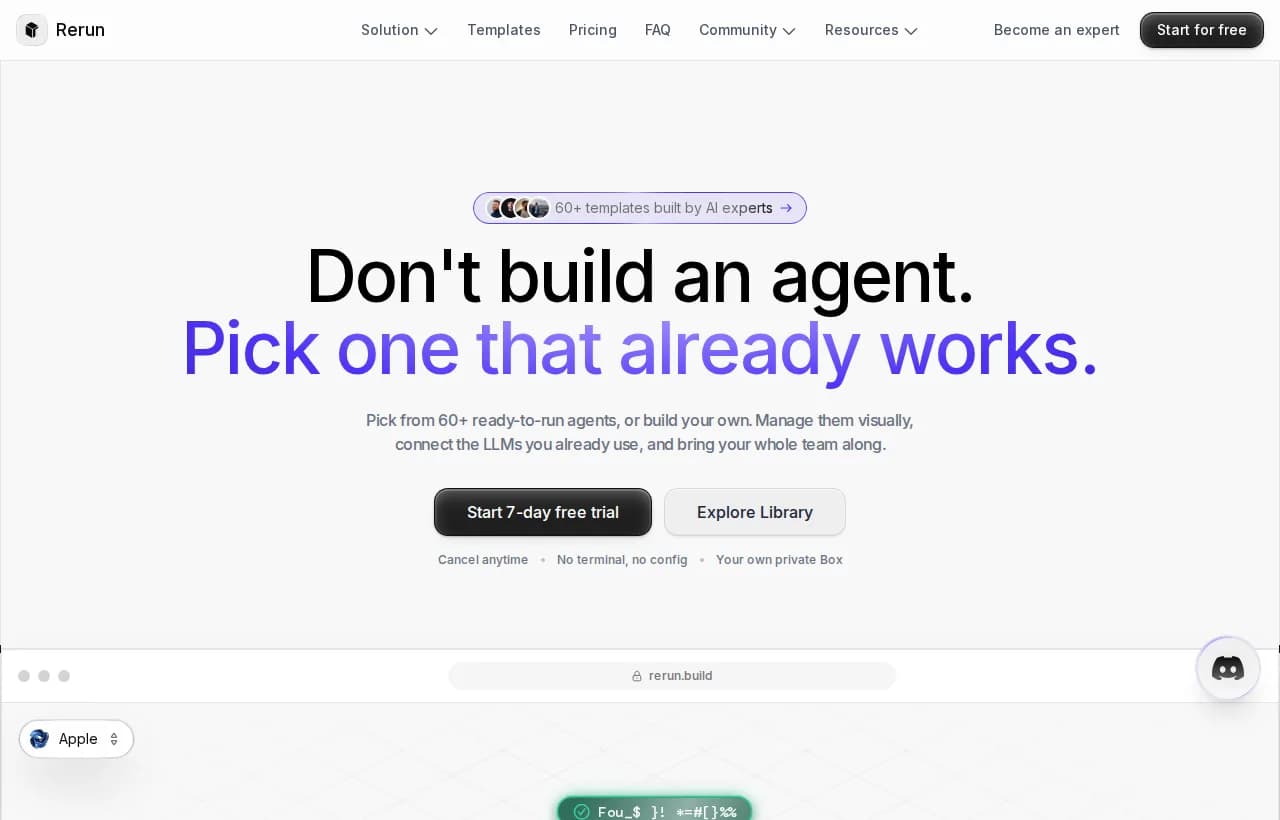
Where a single terminal session or cloud sandbox stops, Rerun keeps going:
| Capability | Claude Code | Codex | Rerun |
|---|---|---|---|
| Writes and edits code | Yes | Yes | Via agents |
| Runs many agents together | No | Parallel tasks | Yes |
| Live dashboard of the work | Terminal logs | Cloud view | Yes |
| Human-in-the-loop approvals | Per command | Partial | Approve from app or Slack |
| Runs 24/7 in a private cloud | No | Partial | Your own machine |
| No flowcharts to wire | Yes | Yes | Yes |
Rerun's differentiators map exactly to what the two CLIs leave open. It orchestrates and coordinates autonomous agents beyond one interactive session. It gives you observability into every run, what the agent did, why, which tools it used, and what changed, instead of a wall of terminal logs. It pauses for human approval before anything sensitive and resumes exactly where it left off. And it does all of this in a dedicated private cloud that runs around the clock.
Like Claude Code and Codex, Rerun is the opposite of a Zapier flowchart or a scripted chatbot. You delegate outcomes and watch them happen, you do not wire brittle triggers and hope. If you want the full field of coding agents rather than this one matchup, our roundup of the best AI coding agents in 2026 covers it.

For the branded head-to-heads, we compare Rerun's own agent against each tool directly in Hermes Agent vs Claude Code and Hermes Agent vs Codex. This article stays neutral on purpose: Claude Code and Codex are both excellent, and Rerun is the layer above whichever one you pick.

Best AI Coding Agents in 2026: GitHub Copilot, Cursor, Devin and More Compared
The definitive 2026 guide to AI coding agents: GitHub Copilot vs Cursor vs Devin vs Devin Desktop vs Amazon Q Developer. Feature matrix, real pricing, and what comes after the code.
The bottom line
Claude Code and Codex are not better-or-worse versions of the same thing. They are two working models. Claude Code is the local, interactive agent that wins on code quality and large refactors. Codex is the cloud delegator that wins on speed, parallelism, and hands-off runs. In 2026 the smart move is not to crown one, it is to route work to each tool's strength, and to put a layer on top that lets you run and watch agents once they are doing real work at scale.
Test both on a task you understand. Then decide how you want to run them.
Frequently asked questions
Is Codex better than Claude Code in 2026?
Neither is strictly better. Codex wins on speed, parallelism, and hands-off delegation because it runs in a cloud sandbox. Claude Code wins on code quality and large refactors because it runs locally and stays in the loop. Most strong teams use both and route work by strength.
What is the difference between Claude Code and Codex?
The core difference is execution. Claude Code runs locally in your terminal against your real files, interactively. OpenAI Codex clones your repo into an OpenAI-managed cloud container and runs delegated tasks there, often several in parallel. Local-first versus cloud-sandbox is the distinction that drives everything else.
Is Claude Code or Codex cheaper?
Entry tiers are similar: Claude Code Pro is about $17 to $20 per month, and Codex on ChatGPT Plus is $20 per month. Power tiers reach $100 to $200 per month on both. The real cost is volume-driven, so calculate cost per useful task rather than the sticker price.
Can I use Claude Code and Codex together?
Yes, and most experienced teams do. Both operate on the same git repository, so switching costs are low. Use Claude Code for interactive, quality-sensitive work and Codex for long, hands-off, parallel tasks. You can even hand a task from one to the other mid-stream.
Does Codex run on my local machine like Claude Code?
Not for heavier work. Claude Code executes on your machine against your files. Codex offers a CLI and IDE extension, but its defining mode clones your repository into OpenAI-managed cloud containers and runs there, which is what enables parallel, hands-off tasks.
Which is better for large codebase refactoring?
Claude Code. Its agentic search maps project structure and dependencies before it edits, and the in-the-loop model where you watch and correct as it goes produces cleaner multi-file changes on big refactors than fire-and-forget cloud runs.
How do Claude Code and Codex compare to Cursor?
Claude Code and Codex are agent-first coding tools you delegate tasks to, while Cursor is an AI-native editor you drive line by line. They overlap but serve different workflows. For the full field, see our roundup of the best AI coding agents in 2026.

Written by
Clément Janssens