Hermès Agent vs OpenAI Codex: Autonomous Orchestrator or Code Engine? (2026)
Codex writes code on demand. Hermès Agent orchestrates and governs it 24/7. A 2026 decision framework, plus how to drive Codex from inside Hermès.
Codex writes code on demand. Hermès Agent runs the work around the clock, and governs it.
That one sentence settles most of the "Hermès Agent vs OpenAI Codex" debate before it starts. These two tools get compared as rivals, but they solve different problems at different layers. One is a code engine. The other is an autonomous orchestrator you can watch work.
The confusion is worth clearing up, because the stakes are real. In the 2025 Stack Overflow Developer Survey, 84% of developers now use or plan to use AI tools, yet only 33% trust their accuracy while 46% actively distrust it. For AI agents specifically, 87% of respondents say they are concerned about accuracy and 81% worry about data security and privacy. Adoption is racing ahead of trust. That gap is exactly why the "who writes the code" question matters less than "who governs the work."
In this guide you get a straight decision framework: what Codex actually is, what Hermès Agent actually is, a ten-dimension head-to-head, and the pattern almost nobody talks about, running Codex from inside Hermès.
In a hurry? Spin up a governed agent free.
TL;DR: Codex codes, Hermès orchestrates
- OpenAI Codex is a coding agent. It writes, edits, and runs code on demand, in your terminal, your IDE, or the cloud. It is excellent at implementation.
- Hermès Agent is an autonomous orchestrator. It runs persistently, on a schedule, with human-in-the-loop approvals and full observability, on infrastructure you control.
- They are not 1:1 rivals. Codex is the hands. Hermès is the operating layer that decides when the hands move, checks the result, and keeps a record.
- Pick by your bottleneck. If the hard part is writing code, reach for Codex. If the hard part is governing autonomous work that runs without you, reach for an orchestrator. If it is both, have Hermès drive Codex.
Which "Hermès" and which "Codex" are we comparing?
The naming space is crowded, so let us be precise.
Hermès Agent here means the AI agent, a self-hosted OpenClaw fork used as an autonomous, always-on worker. Not the Hermes family of language models, not the luxury brand. We compare it as an agent product, on agent axes: autonomy, tools, deployment, governance, and security. If you want the full picture of what it is, our Hermès Agent overview walks through it.
Codex means OpenAI Codex, the coding agent that ships in three surfaces:
- Codex CLI, a lightweight coding agent that runs locally in your terminal.
- The IDE extension, for VS Code, Cursor, and Windsurf.
- Codex Cloud (Codex Web), the cloud-hosted agent you reach from chatgpt.com/codex.
Everything below is about those two products, nothing else.
What OpenAI Codex actually is
Codex is a code engine. You point it at a repository, describe a change, and it implements it: reads the code, edits files, runs commands, and iterates until tests pass. It is genuinely strong at deep implementation work, and it is tuned for the kind of tasks that show up on coding benchmarks like SWE-bench.
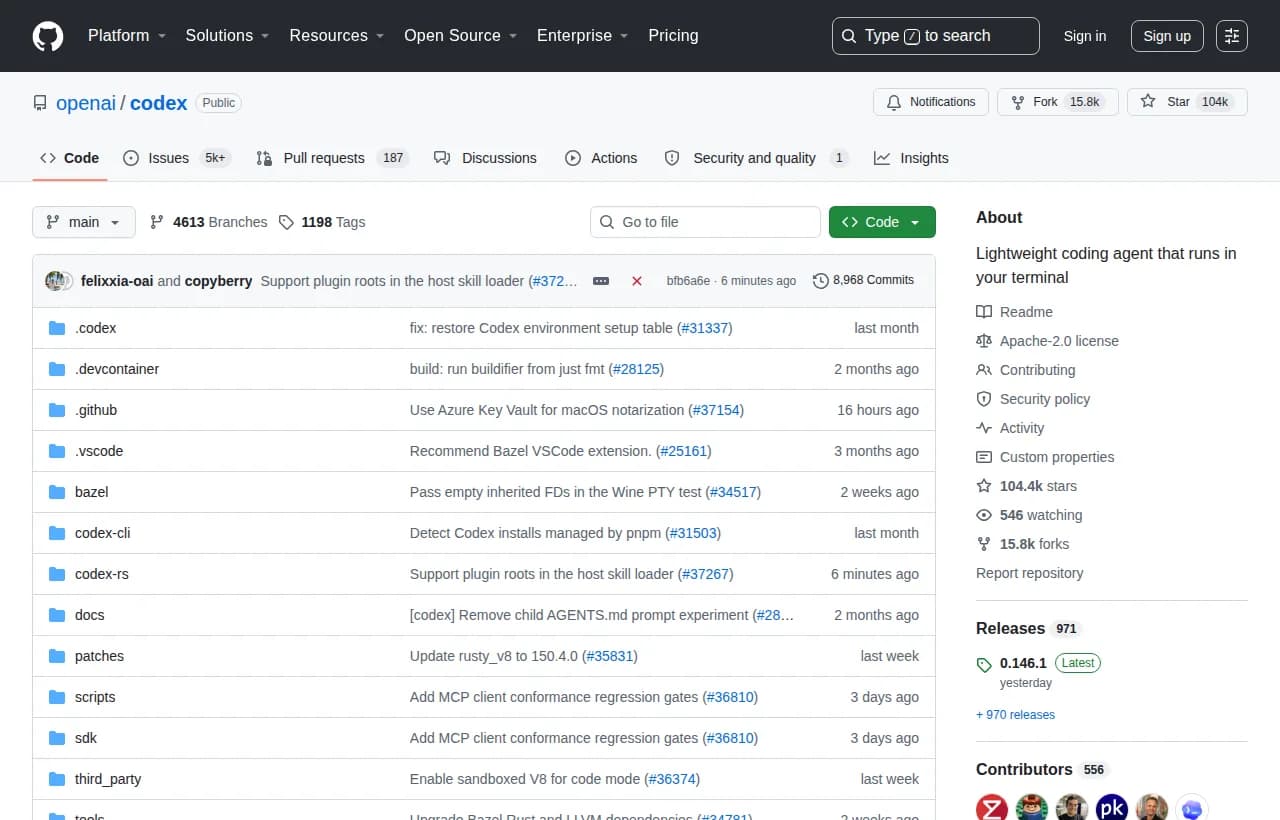
The three surfaces
Codex meets you where you code. The CLI is a single install (npm install -g @openai/codex) and runs on your machine. The IDE extension puts it in your editor. Codex Cloud runs tasks on OpenAI's infrastructure, tied to your ChatGPT plan.
# Install Codex CLI and start a coding session
npm install -g @openai/codex
codex
# Sign in with your ChatGPT plan, then describe the change you want
A real task looks like this. You give Codex a repository and a request, "add rate limiting to the public API and cover it with tests." It reads the relevant files, proposes a diff, runs the test suite, sees a failure, fixes it, and runs the tests again until they pass. You review the result and merge. That tight read, edit, run, repeat loop is what Codex is built for, and it is why it scores well on implementation benchmarks. The catch is that you are in the driver's seat the entire time.
Strengths
- Deep, benchmark-grade code implementation.
- Tight integration with the OpenAI ecosystem and ChatGPT plans.
- Fast local loop in the terminal, plus a cloud option for longer tasks.
The ceiling
Codex is built around a coding session. You open it, you drive it, it finishes, you close it. It does not wake itself up at 7am to reconcile invoices, it does not wait for an email to arrive and then act, and it does not pause to ask a non-developer for approval before doing something sensitive. It also runs on OpenAI models, inside OpenAI's ecosystem, which is a strategic choice we will come back to. For a broader view of where it sits among coding tools, see our roundup of the best AI coding agents in 2026.
Codex is very good at the thing it does. The question is not whether it writes good code. It is what happens in the twenty-three hours a day nobody is driving it.
What Hermès Agent actually is
Hermès Agent is an autonomous orchestrator. Where Codex is session-bound, Hermès is persistent. It runs on its own always-on machine, on infrastructure you control, and it keeps working when you close the laptop.
Persistent and scheduled
Hermès does not need a run button. It wakes on a schedule (cron), on an event (an email lands, a payment fails), or on a message from you. That is the difference between a tool you operate and a worker that operates on its own. Our take on how to deploy AI agents covers what always-on actually requires.
Governed by design
Autonomy without oversight is a liability, and the survey data backs that up: 87% of developers are concerned about agent accuracy. Hermès is built for human-in-the-loop control. It can stop before anything sensitive, ask a question, and wait for approval, then resume exactly where it paused. Every action is logged for observability and an audit trail.
Model-agnostic and sovereign
Hermès is not tied to one model provider. It is self-hosted, so your data stays on your infrastructure, and it can run on whichever models you choose. That is a structural difference, not a feature-list bullet.
Head-to-head: the ten dimensions that actually matter
Honest comparison, and Codex wins the rows it should win.
| Dimension | OpenAI Codex | Hermès Agent |
|---|---|---|
| Primary job | Write and edit code on demand | Orchestrate and govern autonomous work |
| Execution model | Session-bound, interactive | Persistent, 24/7 (cron) |
| Deep code implementation | Benchmark-grade | Capable, not its focus |
| Human-in-the-loop | Per-session prompts | Built-in approval gates |
| Observability and audit | Limited | Logs, audit trail, dashboards |
| Model choice | OpenAI models | Model-agnostic |
| Hosting and data | OpenAI cloud | Self-hosted, sovereign |
| Surfaces | CLI, IDE, Codex Cloud | Terminal, Discord, Slack, Telegram |
| Memory and skills | Static instructions | Persistent skills and memory |
| Ecosystem lock-in | High (OpenAI) | Low, portable |
The pattern is clear. Codex owns implementation. Hermès owns scheduling, governance, and multi-tool orchestration. They are strong at different layers of the same stack.

The real question is not "vs", it is "who governs whom"
Here is the part most comparisons miss. You do not have to choose. You can drive Codex from inside Hermès.
Codex exposes a programmatic runtime (an app-server style interface), which means an orchestrator can call it as a backend. Hermès becomes the shell: it holds the schedule, the approval gates, the memory, and the audit log. Codex becomes a pluggable execution engine that does the actual code edits when Hermès decides a coding task is due.
{ "orchestrator": "Hermès Agent", "role": "governs when and whether work runs", "loop": ["wake on cron or event", "decide a coding task is needed", "call Codex as the coding backend", "pause for human approval before merge or deploy", "log every action to the dashboard"], "execution_backend": "OpenAI Codex", "human_in_the_loop": true }In that architecture:
- Hermès is the governed control plane: cron, human-in-the-loop, observability, memory.
- Codex is the coding backend: it writes the diff when asked.
- The result is autonomous coding work that a non-developer can still watch and approve.
Make it concrete. Say you want your dependencies patched every night without a human babysitting the process. Hermès wakes on a 2am cron, checks for outdated packages, and decides a coding task is due. It calls Codex to write the version bumps and update the lockfile, runs the test suite, and if everything passes it opens a pull request. Then it stops. Before anything merges to main, it pauses and asks a human to approve, from the app or from Slack, and it logs every step to the dashboard along the way. Codex did the code. Hermès decided when to run, held the approval gate, and kept the record. Neither tool does that job alone.
This is why "vs" is the wrong framing. The interesting question is which tool sits on top. An orchestrator that can call a code engine is more powerful than a code engine that cannot orchestrate itself.
Lock-in: what you sign up for with OpenAI Codex
This is a strategic decision, not a feature. Codex is deeply woven into the OpenAI ecosystem, and that has trade-offs worth naming plainly.
| Factor | OpenAI Codex | Hermès Agent |
|---|---|---|
| Account dependency | Tied to ChatGPT plan | Your own infrastructure |
| Model portability | OpenAI models | Any model you choose |
| Data residency | OpenAI cloud (Codex Cloud) | Self-hosted, your data stays put |
| Exit cost | Higher, ecosystem gravity | Low, open and portable |
None of this makes Codex a bad tool. It makes it an ecosystem bet. If your team is already all-in on OpenAI, that gravity is convenient. If you care about data sovereignty, model choice, or avoiding a single-vendor dependency, a self-hosted orchestrator changes the calculus.
There is an Anthropic-shaped version of exactly this trade-off. If your coding tool of choice runs on Claude instead, our Hermès Agent vs Claude Code breakdown covers the same governance argument against the Anthropic ecosystem. The lock-in vendor differs, the orchestration logic does not.
Governance and security: the OWASP and NIST lens
Autonomous agents amplify risk. An agent with tools and file access can do more damage than a chatbot, faster, and often without a human watching. That is not fear, it is the security community's consensus.
The OWASP Top 10 for LLM Applications names the two failure modes that hit autonomous agents hardest: prompt injection and excessive agency, an agent granted more permission than the task needs. The NIST AI Risk Management Framework formalizes the answer: govern, map, measure, and manage the risk with human oversight in the loop.
LLMRisks Archive OWASP Gen AI Security Project
Excessive agency is not abstract. Picture an autonomous coding agent with write access to a repo, a deploy token, and permission to run shell commands, all so it can ship fixes on its own. Now a prompt injection reaches it through a scraped issue or a poisoned dependency, and it dutifully runs a command it was never meant to run, against production, at 3am. The tool did exactly what its permissions allowed. The failure was governance, not code. This is precisely the case OWASP flags, and it is why the answer is structural: scope the agent to the least privilege the task needs, and put a human gate in front of anything consequential.
A code engine like Codex, run in a session with a developer watching, has a human as the safety layer. An autonomous orchestrator does not get that for free, which is why governance has to be built in. Hermès approaches it with the controls the frameworks ask for:
This is the moat. Autonomy is easy to demo and hard to govern. The governance layer is what makes autonomous coding work safe to run when nobody is watching.

When to choose which
Skip the tribalism. Match the tool to the job.
| Your situation | Reach for |
|---|---|
| Solo dev shipping a feature right now | Codex |
| Team needing 24/7 governed automation | Hermès Agent |
| Regulated, air-gapped, or data-sensitive work | Hermès (self-hosted) |
| You want deep coding and orchestration | Hermès driving Codex |
| You want that orchestration hosted, observable, and no-code | Rerun (runs Hermès for you) |
If you are also weighing a workflow-automation tool for the orchestration side, our Hermès Agent vs n8n comparison covers why an agent beats a flowchart for anything that needs judgment.
How teams run both, without the ops burden
Self-hosting an orchestrator sounds like work: a server to stand up, models to wire, monitoring to build. That is the objection Rerun removes.
Rerun is the platform that lets you run AI agents you can actually watch work. You describe the job, connect your tools, and the agent gets to work on its own dedicated machine, with a live dashboard anyone on your team can read. It is not a chatbot, it is not a Zapier-style flowchart builder, and it is not a black box. You see every action as it happens.
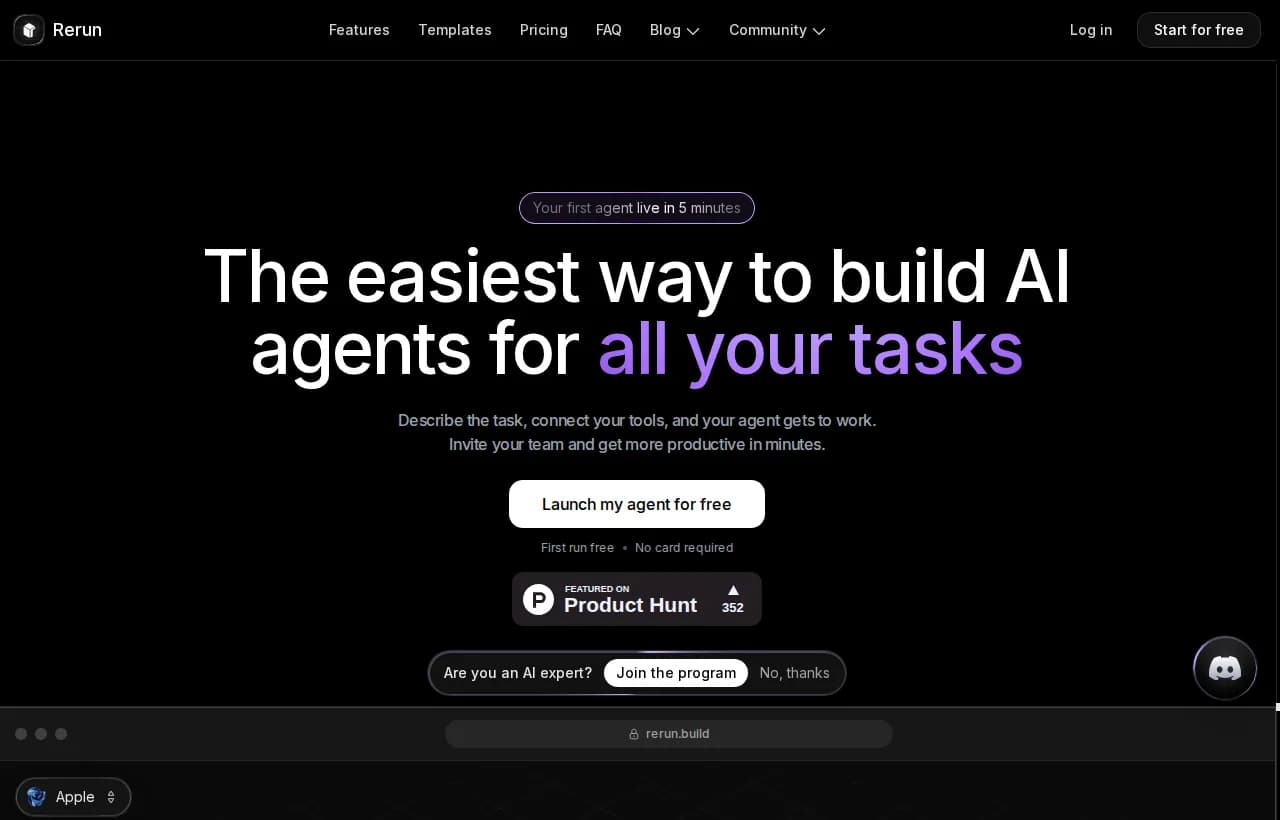
In the compose pattern, Rerun-hosted Hermès is the governed control plane, and Codex is a pluggable execution backend. You get:
- Persistent, 24/7 runs with cron and event triggers, no server to babysit.
- Human-in-the-loop approvals you can action from the app or Slack.
- Live observability: runs, tokens, and handoffs on a dashboard you can read.
- Model freedom: run on Claude, ChatGPT, Gemini, or bring your own key with no usage caps from Rerun.
Codex is the hands. Hermès is the operating layer. Rerun is where that layer runs, observable, governed, and yours. Plans start at $24/month, and you can see the full breakdown on our Hermès Agent pricing guide.
Verdict
Stop treating this as a duel. OpenAI Codex is the best answer when your bottleneck is writing code. It is a sharp, benchmark-grade code engine, and inside the OpenAI ecosystem it is hard to beat.
Hermès Agent is the answer when your bottleneck is governing autonomous work, the scheduled, always-on, human-in-the-loop, self-hosted work that has to run reliably when nobody is watching. It operates at a different layer, and it can drive Codex as one of its tools.
If you only ship features by hand, Codex is enough. If you want work that runs itself, safely, on infrastructure you control, you want an orchestrator, and ideally one you can watch.
Frequently asked questions
Is Hermès Agent the same kind of tool as OpenAI Codex?
No. OpenAI Codex is a code engine that writes and edits code on demand in a session. Hermès Agent is an autonomous orchestrator that runs persistently, on a schedule, with human-in-the-loop approvals and observability. They operate at different layers, and Hermès can call Codex as an execution backend.
Can Hermès Agent run OpenAI Codex?
Yes. Codex exposes a programmatic runtime, so an orchestrator like Hermès can call it as a coding backend. Hermès holds the schedule, approval gates, memory, and audit log, and hands the actual code edits to Codex when a coding task is due. That gives you autonomous coding work that a human can still watch and approve.
Which is better for a solo developer shipping a feature?
For a developer actively writing code in a session, OpenAI Codex is usually the better fit. It is benchmark-grade at deep code implementation and integrates tightly with the OpenAI ecosystem. Hermès Agent becomes the better choice when the work needs to run 24/7, unattended, and governed.
What about data privacy and vendor lock-in?
Codex runs on OpenAI models inside OpenAI's ecosystem, tied to a ChatGPT plan, with Codex Cloud running on OpenAI infrastructure. Hermès Agent is self-hosted and model-agnostic, so your data stays on your own infrastructure and you can choose which models to run. For regulated or data-sensitive work, the self-hosted route matters.
How does Hermès Agent vs Codex compare to Hermès Agent vs Claude Code?
The governance argument is the same, only the ecosystem lock-in differs. Codex ties you to OpenAI, Claude Code ties you to Anthropic. Both are code engines; Hermès is the orchestration and governance layer on top. See our Hermès Agent vs Claude Code comparison for the Anthropic version of the trade-off.
Do I need to self-host to run Hermès Agent?
You can, but you do not have to manage the infrastructure yourself. Rerun runs Hermès as a governed, always-on agent on its own dedicated machine, with human-in-the-loop approvals and a live dashboard, so you get the orchestration and observability without standing up and babysitting a server. Plans start at $24/month with a free 7-day trial.

Written by
Clément Janssens