AI Agents for Finance: Use Cases, Workflows, and How to Deploy Them
How finance teams deploy AI agents on close, AP, and FP&A workflows safely, with human approvals, least-privilege access, and full observability.
Generative AI could add between $200 billion and $340 billion in value every year to the banking sector alone, the equivalent of 9 to 15 percent of operating profits, according to McKinsey's analysis of generative AI in banking. Most of that value does not come from a smarter chatbot. It comes from software that can actually do the work: pull the ledger, reconcile the accounts, flag the anomaly, and route the exception to a human before anything irreversible happens.
That is what an AI agent for finance is. Not a bot that answers questions about your numbers, but a system that senses, reasons, and acts on real financial workflows, with you watching and approving the steps that matter. The best finance AI agents share one trait: they act inside guardrails, not around them.
This guide covers the use cases that are working today, three finance workflows walked step by step, and the part almost nobody writes about: how to deploy a finance agent you can defend to an auditor.
In a hurry? Start building your first agent free.

What an AI agent for finance actually is (and what it is not)
An AI agent for finance runs a loop: it senses (reads from your ERP, general ledger, bank feeds, or market data), it reasons (compares against rules, history, and policy), and it acts (drafts a journal entry, matches an invoice, flags a suspicious transaction, or pauses to ask for approval). The action is the whole point. A report that never leaves the screen is not an agent, it is a dashboard.
This is where finance leaders get burned by the wrong mental model. Two comparisons matter.
A chatbot answers. You ask it about last month's variance and it tells you. An agent acts. It pulls the actuals, computes the variance, drafts the commentary, and routes the exceptions that break the pattern. If you want the difference in one line, a chatbot talks about the work and an agent does it. We unpack that gap further in our breakdown of what separates an AI agent from a chatbot.
A flowchart automation (Zapier, Make, n8n) follows a path you drew in advance. That works right up until reality deviates: a vendor sends an invoice in a new format, a PO line is missing, a currency does not match. The flow errors out and lands in your inbox. An agent reasons over the exception instead of breaking on it. If your problem genuinely fits a fixed set of if-this-then-that branches, use a flowchart. Finance rarely does.
| Capability | Chatbot | Flowchart automation | AI agent |
|---|---|---|---|
| Answers questions about your data | Yes | Partial | Yes |
| Takes action in your systems | No | Yes | Yes |
| Handles a case it was never scripted for | No | No | Yes |
| Reasons over an exception | No | No | Yes |
| Stops for human approval on risky steps | No | Partial | Yes |
An agent is only as valuable in finance as it is governed. The teams winning with agents are not the ones with the smartest model. They are the ones who gave the agent real actions inside clear guardrails.
Why finance is a natural fit for agents, and also high-stakes
Finance is full of work that is repetitive, rules-heavy, and data-rich. Reconciliations, invoice matching, variance commentary, watchlist screening. That profile is exactly what agents are good at, and the capacity they free up goes straight back into analysis and judgment that people are good at. This is what agentic AI in finance looks like in practice: repetitive, rules-heavy work handed off, judgment kept human.
The catch is that finance is also where a mistake moves money, trips a control, or shows up in an audit. Money movement, SOX controls, AML and KYC obligations, revenue recognition. You cannot hand any of that to a black box and hope. This is precisely why "just plug in a chatbot" fails in finance and why governance, not model choice, is the deciding factor. Hold that thought, because it is the through-line of the whole deployment section.
 Think Topics | IBMAccess explainer hub for content crafted by IBM experts on popular tech topics, as well as existing and emerging technologies to leverage them to your advantage
 ibm.com
AI agents for finance: 7 core use cases
AI agents for finance and accounting thrive on exactly this kind of work. Here are the use cases with real demand and real payback today. None of them require the agent to be trusted blindly. Each one has a natural point where a human signs off.
1. Month-end close and reconciliation
The agent matches general ledger entries against subledgers and bank statements, flags anomalies and unreconciled items, and drafts audit-ready statements. Instead of a controller chasing mismatches across spreadsheets, the agent surfaces the exceptions and the human clears them.
2. Accounts payable and invoice matching
Three-way matching of invoice to purchase order to receipt, duplicate detection, and drafting of vendor dispute emails. The agent handles the messy non-standard invoice that a rigid flowchart would kick straight to a human.
3. FP&A, forecasting, and variance analysis
Budget-to-actual monitoring, scenario stress-testing, and first-draft variance commentary. The agent writes the "why" behind the numbers, a human edits and signs off before it reaches the board deck.
4. Compliance, AML, and KYC
Watchlist and sanctions screening, transaction monitoring, and case preparation for review. The agent assembles the evidence pack, a compliance officer makes the call.
5. Fraud and risk monitoring
Real-time anomaly detection on transactions, credit-application triage, and early-warning flags on spending patterns. Speed matters here, and an always-on agent watches around the clock.
6. Treasury and cash management
Liquidity monitoring, payment scheduling, and cash-position reporting. Any actual payment stops for approval, always.
7. Personal and embedded finance agents
On the consumer side, agents categorize spending, surface savings, and answer account questions. The same governance principles apply: the agent proposes, the person decides on anything that moves money.

3 finance agent workflows, step by step
Use cases are easy to list. What convinces a finance team is seeing the loop end to end, with the human checkpoint in the right place. Here are three.
Workflow 1: automated month-end close
- The agent pulls balances from the ERP and the bank feed the moment the period locks.
- It matches GL entries to subledgers and flags every unreconciled item with a probable cause.
- It drafts the reconciliation statement and the journal entries needed to clear small, in-policy differences.
- It stops. Any entry above your materiality threshold waits for the controller to approve before it posts.
- On approval, it posts the approved entries and files the audit trail.
The guardrail that makes this safe is step 4. The agent never posts a material entry on its own. That single approval gate is the difference between a time-saver and a liability.
Workflow 2: the accounts payable exception
- An invoice arrives in a format the system has never seen, with a missing PO reference.
- A flowchart automation would error and dump it in a queue. The agent instead reads the invoice, infers the likely PO from the vendor and line items, and checks the receipt.
- If it finds a confident match, it drafts the three-way match for review. If it is unsure, it drafts a clarifying email to the vendor.
- It stops before sending anything external or approving payment, and hands the draft to a human.
This is the case that separates agents from rigid workflow automation. The exception is not a failure state, it is just another input the agent reasons over.
Workflow 3: variance-to-commentary for FP&A
- At period close, the agent computes budget-to-actual variances across every cost center.
- It ranks them by materiality and pulls context: headcount changes, one-time costs, timing shifts.
- It drafts plain-language commentary explaining each material swing.
- It stops. The FP&A lead edits, corrects, and signs off before the commentary goes anywhere near the board deck.
Notice the pattern. In all three, the agent does the tedious 80 percent and pauses at the 20 percent that needs judgment. That pause is not a limitation, it is the product. You can see how we think about that handoff in our deep dive on human-in-the-loop AI agents.
{ "role": "Month-end close assistant for a mid-market finance team", "goal": "Reconcile GL to subledgers and bank feed, draft clearing entries, prepare audit-ready statements", "must_do": ["match GL entries to subledgers and bank statements", "flag every unreconciled item with a probable cause", "draft journal entries only for in-policy differences below the materiality threshold"], "must_ask_approval_before": ["posting any entry at or above the materiality threshold", "any adjustment touching revenue recognition", "anything that changes a prior period"], "never_do": ["post a material entry autonomously", "modify a locked period without approval"], "log": "every action, source, and amount to the audit trail" }How to deploy AI agents in finance safely
This is the part the hype skips. Building a finance agent is the easy 20 percent. Deploying one you can trust, and defend to an auditor, is the other 80 percent, and it is not a modeling problem. It is a governance problem. Five principles.
Start with one bounded, high-friction workflow
Do not "automate finance." Pick one workflow with clear inputs and a clear owner, month-end reconciliation or AP matching are ideal, and prove it there. Smaller finance teams can start even leaner, see our guide to AI agents for small business.
Put a human in the loop on every action that moves money or leaves the building
Every payment, every external email, every material journal entry stops for approval. The approval should be one click, from the app or from Slack, and the agent should resume exactly where it paused. No approval gate, no deployment.
Grant least-privilege access
The agent should see only the systems and fields it needs for its one job, and nothing else. An AP agent does not need write access to payroll. Scoping access tightly is the same discipline we cover in AI agent security, and it is what keeps a compromised or confused agent from becoming a blast radius.
Make every action observable and auditable
Every step the agent takes, what it read, what it decided, what it did, and when, has to be logged and replayable. In finance this is not a nice-to-have, it is the audit trail. If you cannot show an auditor exactly what the agent did and why, you cannot use it. This is the heart of AI agent observability.
Govern where the agent runs and how data is handled
Financial data should run on infrastructure you control, isolated from other tenants, with secrets that never leak. Where the agent lives matters as much as what it does.
Those five principles are exactly the layer that most tools leave to you. It is also exactly what Rerun provides out of the box.
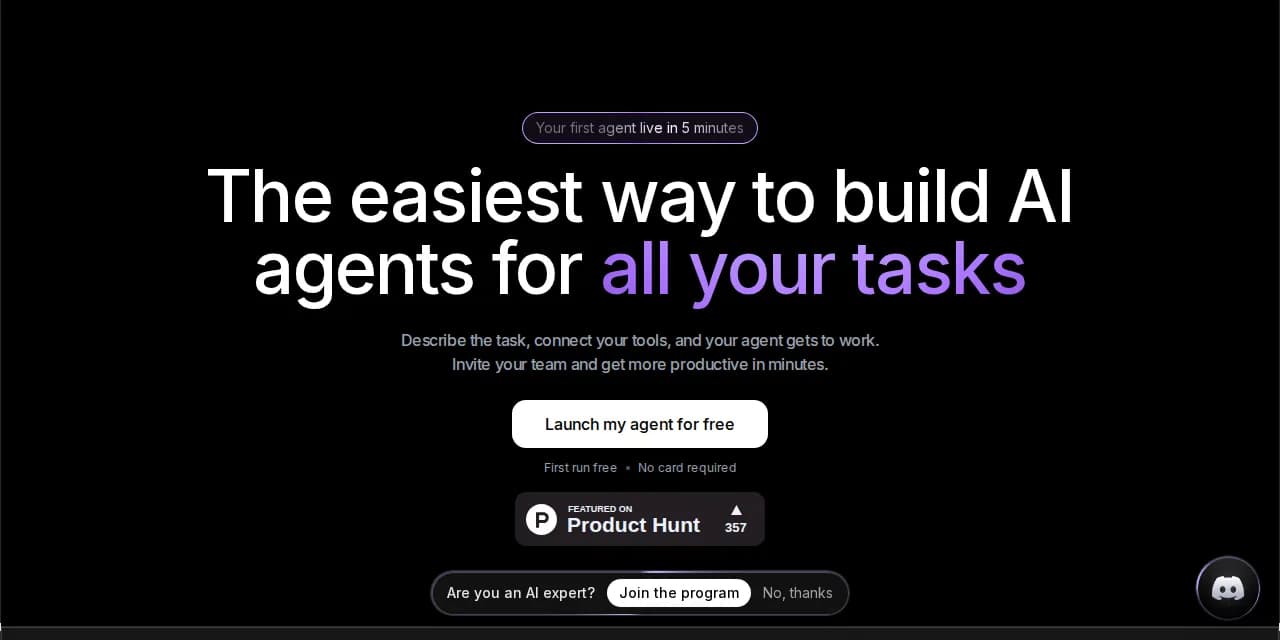
Rerun is the platform for running AI agents you can actually watch work. For a finance team, the four controls above are not features you bolt on later, they are how it works by default:
- Human-in-the-loop approvals. The agent stops before anything sensitive, a refund, a payment, a client email, and waits. You approve from the app or Slack, and it picks up exactly where it left off.
- Live observability. Every run, token, and handoff shows up on a dashboard anyone on the team can read. Full logs, replayable, no terminal required.
- Least-privilege access. Connect only the tools a given agent needs, scoped per agent, so an AP agent never touches payroll.
- Secure, dedicated hosting. Each workspace gets its own isolated private server in the cloud, dedicated CPU and memory, your data stays inside it, with self-hosting rolling out on higher plans for full data sovereignty.
It is not Zapier and there are no flowcharts to wire or maintain. It is not a chatbot. And it is not a black box, which in finance is the whole point.

Common pitfalls, and how to avoid them
The skeptics have a point, and it is worth stating plainly: nobody sane lets a language model freehand your financial calculations. The fix is not to avoid agents, it is to deploy them correctly.
| Pitfall | Risk | Fix |
|---|---|---|
| Trusting the model to do the math | High | Keep deterministic math deterministic. Use the agent to orchestrate and judge, not to be a spreadsheet |
| No approval gate on actions | Critical | Human sign-off on every money-moving or external step |
| No audit trail | High | Full, replayable logging of every action |
| Access too broad | High | Least-privilege, scoped per agent |
| Boiling the ocean | Medium | One bounded workflow first, then expand |
The recurring theme: the model is the engine, not the driver. Deterministic calculations stay deterministic. The agent handles orchestration, exceptions, and drafting, and a human owns the decisions that count.
Getting started: a finance agent pilot in one quarter
You do not need a transformation program. You need one workflow, one owner, and the right guardrails. The best AI agents for finance are not the smartest models, they are the best-governed. Here is the checklist.
If you want the general version of this framework beyond finance, our guide on how to deploy AI agents in production goes deeper on the governance layer, and AI agent orchestration covers coordinating several agents once you have more than one.
For a sense of what these agents look like beyond finance, the same approach runs AI agents for customer service and dozens of other functions.

How to Deploy AI Agents in Production: A Step-by-Step Guide
A governance-first, step-by-step guide to deploying AI agents in production, plus the four pillars that separate a demo from an agent you can trust: approvals, observability, least privilege, and secure hosting.
The finance teams pulling ahead are not waiting for finance AI agents to be perfect. They are picking one workflow, putting a human on the approvals, and watching the work get done. That is a deployment you can defend, and it is one you can start this quarter.
Frequently asked questions
What are AI agents in finance?
AI agents in finance are systems that sense, reason, and act on financial workflows. They read from your ERP, general ledger, and bank feeds, compare against rules and history, then take an action such as matching an invoice, drafting a journal entry, or flagging a suspicious transaction. Unlike a report or a chatbot, an agent does the work rather than just describing it, and it pauses for human approval on anything sensitive.
What is the difference between an AI agent and a finance chatbot?
A chatbot answers questions about your numbers. An agent acts on them. Ask a chatbot about last month's variance and it tells you; an agent pulls the actuals, computes the variance, drafts the commentary, and routes the exceptions for approval. The agent also handles cases it was never scripted for, where a chatbot or a rigid flowchart automation would break.
Are AI agents safe to use for financial tasks?
They are safe when they are governed, not when they are trusted blindly. The teams doing this well keep deterministic math deterministic, put a human in the loop on every money-moving or external action, grant least-privilege access, and log every step for a full audit trail. Nobody should let a language model freehand financial calculations, but an agent orchestrating the work inside those guardrails is both safe and defensible to an auditor.
What are the best use cases for AI agents in finance?
The strongest use cases today are month-end close and reconciliation, accounts payable and invoice matching, FP&A forecasting and variance analysis, compliance including AML and KYC, fraud and risk monitoring, and treasury and cash management. Each is repetitive, rules-heavy, and data-rich, and each has a natural point where a human signs off before anything irreversible happens.
How do you deploy an AI agent for finance workflows?
Start with one bounded, high-friction workflow rather than automating everything. Put a human in the loop on every action that moves money or leaves the building, grant least-privilege access scoped to that one job, make every action observable and auditable, and run the agent on infrastructure you control. Prove it on one workflow, then expand. Our guide on how to deploy AI agents in production covers the governance layer in depth.
Can AI agents handle accounting and month-end close?
Yes, for the mechanical parts. An agent can match the general ledger to subledgers and bank feeds, flag unreconciled items with a probable cause, and draft clearing entries for small in-policy differences. What it should not do is post material entries on its own. Any entry above your materiality threshold, or anything touching revenue recognition or a prior period, stops for a controller to approve before it posts.
Do AI agents replace finance teams?
No. They take the tedious 80 percent, reconciliations, matching, first-draft commentary, so the team spends its time on the 20 percent that needs judgment. The agent proposes and drafts; a human decides on anything that matters. In practice this unlocks capacity rather than cutting headcount, which is where most of the value in finance actually comes from.

Written by
Clément Janssens