OpenClaw vs Claude Code (2026): Different Jobs, Very Different Risk Surfaces
OpenClaw and Claude Code barely compete. One is a sandboxed coding agent, the other an always-on assistant with full system access across 29 channels. A per-task decision framework, the real risk surfaces mapped to OWASP, and how to run an always-on agent safely.
"OpenClaw vs Claude Code" is the wrong fight. One is a coding agent that lives in your terminal. The other is an always-on assistant that reads your files, runs shell commands, and listens across 29 chat channels. They barely overlap. Picking between them like they are the same product is how teams end up with the wrong tool in the wrong place, and a much bigger problem they never priced in: risk.
Here is the number that should frame this whole comparison. In the OWASP Top 10 for LLM Applications (2025), prompt injection is ranked LLM01, the single highest risk for any app built on a large language model. An agent wired to your inbox, your calendar, and a dozen messaging apps is a prompt-injection surface by design. So the useful question is not "which one wins." It is "which one fits the task, and what does each one expose when you let it run."
This guide gives you a per-task decision framework, an honest look at the two very different risk surfaces, and a practical model for running the more powerful of the two safely in production.
In a hurry? Put a human approval gate on any agent, free.
TL;DR: which one, in one screen
- Pick Claude Code when the work is code: building features, fixing bugs, refactoring, running tests, opening pull requests inside a repo.
- Pick OpenClaw when the work must persist and act across your apps over time: always-on inbox triage, scheduled automations, a personal assistant that lives in WhatsApp or Telegram.
- Pick a governed OpenClaw (OpenClaw plus an approval and audit layer) the moment the agent can move money, touch customer data, deploy to production, or message real people.
The one-line version: Claude Code's risk closes when the session ends. OpenClaw's risk stays resident. That asymmetry, not raw capability, is the real decision. Jump to how to run OpenClaw safely if that is your actual question.
The two at a glance
| Claude Code | OpenClaw | |
|---|---|---|
| What it is | Agentic coding tool | Always-on personal and ops agent |
| Runtime | Session-scoped, launched per task | Long-running daemon, always on |
| Interfaces | Terminal, IDE, desktop, web | 29 chat channels like WhatsApp, Telegram, Slack |
| System access | Scoped to a project, under permission modes | Full system access to files, shell, and scripts |
| Models | Claude plan or API, some third-party providers | Model-agnostic: hosted, subscription, gateway, or local |
| Hosting | Anthropic-operated | Open source, self-hosted |
| Best for | Writing and shipping code | Persistent cross-app assistance |
What each tool actually is (and isn't)
Most "OpenClaw vs Claude Code" pieces blur these two into "AI agents" and move on. The differences are the whole point, so let's be precise.
Claude Code: the sandboxed coding agent
Per Anthropic's own documentation, Claude Code is "an agentic coding tool that reads your codebase, edits files, runs commands, and integrates with your development tools." It runs in your terminal, your IDE, a desktop app, and the web. You launch it against a project, it works within that session, and it operates under Anthropic's permission modes.
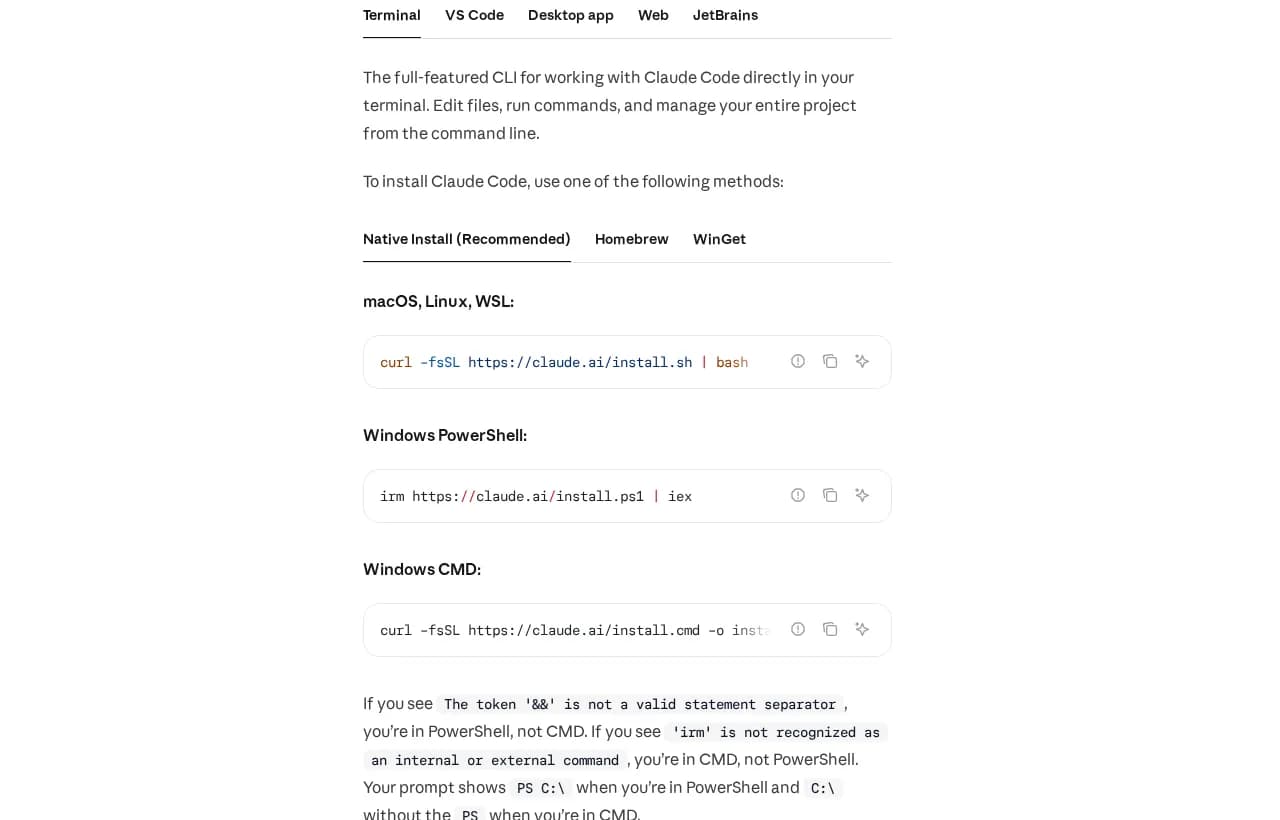
The important trait is not a feature, it is a shape: Claude Code is session-scoped. You start it, it does the work inside a bounded context, and when the session ends, the blast radius closes with it. That ephemerality is a security property, not a limitation.
OpenClaw: the always-on, model-agnostic ops agent
OpenClaw is a different animal. It is an open-source, self-hosted agent that runs on your own machine and, in its own words, "really does things": organizes your inbox, sends emails, manages your calendar, browses the web. You talk to it from WhatsApp, Telegram, Discord, Slack, Signal, iMessage, or any of its 29 channels.
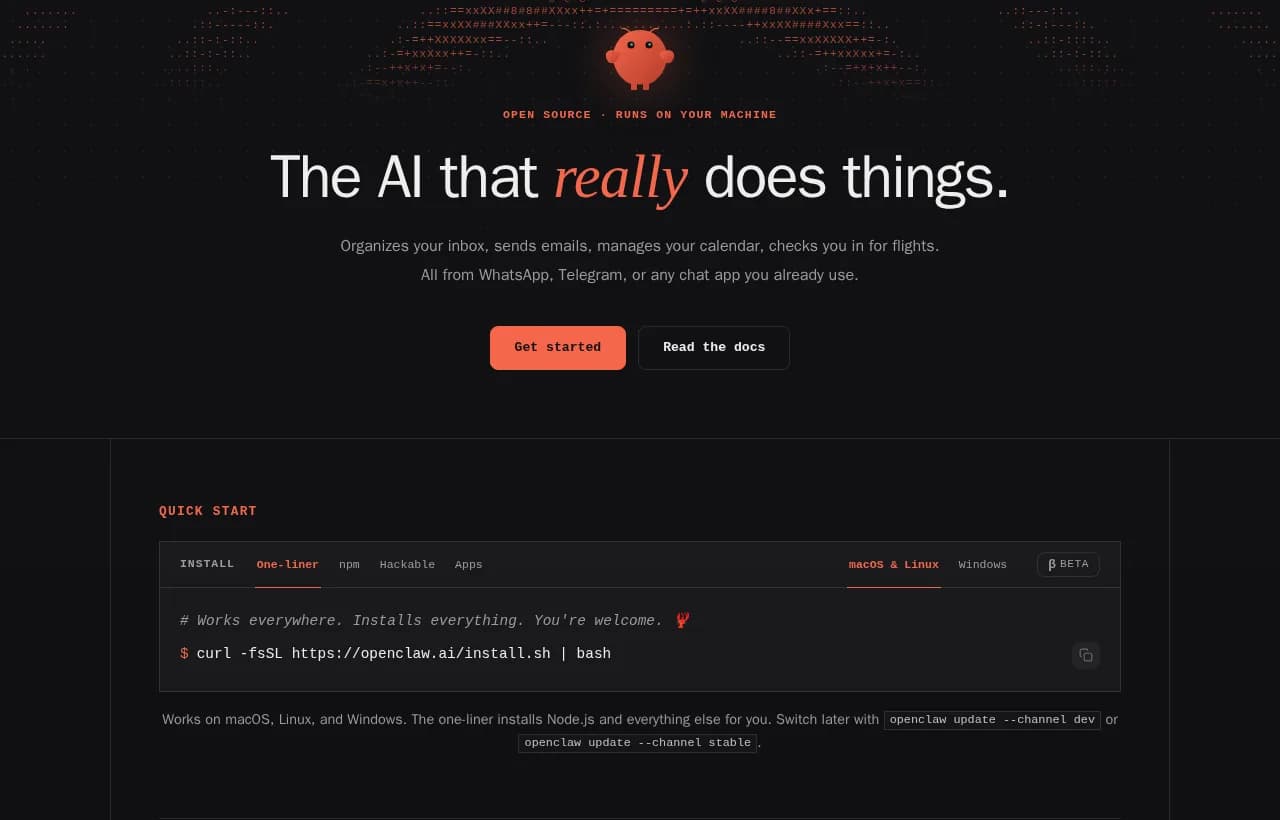
Its capabilities, straight from the project's site, tell you why it is powerful and why it needs governing:
- Full system access: read and write files, run shell commands, execute scripts. Full access or sandboxed, your choice.
- Persistent memory across conversations.
- Browser control to fill forms and extract data from any site.
- Skills and plugins you install from ClawHub, its community skill registry, or that the agent writes for itself.
OpenClaw is a long-running daemon. It does not start and stop around a task, it stays resident, holding open connections and standing permissions. That is exactly what makes it feel like magic, and exactly what changes the security conversation.
Why people confuse them
Both are "AI agents." Both can run on Claude models. Both can touch a codebase. But Claude Code is a tool for the work of coding, scoped to sessions and repos, while OpenClaw is a runtime for a persistent digital assistant with broad reach into your system and your life. The overlap is shallow. The divergence is deep.

The per-task decision framework
Stop asking "which is better." Ask "what is the job." Here is how the two map to real tasks, and where a raw agent is no longer enough.
| Task / job to be done | Best fit | Why |
|---|---|---|
| Write, refactor, or debug code in a repo | Claude Code | Deep code comprehension, repo-aware, session-scoped, Anthropic guardrails |
| Run tests and open a pull request | Claude Code | Built for the dev loop, ephemeral by design |
| Always-on inbox, Slack, or Telegram triage | OpenClaw | Persistent daemon holding open channel connections |
| Scheduled background automations across apps | OpenClaw | Long-term memory plus standing access across tools |
| Personal-assistant ops across many apps | OpenClaw | Multi-channel bridge, model-agnostic runtime |
| Anything touching money, PII, prod, or external messages | Governed OpenClaw | Power is right, but standing access plus untrusted input demands approvals and audit |
| An agent acting on behalf of a team or business | Governed OpenClaw | Excessive-agency exposure needs a human-in-the-loop gate |
Tasks where Claude Code is the right tool
Anything where the work is the code and the context is the repo. Claude Code is a short-lived process: you launch it, it works inside a session scoped to that project, and it exits. Choose it for writing and editing code, running tests, creating commits and pull requests, and repo-scoped debugging. If your question is really about coding agents, our comparison of Hermes versus Claude Code covers that side of the field in depth.
Tasks where OpenClaw is the right tool
Anything that must persist, listen, and act across your apps over time. OpenClaw stays resident, bridges chat channels, and can run on your own hardware with local models. Choose it for always-on triage, scheduled automations, and personal or business "digital life" ops that a session-based coding tool structurally is not designed for.
Tasks where you need a governed OpenClaw
The moment an OpenClaw task can move money, touch customer or personal data, deploy to production, or send messages to real people, the same architecture that makes it powerful becomes the liability. Standing system access, 29 input channels, and community-authored skills are a large attack surface. Raw OpenClaw here is not a tooling choice, it is a governance gap. This is where the real question changes from "which tool" to "what controls."
The part nobody benchmarks: risk surface
Every other comparison stops at "run both." None of them measures the thing that actually matters once an agent has real permissions. Let's fix that, grounded in the fundamentals of AI agent security and the OWASP framework, not fear.
Claude Code's surface: sandboxed, per-session, scoped
Claude Code runs inside a session, under Anthropic's permission modes, scoped to the project you point it at. When the session ends, its access ends. The surface is real but bounded: a single tenant, a defined context, a clear stop. You should still review what it runs, but the exposure does not follow you around.
OpenClaw's surface: many channels, community skills, standing access
OpenClaw's defaults are the mirror image. It can hold full system access, it listens on many untrusted channels, it runs community-authored skills, and it never sleeps. Each of those is a feature. Together they are an attack surface that stays live 24/7.
Any message from any of 29 channels is untrusted input reaching an agent that can run shell commands on your machine. That is not a bug in OpenClaw. It is the shape of an always-on personal agent, and it is why governance is not optional.
Mapping OpenClaw's exposure to the OWASP LLM Top 10
The OWASP Top 10 for LLM Applications (2025) gives us a precise, vendor-neutral vocabulary. Here is how an ungoverned always-on agent lines up:
| OWASP entry | What it means for an always-on agent |
|---|---|
| LLM01: Prompt Injection | Many chat channels means untrusted text reaches an agent with real capabilities |
| LLM06: Excessive Agency | Standing system access plus autonomy plus broad permissions is the core risk |
| LLM03: Supply Chain | Community skills and plugins are third-party code running in your runtime |
| LLM02: Sensitive Information Disclosure | Credentials and personal data flow through a self-hosted agent |
| LLM05: Improper Output Handling | The agent executes shell and scripts, so its output flows into powerful sinks |
 OWASP Gen AI Security Project
The point is not that OpenClaw is "insecure." It is that its power maps, one to one, onto the industry's top-ranked LLM risks. Which means the work is not choosing a tool, it is putting controls around it.
Governing it with the NIST AI RMF
The NIST AI Risk Management Framework, and its 2024 Generative AI Profile, organizes this into four functions you can act on:
- Govern: set the policy and roles for what the agent may do.
- Map: catalog every system, channel, and credential the agent can touch.
- Measure: instrument observability and an audit trail for every action.
- Manage: put approvals and a kill-switch on high-blast-radius actions.
That is a checklist, not a philosophy. The next section is how you actually implement it.
How to run OpenClaw safely in production
If OpenClaw, or any always-on agent, is in your stack, three controls turn it from a liability into an asset. This is controls-first, vendor-second.
Human-in-the-loop approvals for actions that matter
The single highest-leverage control is a gate. When an agent is about to do something irreversible, sending an external email, issuing a refund, deploying, it should stop and ask a human. This maps directly to OWASP LLM06, Excessive Agency, and it is the core idea behind human-in-the-loop AI agents. Here is the shape of a control worth wiring in:
{ "policy": "require_human_approval", "triggers": ["send_external_message", "move_money", "deploy_to_prod", "delete_data"], "on_trigger": "pause_and_notify", "approver_channel": "Slack", "resume": "only_after_explicit_approval", "log": "record_actor_action_reason_timestamp" }Least privilege and scoped credentials
An always-on agent should not hold the keys to everything just because it might need one of them. Scope access to the task in front of it. A triage agent reads mail, it does not need your payment provider. This is basic, and it is the mitigation OWASP recommends for both Excessive Agency and Sensitive Information Disclosure.
Observability and an audit trail
You cannot govern what you cannot see. Every action needs a record: which agent, what it did, why, and when. That is the "Measure" and "Manage" side of the NIST framework, and in practice it is the difference between an incident you can explain and one you cannot. Our guide to AI agent observability goes deeper on what to instrument.

Where Rerun fits
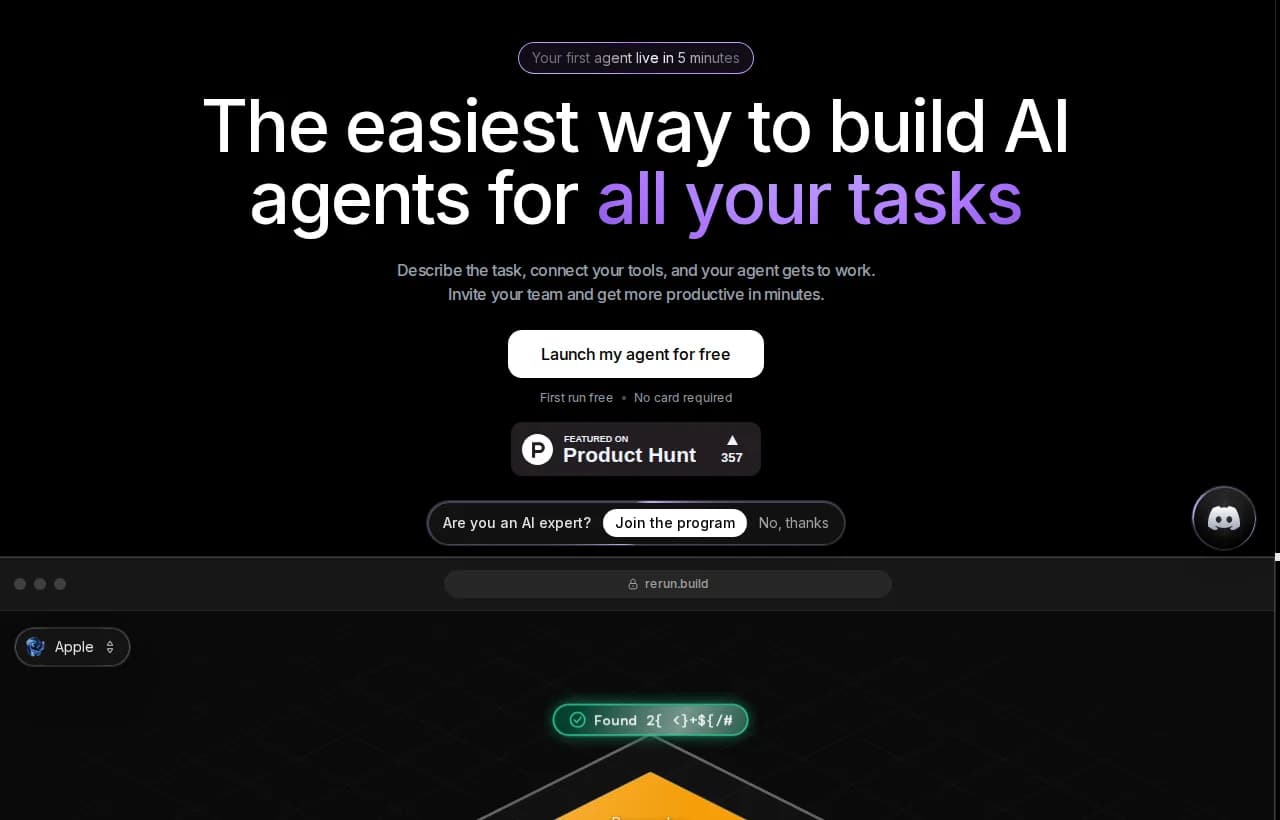
Here is the honest positioning. Rerun is not an alternative to Claude Code or OpenClaw. It is the human-in-the-loop layer you put in front of an autonomous agent so it can run in production without unaccountable blast radius. Rerun gives you:
- Approvals: sensitive actions pause and wait for a human, approved from the app or Slack, then the agent resumes exactly where it stopped.
- Live observability: every run, token, and handoff on a dashboard anyone on the team can read, not a terminal log only one person understands.
- Least privilege and no-code setup: you scope what an agent can do without hand-coding a policy engine.
Two things this is not. It is not a chatbot that only talks back, and it is not a flowchart you wire and babysit inside a tool like Zapier, Make, or n8n. A static automation cannot reason about a situation it has not seen, and an ungoverned agent cannot be held to account for what it did. Rerun sits between the two: the agent decides and acts, while the actions that carry real consequences pause for a human and land in an audit trail. If you are thinking about the wider picture, how to deploy AI agents walks through the production path, and AI agent orchestration covers coordinating several agents without wiring static flows.
Cost and the Anthropic subscription question
Two practical questions come up constantly, so let's answer them plainly.
Can OpenClaw use your Claude subscription?
OpenClaw is model-agnostic. Per its site, you can bring "hosted, subscription-backed, gateway, or local models." Claude Code, by contrast, runs primarily on a Claude subscription or an Anthropic Console account, though the terminal CLI and VS Code also support third-party providers. The catch: provider policies on using flat-rate consumer subscriptions with third-party agents have shifted over time, so do not assume a personal plan will keep working with an external agent forever. Plan for a metered API key or a local model as the durable path.
Total cost of ownership
The honest framing is that the sticker price is not the cost.
| Cost factor | Claude Code | OpenClaw |
|---|---|---|
| Software | Subscription or API usage | Free, open source |
| Infrastructure | None, runs locally per session | You host it, always-on machine |
| Model usage | Metered against your plan or key | Variable API spend, or local compute |
| Governance overhead | Lower, session-scoped | Higher, needs approvals and audit |
The line item most teams forget is that last row. An ungoverned always-on agent is cheap until the day it is very, very expensive.
OpenClaw vs Claude Code vs the alternatives
Neither tool is your only option, and if the fit is wrong, the alternative matters more than the head-to-head. A few honest pointers:
- If OpenClaw is close but not right, our roundup of OpenClaw alternatives maps the full field, including where a watched, governed agent platform fits.
- If you are weighing OpenClaw against the other always-on assistant everyone mentions, read Hermes vs OpenClaw.
- If your real decision is between coding agents, Hermes vs Claude Code is the sibling comparison.
The Best OpenClaw Alternatives in 2026 (Safer, No-Code, Human-in-the-Loop)
OpenClaw is powerful, but it runs with full system access and no approval step. Here are the best OpenClaw alternatives in 2026, ranked for safety, visibility, and no-code use.
And when the job is "an autonomous agent I can actually watch and control," that is the category Rerun was built for. Not a chatbot that talks back, not a flowchart you maintain, but agents that do the work while you see every step live.
The bottom line
OpenClaw and Claude Code are not competitors, they are different jobs with very different risk surfaces. Claude Code is a sandboxed coding agent whose exposure closes with the session. OpenClaw is an always-on assistant whose power, full system access across 29 channels with community skills, maps straight onto the OWASP LLM Top 10. So decide per task. And if an always-on agent is in your stack, the real work is not picking it, it is governing it: approvals on what matters, least privilege everywhere, and an audit trail you can read.
Frequently asked questions
What can OpenClaw do that Claude Code can't?
OpenClaw is an always-on, self-hosted agent that stays resident, holds persistent memory, and listens across 29 chat channels like WhatsApp, Telegram, Slack, and iMessage, with full system access to read and write files and run shell commands. Claude Code is a session-scoped coding tool built to read a codebase, edit files, run commands, and open pull requests. OpenClaw persists and acts across your apps over time; Claude Code does its work inside a bounded coding session and then exits.
Can OpenClaw use your Claude or Claude Code subscription?
OpenClaw is model-agnostic and can run on hosted, subscription-backed, gateway, or local models. Claude Code itself runs primarily on a Claude subscription or an Anthropic Console account, and the terminal CLI and VS Code also support third-party providers. Provider policies on using flat-rate consumer subscriptions with third-party agents have shifted over time, so the durable path for an external agent like OpenClaw is a metered API key or a local model rather than a personal flat-rate plan.
Is OpenClaw good for coding?
OpenClaw can run shell commands and execute scripts, so it can touch code, but it is built as a general always-on assistant, not a dedicated coding agent. For writing, refactoring, debugging, and opening pull requests inside a repo, a purpose-built coding tool like Claude Code is the better fit because it is repo-aware and session-scoped.
Should I use OpenClaw or Claude Code?
Decide per task. Use Claude Code when the work is code inside a repository. Use OpenClaw when the work must persist and act across your apps over time, such as always-on inbox triage or scheduled automations. If the OpenClaw task can move money, touch personal data, deploy to production, or message real people, add a governance layer with human-in-the-loop approvals before running it.
How much do OpenClaw and Claude Code cost?
OpenClaw is free and open source, but you host it on an always-on machine and pay variable model costs through an API key or local compute. Claude Code costs a subscription or metered API usage but needs no standing infrastructure because it runs per session. The cost teams forget is governance overhead: an ungoverned always-on agent is cheap until an unchecked action becomes expensive.
Is OpenClaw safe to run in production?
OpenClaw is powerful, and that power maps directly onto the OWASP Top 10 for LLM Applications: prompt injection from many channels, excessive agency from standing system access, and supply-chain risk from community skills. It can be run safely with three controls: human-in-the-loop approvals on high-blast-radius actions, least privilege scoped per channel and skill, and full observability with an audit trail. A layer like Rerun provides those controls without replacing the agent.
Is OpenClaw affiliated with Anthropic?
No. OpenClaw is an independent open-source project run by the OpenClaw Foundation and is not affiliated with Anthropic, even though it can run on Claude models. Claude Code is Anthropic's own agentic coding tool.

Written by
Clément Janssens